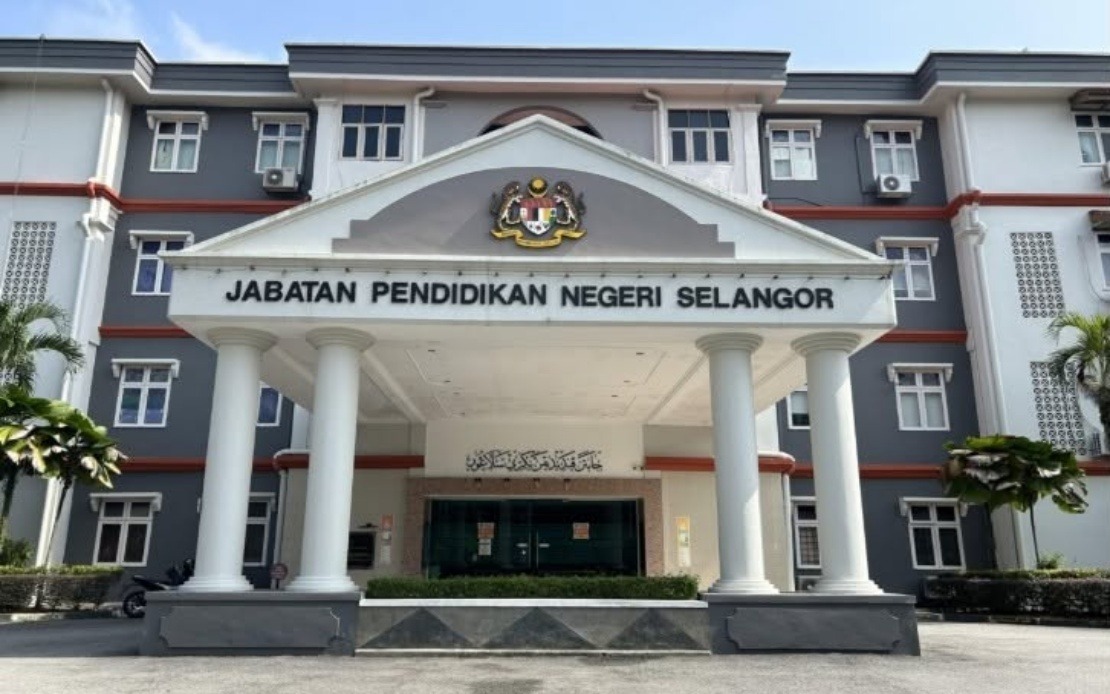
The Selangor State Education Department (JPN) has declared its unwavering commitment to supporting law enforcement authorities in investigating a bullying incident allegedly involving secondary school students in Rawang that recently captured widespread public attention through social media. The department's emphatic stance comes as the viral videos depicting the incident continue to generate significant community concern and debate about student safety and institutional accountability in Malaysian schools.
In an official statement released on July 12, the Selangor JPN made clear that no party connected to the matter would receive preferential treatment or protection, signalling a zero-tolerance approach to the allegations. The department stressed that it would apply existing disciplinary regulations uniformly and without hesitation against any individuals found culpable following the investigation's completion. This principled stance reflects growing public demand for educational institutions to take decisive action against misconduct that threatens student welfare.
The Selangor JPN's statement specifically addressed the social media phenomenon that thrust the incident into the public consciousness, acknowledging that a video documenting apparent student misconduct at the Rawang school had circulated widely online. Rather than downplaying the severity of the matter, the department characterised it as a serious concern that demands thorough examination and appropriate institutional response. By explicitly referencing the viral nature of the incident, the JPN recognised that transparency and accountability are essential to maintaining public confidence in the education system.
Crucially, the department clarified that police authorities are currently conducting the formal investigation, positioning the JPN as a supporting agency rather than the lead investigator. This delineation of responsibility ensures that law enforcement can proceed with their criminal inquiry without administrative interference, while the education department stands ready to provide relevant documentation, witness cooperation, and institutional resources as needed. The collaborative approach reflects best practices in handling such sensitive matters involving minors.
The department's reiteration that it tolerates no compromise regarding student safety and wellbeing underscores a fundamental obligation that extends beyond regulatory compliance. Malaysian schools increasingly face expectations not only to educate academically but to provide secure environments where students can develop physically, emotionally, and socially without fear of harm or intimidation. Bullying, whether physical, verbal, or cybernetic, undermines these foundational objectives and can inflict lasting psychological damage on victims.
The Selangor JPN's appeal to the public to respect the ongoing investigation process reflects recognition of the delicate balance required during sensitive probes involving young people. While transparency remains important, premature public judgments or vigilantism can compromise investigative integrity and potentially prejudice any subsequent disciplinary or legal proceedings. This measured request for patience acknowledges that thorough investigation requires time and that jumping to conclusions based on partial information can be counterproductive.
The incident highlights broader challenges facing Malaysian secondary schools, where social media has amplified the visibility of misconduct that might previously have remained confined to school communities. The democratisation of video recording and instant sharing means that incidents can reach thousands within minutes, creating intense public pressure for rapid institutional responses. Educational authorities must navigate the tension between acting decisively to address genuine concerns and ensuring that due process protections remain intact for all parties involved.
For Malaysian parents and educators, the Rawang incident serves as a reminder that bullying remains a persistent issue within schools despite repeated policy initiatives and awareness campaigns. The fact that students felt sufficiently emboldened to record and share footage of apparent misconduct raises questions about the effectiveness of existing anti-bullying frameworks and whether school leadership adequately deters such behaviour through consistent enforcement and visible consequences. Schools nationwide may need to reassess their disciplinary cultures and the clarity of messaging regarding unacceptable conduct.
The Selangor JPN's handling of this case will likely set a precedent for how the state education department responds to similar incidents in future. By emphasising full cooperation with police, rejecting any prospect of institutional protection for wrongdoers, and reaffirming commitment to student safety, the department has positioned itself as taking the matter seriously. However, the true measure of accountability will emerge when investigations conclude and disciplinary decisions are announced, demonstrating whether the department's stated principles translate into concrete action that sends a clear message to students and parents about the consequences of misconduct.

