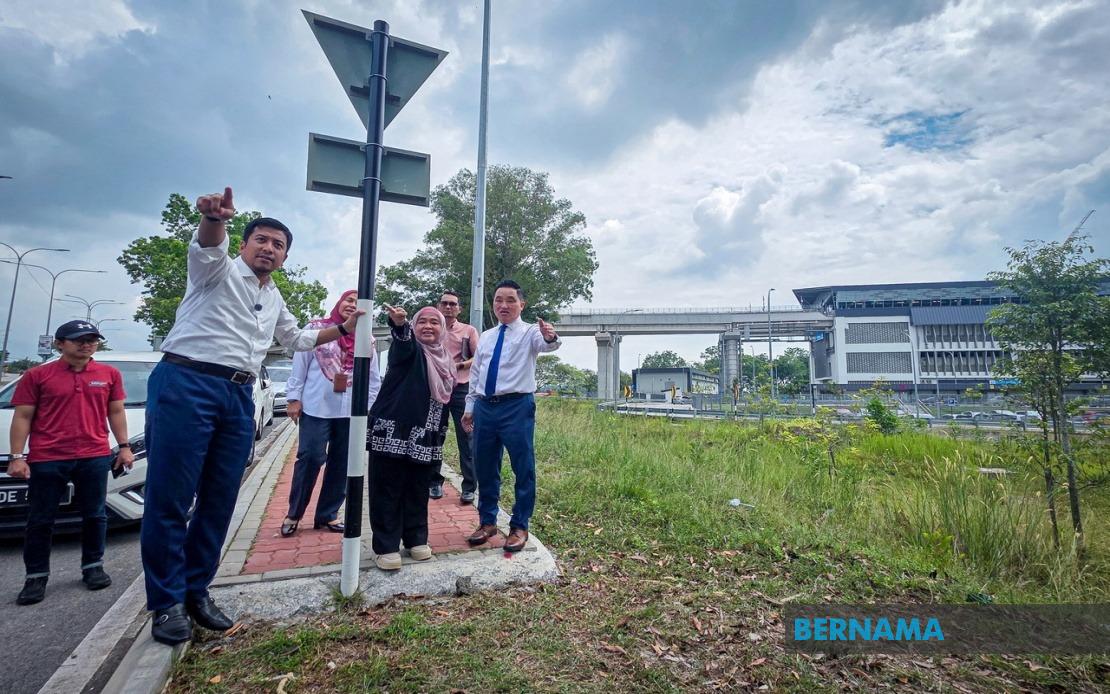
The Selangor State Government is accelerating efforts to address infrastructure shortcomings at its Shah Alam Line LRT3 stations, focusing on the critical need to establish a welcoming and functional environment for commuters. State Local Government and Tourism Exco Datuk Ng Suee Lim outlined the administration's commitment to resolving longstanding issues affecting user experience across the transit network, signalling recognition that initial project delivery left certain facilities incomplete or substandard.
Two stations have emerged as priority concerns. At Dato' Menteri Station, officials have identified delays stemming from administrative processes including permit approvals, with authorities instructing Prasarana to complete necessary infrastructure within a two-month window. The situation at Shah Alam Stadium Station presents a different challenge, as its infrastructure gaps involve coordination with private sector developers undertaking adjacent projects, requiring a more extended timeline and formal tender processes before remedial work can commence. Both cases illustrate the complex interplay between public transit operators, local authorities, and private development interests that characterises modern urban infrastructure in Malaysia's major metropolitan areas.
The connectivity issues extend beyond the stations themselves to encompass the broader pedestrian experience. Pedestrian walkways and zebra crossings have been identified as inadequate or incomplete, creating safety and accessibility concerns for residents and workers depending on these transportation links. Such infrastructure deficiencies can substantially discourage public transport adoption, particularly among families and elderly residents who require secure, clearly-defined pathways. The government's recognition of these gaps represents a departure from the tendency to declare major projects complete once initial operations commence, instead acknowledging that real-world usage reveals design and implementation shortcomings requiring systematic correction.
Datak Ng's remarks during a press inspection reveal the administration's willingness to accept responsibility for post-launch issues, framing them as inevitable in large infrastructure projects that subsequently require refinement. This pragmatic stance contrasts with the typical defensive posture adopted by authorities when new facilities underperform. The involvement of Exco Youth, Sports and Entrepreneurship Mohd Najwan Halimi in the inspection underscores the cross-portfolio nature of transport infrastructure issues, which intersect with economic development, urban planning, and quality-of-life concerns.
The Shah Alam City Council (MBSA) will assume a monitoring role, tasked with tracking progress and coordinating with private developers to accelerate improvements. This delegation of oversight to local councils reflects the broader administrative structure where state governments set policy direction while local authorities implement specific improvements and maintain day-to-day accountability. The coordination mechanism being established with nearby developers is particularly significant, as it indicates recognition that infrastructure gaps often result from unclear delineation between public and private responsibilities in mixed-use urban environments.
Expanding beyond the two priority stations, Selangor has instructed all Local Authorities (PBT) operating stations within their jurisdictions to conduct comprehensive reviews identifying connectivity deficiencies. This systemic audit approach suggests officials anticipate similar problems at other locations along the line, potentially affecting user experience across the entire network. The Shah Alam Line serves as a critical component of the Klang Valley's expanding public transport infrastructure, with implications for commuter patterns, property values, and regional economic activity extending well beyond immediate station locations.
The Royal Klang City Council (MBDK) has also been enlisted in the oversight process, indicating that connectivity infrastructure challenges extend across municipal boundaries. This regional coordination acknowledges that metropolitan transport systems function as integrated networks where deficiencies at particular nodes can affect broader system functionality. The government's proposal to establish feedback channels through council members and state assemblymen suggests an attempt to create responsive mechanisms for identifying and rectifying issues as they emerge through regular community engagement.
For Malaysian commuters accustomed to incomplete or substandard public infrastructure facilities, Selangor's explicit commitment to systematic remediation offers a degree of reassurance, though scepticism regarding timelines remains warranted given historical patterns of project delays. The two-month deadline for Dato' Menteri Station represents a relatively aggressive schedule that will test administrative efficiency and contractor responsiveness. The less-defined timeline for Shah Alam Stadium Station suggests more complex negotiations lie ahead, potentially extending resolution indefinitely if coordination with private developers proves protracted.
The underlying issue reflects broader Malaysian urban development challenges where transit infrastructure projects frequently face post-launch difficulties stemming from incomplete design, inadequate coordination between stakeholders, and insufficient testing before opening to the public. These patterns impose costs on commuters through reduced safety, accessibility, and service reliability. The Selangor government's approach, if implemented with genuine urgency, could establish useful precedent for addressing similar problems affecting other transit systems throughout Malaysia's urban centres, particularly the Kuala Lumpur metropolitan region where transport infrastructure expansion continues apace.
Stakeholder coordination will prove essential to success, particularly given the involvement of Prasarana, developers, multiple local authorities, and state agencies. The government's willingness to publicly acknowledge infrastructure deficiencies and establish specific timelines creates accountability mechanisms that may encourage faster resolution than typically occurs when authorities maintain defensive silence. However, sustainable improvement requires not merely addressing immediate gaps but implementing systems ensuring that future projects incorporate complete infrastructure from inception rather than treating connectivity as an afterthought following operations commencement.

