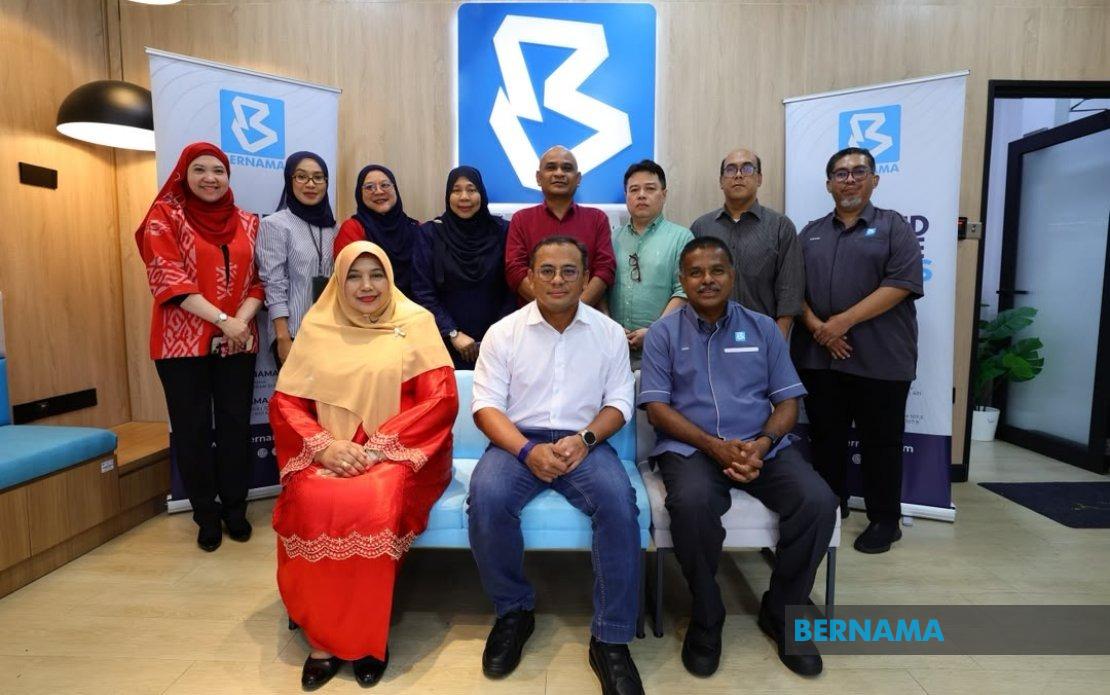
Datuk Seri Amirudin Shari, the Selangor Menteri Besar, made an unscheduled visit to Bernama's Negeri Sembilan bureau on July 20, marking a rare glimpse into how Malaysia's national news agency coordinates its reporting during crucial electoral moments. The visit underscores the interconnected nature of Malaysia's political and media landscapes, where senior leaders maintain close engagement with press operations even during the intense period of state election campaigns. Amirudin's presence at the Seremban office, arriving at 2 pm, sent a clear signal about the importance both state leadership and the ruling coalition place on narrative management during electoral contests.
As the election director for Pakatan Harapan, Amirudin's involvement in observing media operations reflects broader political strategy. His dual roles—administering one of Malaysia's most developed states while coordinating his coalition's campaign messaging—position him as a bridge between governance and electoral machinery. The timing of this visit, which occurred when the campaign for the 16th Negeri Sembilan state election had reached its third day, suggests active coordination between party leadership and news coverage frameworks. Such engagement carries significance beyond mere courtesy; it demonstrates how closely political leadership monitors the information ecosystem during pivotal moments.
The visit involved briefings with Bernama's senior management team, including chief executive officer Datin Paduka Nur-ul Afida Kamaludin and editor-in-chief Arul Rajoo Durar Raj. Their presence alongside deputy editor-in-chief Mohd Shukri Ishak and Negeri Sembilan bureau chief Nursyabiha Sukri illustrated the hierarchical importance assigned to the meeting within the agency's structure. This assemblage of senior journalists and administrators indicated that Amirudin's visit was treated as a substantive engagement rather than a ceremonial walkthrough. The participation of multiple layers of editorial leadership suggests that broader questions about election coverage, editorial standards, and information dissemination were likely addressed.
During the session, Amirudin received a detailed briefing from Mohd Hisham Abdul Rafar, the coordinating editor overseeing Bernama's election coverage operations. This session provided the Selangor leader with insights into how Malaysia's oldest and most established news agency approaches the logistical and journalistic challenges of covering a state election in real time. Negeri Sembilan's election, though focused on a single state, typically attracts significant national attention because of the peninsula's political significance and the ways state-level electoral outcomes often presage national political shifts. Understanding Bernama's operational approach would have given Amirudin a sense of how information flows are managed and which narratives receive prominence within the agency's reporting framework.
Part of the visit included a recording session for Bernama TV, the agency's television news division, where Amirudin was scheduled to discuss election developments on camera. This segment of the programme demonstrates how contemporary political leaders integrate themselves into broadcast media narratives during campaigns. Rather than simply observing press operations from a distance, senior politicians like Amirudin now actively participate in creating content for major news platforms. The Bernama TV interview would have allowed him to reach audiences beyond political rallies or formal press conferences, embedding his commentary directly into news programming and thereby influencing how electoral developments were framed for viewers across Malaysia.
The Electoral Commission's timeline for the Negeri Sembilan election shaped the operational context of Amirudin's visit. With early voting scheduled for July 28 and polling day set for August 1, news agencies faced an accelerated schedule for delivering comprehensive coverage of campaign developments. This compressed timeframe heightened the importance of having robust coordination between media outlets and political actors who could provide context and analysis to voters. Bernama's role as the official national news agency made it essential infrastructure for disseminating information about the election, particularly to media outlets and international observers seeking authoritative accounts of Malaysian electoral processes.
Negeri Sembilan holds particular political weight within Malaysia's federation. The state has historically served as a bellwether for broader political trends, and its electoral outcomes often receive disproportionate national attention relative to its population size. The state's political composition—with its mix of Malay-majority and Chinese-majority constituencies, its position between Selangor and Pahah, and its role in broader peninsular political calculations—makes its elections windows into how Malaysian voters are thinking about governance, economic management, and federal-state relations. Coverage of Negeri Sembilan's election thus extends beyond local interest into questions about national political momentum, which explains why the Selangor MB would allocate time to engaging with election coverage operations.
Amirudin's specific interest in Bernama's operations reflects pragmatic political awareness. As PH's election director, he bore responsibility for ensuring that his coalition's messages were effectively communicated to voters, and understanding how the country's premier news agency processes and disseminates information about elections was crucial to that function. Bernama's reach extends through subscription-based content to media outlets across Malaysia and internationally, making the agency a critical node in Malaysia's information infrastructure. For a political leader managing a state election, familiarity with how Bernama's systems operated, which stories received emphasis, and how editorial decisions were made constituted valuable intelligence for campaign management.
The visit also carried implicit significance regarding press-government relations in Malaysia. Amirudin's presence at Bernama's election operations room could be interpreted as both a gesture of goodwill toward the state-aligned news agency and a demonstration of confidence in its editorial processes. In Malaysia's media landscape, where perceptions of political alignment influence audience trust and where state-linked media face persistent questions about editorial independence, such visits by senior political figures carry multiple meanings. They can signal approval of coverage direction, provide opportunities for politicians to informally influence editorial thinking, or demonstrate the coalition government's comfort with how state media is handling the political moment.
For Malaysian observers of press-politics dynamics, Amirudin's visit illustrated the continuing centrality of traditional media—particularly the state news agency—in electoral politics. Despite the rise of digital platforms and social media, Bernama remains the reference point that other outlets cite and draw upon for authoritative information about major political events. The agency's coverage architecture, decisions about story prominence, and editorial framing thus retain significant influence over how elections are understood and discussed across Malaysian media ecosystems. A senior political leader taking time to observe these operations firsthand underscores that traditional media gatekeeping functions have not been entirely displaced by digital disruption.
The broader electoral context of Negeri Sembilan in 2023 positioned the state election within longer arcs of Malaysian political realignment. The campaign was occurring amid broader discussions about federal government stability, the sustainability of Pakatan Harapan's coalition, and the political prospects of various component parties within the ruling coalition. From this perspective, Amirudin's engagement with Bernama's coverage operations was not merely about a single state election but about how national media framed the meaning of Negeri Sembilan's results for Malaysia's political future. His interaction with senior editorial staff and journalists provided informal opportunities to emphasize angles or narratives that PH wanted given prominence.
Moving forward, the Negeri Sembilan election would test not only voters' preferences but also the effectiveness of various political communications strategies, including those mediated through traditional news agencies like Bernama. The comprehensive coverage that the agency was mobilizing would provide detailed documentation of campaign dynamics, voter engagement patterns, and election-day processes. These records would subsequently inform analysis of how Malaysian electoral contests unfold and what factors influence outcomes. Amirudin's participation in observing these documentation processes suggested that PH was attentive to how the election would be remembered and analysed in historical retrospect, not only to its immediate results.

