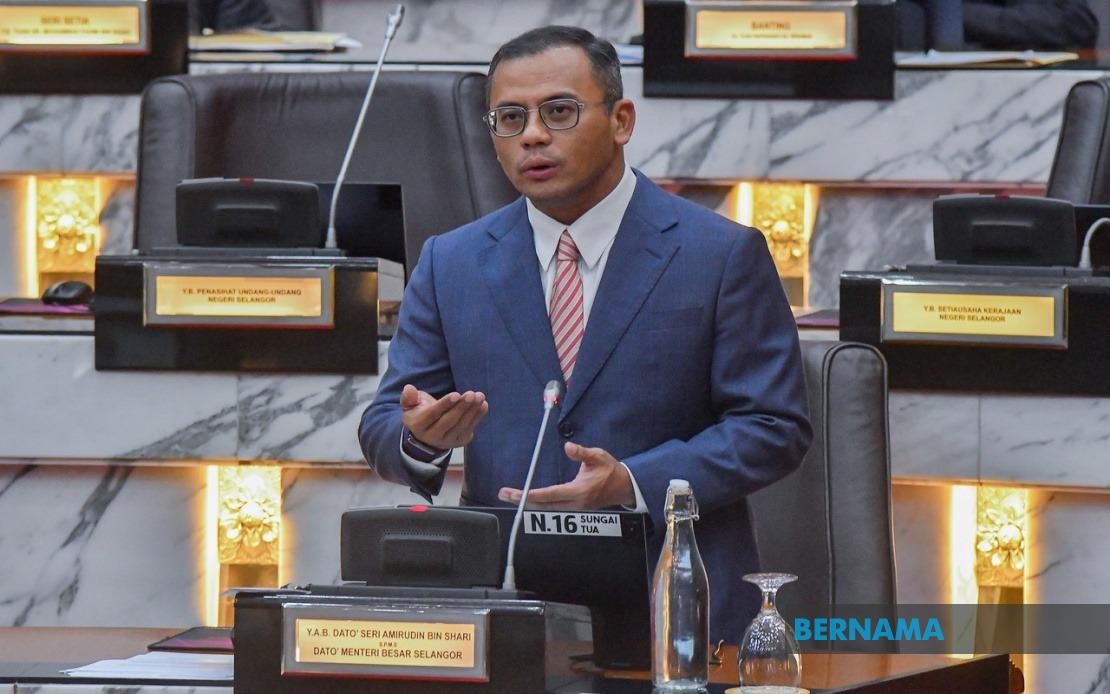
Selangor's local authorities have received a direct mandate from Menteri Besar Datuk Seri Amirudin Shari to undertake a thorough assessment of how effectively public transport facilities connect with surrounding residential and commercial areas. The directive comes as connectivity challenges, particularly around the Light Rail Transit Line 3 (LRT3) and other services, have increasingly drawn public attention through social media platforms, raising questions about the state's commitment to integrated urban mobility.
The state government has signalled its willingness to provide supplementary financial support to address these gaps, though the Menteri Besar emphasized that solutions must remain cost-effective and aligned with broader objectives to encourage residents to shift away from private vehicle dependency. This represents a significant commitment, given Selangor's status as Malaysia's economic engine and the mounting traffic congestion affecting productivity and quality of life across the Klang Valley and surrounding districts.
Critically, Amirudin stressed that local authorities must adopt a more proactive stance rather than waiting for community complaints to surface online before taking action. This criticism reflects a broader governance concern: the reactive nature of some municipal responses to urban service failures. The Menteri Besar called for regular engagement with council members and other stakeholders, ensuring that issues are identified and addressed through established channels before they escalate into viral social media campaigns that damage public confidence.
The issue gained prominence when assemblyman Danial Al-Rashid Haron Aminar Rashid (PH-Batu Tiga) raised concerns during the State Legislative Assembly debate on the Selangor Resilience Strengthening Package. His intervention highlighted a critical weakness in the current transport ecosystem: the disconnect between transit nodes and the communities they are meant to serve. Poor connectivity at journey endpoints—what specialists call first-mile and last-mile connectivity—remains one of Asia's most persistent transport challenges, often determining whether commuters will embrace public transit or default to personal vehicles.
The state government has tasked Ng Sze Han, who chairs the State Investment, Trade and Mobility Committee, with coordinating a comprehensive mapping exercise across all public transport operators. This initiative aims to identify geographical and temporal gaps in service coverage, creating a visual and operational framework for targeted intervention. By bringing operators to the table, the state hopes to develop coordinated solutions rather than fragmented improvements that fail to address systemic issues.
Amirudin acknowledged that state subsidies represent one tool for closing these gaps, but highlighted a crucial operational problem: subsidies alone cannot solve connectivity challenges if operators fail to manage service hours effectively or maintain adequate route coverage. This nuanced perspective suggests the state recognizes that financial support must be paired with operational accountability. Operators receiving public funds must demonstrate that they are utilizing those resources to genuinely improve service accessibility rather than simply absorbing subsidies while maintaining inadequate coverage.
The emphasis on accessibility extends beyond mere transit proximity. Comfortable and secure pedestrian infrastructure—including well-lit walkways, accessible crossings, and safety features—represents an essential component of the transport experience. Many potential commuters, particularly elderly residents and persons with disabilities, avoid public transport when walking to stations feels unsafe or physically demanding. By directing local authorities to upgrade pedestrian facilities, the state is acknowledging that transport connectivity encompasses the entire journey experience, not merely the bus or train ride itself.
For Malaysian readers, this directive carries implications beyond Selangor. The state's transport challenges often foreshadow issues facing other major urban centers like Kuala Lumpur, Penang, and Johor Bahru. Selangor's 6.5 million residents represent roughly one-fifth of Malaysia's population, and the state's success or failure in achieving integrated mobility will inform national transport policy discussions. If Selangor can successfully bridge first-mile and last-mile gaps while maintaining cost discipline, the model could serve as a template for other states grappling with similar challenges.
The regional context matters equally. Southeast Asian cities from Bangkok to Jakarta face identical connectivity problems, often resulting in sprawling informal transport networks that serve unmet demand but lack regulation or safety standards. Selangor's structured approach—combining mapping, operator coordination, targeted subsidies, and infrastructure investment—represents a more systematic methodology than currently prevails in many neighboring jurisdictions.
Operators themselves face a delicate balance. Public transport companies operating in Selangor must balance commercial viability with social obligations, particularly on routes serving lower-income communities where passenger volumes may not justify operations from a purely profit-driven perspective. The state's willingness to provide subsidies suggests recognition that some socially necessary routes require financial support, a principle increasingly accepted across developed urban systems but still contested in less mature markets.
The timeline for implementation remains unstated, but the urgency implied by Amirudin's comments suggests the state views this as a near-term priority. As Selangor continues to absorb both natural population growth and immigration from other states seeking economic opportunity, transport infrastructure must expand in parallel. Failing to address connectivity now risks cementing problematic patterns that become exponentially harder to correct once settled into established commuting behaviors.
Ultimately, this directive represents both acknowledgment of current deficiencies and commitment to systematic improvement. Whether the state can translate this political will into operational reality—ensuring that local authorities, operators, and state agencies coordinate effectively toward genuine accessibility improvements—will determine whether Selangor achieves its stated mobility objectives or simply cycles through another round of incremental, insufficient reforms.

