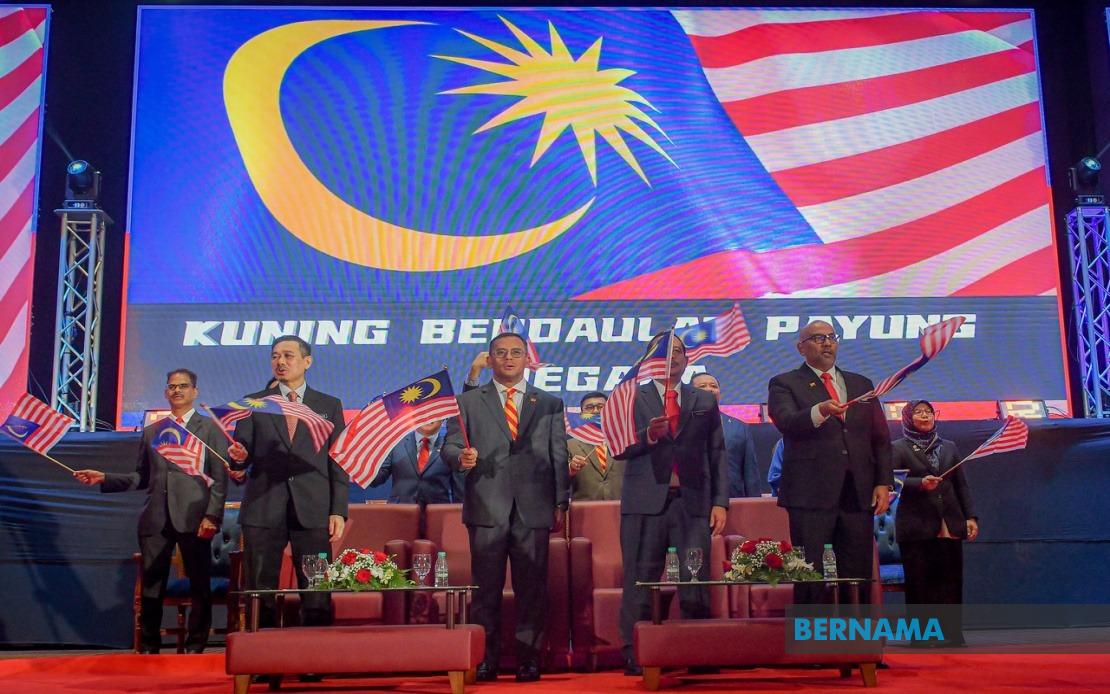
A determination regarding the status of a Selangor state legislative seat is anticipated to reach completion within the coming week, following which the Election Commission will assess the necessity of holding a by-election, according to Menteri Besar Datuk Seri Amirudin Shari. The pronouncement emerged during remarks to journalists in Shah Alam after he had presided over an assembly engagement with civil servants and inaugurated the Fly the Jalur Gemilang patriotic campaign.
The state administration is currently in receipt mode, awaiting formal documentation from the Speaker of the Selangor State Legislative Assembly outlining the seat's constitutional standing. Concurrently, legal advisers from the state have been tasked with preparing the requisite legal memorandum to accompany this determination before it moves to the relevant authorities for deliberation. Amirudin emphasised that the authority to make this initial pronouncement rests squarely with the Speaker, whose role is enshrined in parliamentary procedure, whilst the legal groundwork falls to the state's legal personnel.
The situation stems from reported concerns surfacing earlier regarding whether a sitting Selangor state assemblyman meets the statutory requirements to continue holding office. Such eligibility questions can trigger cascading constitutional processes, and media coverage had already begun examining whether the state government would need to call a fresh election to fill the seat should it become vacant through legislative mechanism. The Menteri Besar made clear that the state government stands ready to implement whatever course of action the Election Commission determines following the Speaker's formal notification, demonstrating administrative willingness to proceed through established legal channels without resistance or delay.
Amirudin underscored the government's commitment to honouring all statutory procedures and respecting the Election Commission's authority in determining whether a by-election should proceed. This stance reflects broader constitutional practice in Malaysia, where executive branches defer to parliamentary speakers and independent electoral bodies on matters of seat vacancy and constituency management. The careful sequencing—with the Speaker moving first, followed by legal analysis, and culminating in the Election Commission's decision—mirrors the institutional checks built into the system to prevent arbitrary action.
Beyond the assembly seat question, the Menteri Besar addressed another pressing matter occupying state government attention: the proliferation of stray dogs across Selangor and the accompanying public safety risks. He characterised the state's engagement with this challenge as a continuous, proactive exercise in safeguarding residents, though one requiring delicate calibration between enforcement and humanitarian considerations. The remarks came amid public controversy over animal welfare, with viral incidents of alleged cruelty against pets and stray animals generating significant community concern and attracting high-level royal attention.
Amirudin articulated the fundamental tension that local authorities face when managing street animal populations. Taking action exposes officials to criticism from animal welfare advocates, yet inaction creates genuine hazards for residents, particularly children and vulnerable groups. The Menteri Besar advocated for what he termed a balanced approach: enforcement conducted strictly within legal boundaries, executed with restraint and compassion rather than brutality, and grounded in the primary objective of public protection. This framing positions the state government as genuinely caught between competing valid concerns rather than indifferent to animal suffering.
The government has registered the concerns raised publicly by Tengku Permaisuri Norashikin of Selangor regarding the treatment of animals in enforcement operations. The Tengku Permaisuri had articulated sadness, disappointment and anger over recent incidents that circulated virally, demonstrating how individual cases of animal cruelty now possess substantial amplification power through social media. Her office subsequently called upon the Federal Government to review and strengthen penalties within the Animal Welfare Act 2015, signalling that royal sentiment favours stricter legal consequences for those convicted of animal mistreatment.
Amirudin pushed back against characterisations that enforcement only occurs when public outcry forces official action. He noted that stray animal management had previously been raised within the State Legislative Assembly by Port Klang's representative, indicating that the matter possessed legitimate governance status prior to recent viral incidents. The Menteri Besar appeared to suggest that critics selectively highlight animal welfare concerns when local authorities respond to them, whilst overlooking the prior parliamentary discussion that validated the issue's importance for public discussion and state action.
The dual challenges occupying the Menteri Besar—resolving the assembly seat eligibility question and calibrating the response to stray animal populations—exemplify the multifaceted demands facing contemporary state governments in Malaysia. The seat matter requires navigation through constitutional machinery and deference to established institutions, whilst the animal welfare issue demands balancing public safety imperatives against growing societal concern for animal dignity. Both situations involve managing competing stakeholder expectations and respecting legal frameworks whilst responding to genuine community needs.
For Malaysian observers tracking governance dynamics in Selangor, the coming week will yield significant developments. The Speaker's determination on the assembly seat will likely clarify whether the state faces the logistical and financial commitment of mounting a by-election in the near term. Simultaneously, the government's continued emphasis on humane enforcement against stray animals signals institutional sensitivity to shifting public values around animal welfare, suggesting that future enforcement operations may incorporate heightened safeguards and documentation of procedural propriety. Both matters reflect how state governments must increasingly justify their actions through multiple institutional and public accountability mechanisms.

