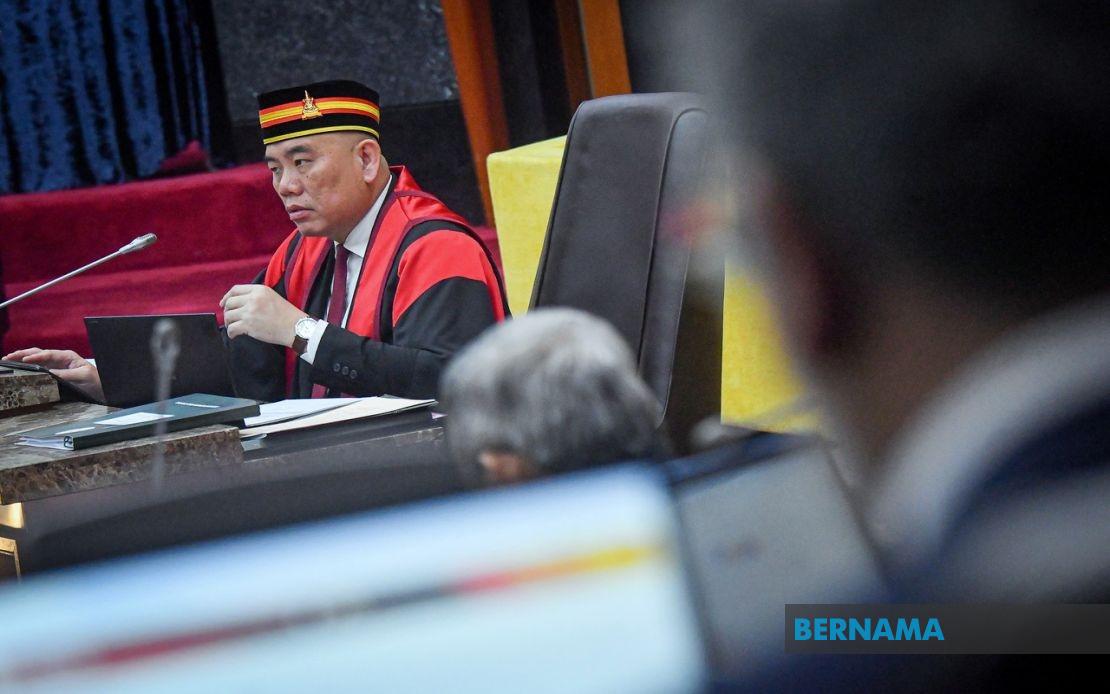
Selangor State Legislative Assembly Speaker Lau Weng San announced on Friday that an ongoing examination of state assemblymen's attendance and tenure status remains in progress, though he declined to specify a completion timeline for the comprehensive assessment that will ultimately determine if any seats face potential vacation.
The Speaker's meticulous review encompasses legislators from all political parties and constituencies, with Lau emphasizing that thoroughness and constitutional compliance guide the investigation. He stressed the need to examine every angle and consider all possibilities before reaching conclusions about individual assemblymen's standing within the legislature. This inclusive approach suggests concerns extend beyond a single party or faction, potentially touching multiple constituencies across the state.
Lau's cautious language reflects the constitutional complexity surrounding seat vacancies in Selangor. Under the state's constitutional framework, an assemblyman may lose his seat if he absents himself from sittings for six consecutive months without obtaining permission or providing official notification to the Speaker. However, assemblymen who have submitted absence letters citing legitimate reasons—particularly health matters—remain under individual evaluation, with each case assessed on its merits before any vacancy declaration is contemplated.
When pressed about the absence of one or two assemblymen from Friday's legislative sitting, Lau resisted speculation that their non-attendance reflected underlying problems related to the ongoing review. He cautioned against hasty assumptions, noting that assemblymen may fail to attend for numerous reasons entirely unrelated to constitutional compliance issues. This distinction matters considerably, as premature public conclusions could prejudice formal proceedings or damage reputations unfairly.
Menteri Besar Datuk Seri Amirudin Shari indicated earlier this week that a determination regarding at least one state seat's status is expected imminently, potentially this week. The state government awaits formal notification from the Speaker before proceeding with subsequent steps. The Selangor legal adviser is simultaneously preparing relevant documentation that will guide referral to appropriate authorities, including potentially the Election Commission, which would determine whether a by-election becomes necessary should any vacancy be declared.
The procedure reflects multi-layered institutional processes that prevent arbitrary seat vacancies. Once the Speaker formally establishes a vacancy through constitutional grounds, the Election Commission must subsequently evaluate whether a by-election serves the public interest. This staged approach provides multiple checkpoints and prevents individual judgment from unilaterally determining electoral outcomes.
For Malaysian political observers, the situation underscores ongoing tensions in Selangor's legislative dynamics. The state remains Malaysia's most politically complex territory, with razor-thin government majorities that make every assemblyman's participation strategically significant. Attendance records and constitutional technicalities gain outsized importance in such environments, where individual absences can theoretically alter voting outcomes on critical legislation.
The review's scope—encompassing all parties and constituencies—suggests institutional scrutiny rather than partisan targeting, though opposition parties may scrutinize the Speaker's decisions for bias once specific determinations emerge. Transparency in the process becomes essential for maintaining confidence in the legislature's constitutional legitimacy, particularly given Selangor's history of intense factional competition.
Speaker Lau's emphasis on examining every party and every corner indicates awareness that credibility requires demonstrable evenhandedness. Any appearance that the review disproportionately affects one political faction could trigger constitutional or procedural challenges that further complicate the assembly's governance. The careful, methodical approach—even if frustratingly slow for those seeking immediate clarity—protects the integrity of whatever determinations ultimately emerge.
The potential by-election scenario carries broader significance for Selangor's political trajectory. A vacancy would test current coalition stability and potentially trigger complex negotiations among government and opposition blocs regarding seat contests. By-elections have historically become proxy battles for broader political movements, and a Selangor by-election would undoubtedly attract intense scrutiny from national political figures.
Assemblymen who submitted absence notifications citing health reasons or other personal circumstances appear to face less immediate jeopardy, provided their documentation and circumstances satisfy constitutional requirements. The Speaker's acknowledgment of these submissions suggests systematic assessment rather than blanket application of attendance rules, though individual determination standards remain opaque at this stage.
The coming days will prove decisive. Once the Speaker completes his review and submits formal notifications regarding any potential vacancies, the constitutional machinery moves into subsequent phases. The state legal adviser's preparatory work suggests the government anticipates favorable conditions for proceeding quickly should vacancies be established, whether through formal vacancy declarations or election commission involvement.
For Selangor residents and broader Malaysian political observers, this review period represents a crucial juncture where institutional procedures determine whether legislative composition changes occur through constitutional mechanisms rather than electoral processes. The Speaker's deliberate pace reflects the gravity of decisions that could reshape the state assembly's political balance, making procedural correctness as important as the ultimate determinations themselves.

