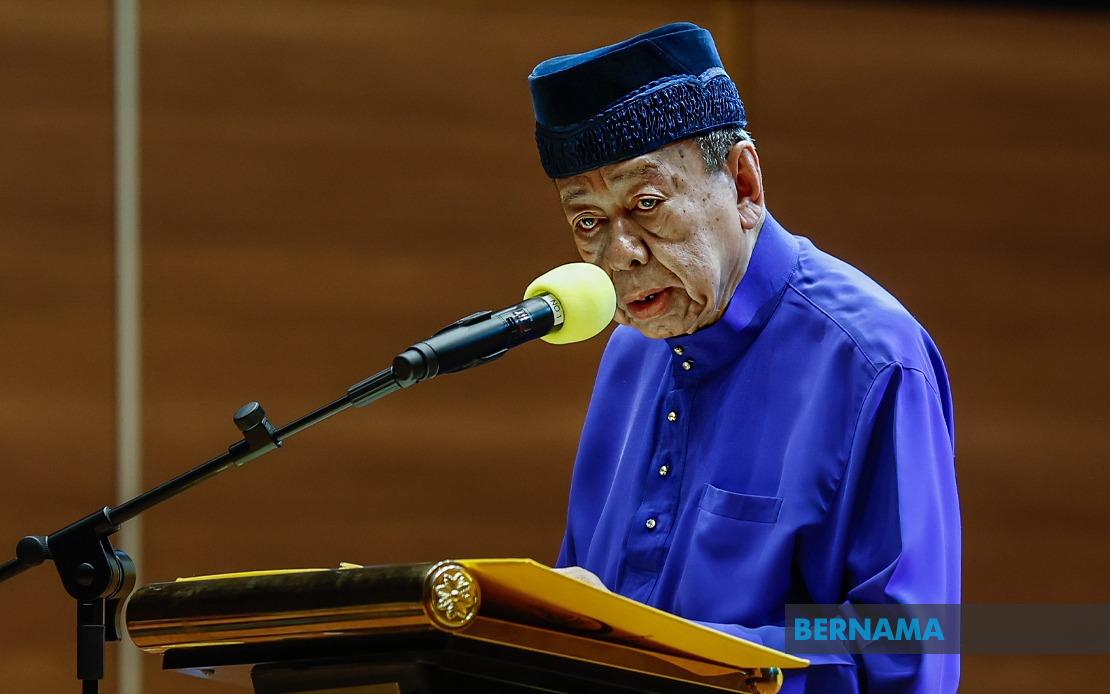
The Sultan of Selangor, Sultan Sharafuddin Idris Shah, has delivered a pointed call for Universiti Teknologi MARA to fundamentally recalibrate its educational approach, insisting that the institution's programmes must evolve in tandem with shifting global economic realities. Speaking at the UiTM Royal Address 2026 at Seri Budiman Concert Hall in Shah Alam, His Royal Highness emphasised that while UiTM's historical mission remains vital, complacency about past accomplishments cannot substitute for the rigorous modernisation required in today's fiercely competitive employment landscape. The focus, he argued, must extend beyond merely producing graduates qualified to fill existing positions—instead, the university must actively cultivate entrepreneurial mindsets and innovative capacity that propel Bumiputera professionals into roles as business creators and economic leaders rather than subordinate participants in sectors controlled by others.
The Sultan identified several critical knowledge domains where UiTM must strengthen its academic architecture, including digital transformation, artificial intelligence systems, foundational and applied sciences, engineering disciplines, healthcare professions, financial and accounting expertise, legal training, and the burgeoning creative economy sectors. These fields, he suggested, will fundamentally determine whether Malaysia can sustain competitive advantage and economic dynamism throughout the coming decades. His observation reflects a broader Southeast Asian trend wherein nations recognising the obsolescence of traditional employment structures are prioritising educational pathways that generate intellectual property, technological innovation, and venture creation. For Malaysia specifically, the challenge extends beyond merely adopting international curricula; it requires cultivating an institutional culture within UiTM that systematically identifies emerging opportunities and translates them into relevant learning experiences before global market demand has fully crystallised.
Central to the Sultan's vision is a strategic repositioning of UiTM's relationship with the private sector and industrial ecosystem. He stressed that the university cannot afford to graduate students possessed of formal qualifications but lacking practical capabilities, linguistic fluency, analytical sophistication, or the psychological confidence demanded by employers operating in increasingly competitive global markets. This critique suggests that despite UiTM's historical success in producing the Malay-Bumiputera professional class—a genuinely significant achievement—considerable gaps persist between what the institution teaches and what employers actually require. The Sultan urged every UiTM student and graduate to achieve functional mastery of at least two foreign languages, a recommendation reflecting recognition that English-only competence, once sufficient, no longer guarantees professional mobility or advancement opportunities in Southeast Asia's polyglot corporate environment. Meaningful industry partnerships, he implied, must move beyond ceremonial engagement to encompass substantive curriculum co-design, internship structures that provide genuine skill development, and employer feedback mechanisms ensuring programmes remain calibrated to evolving workplace requirements.
Simultaneously, the Sultan reaffirmed UiTM's foundational constitutional mandate to advance Malay and Bumiputera educational advancement, grounding this commitment in the Federal Constitution's Article 153 framework and the Universiti Teknologi MARA Act 1976. His framing represents a sophisticated legal and political argument: UiTM's affirmative mandate does not rest on administrative convenience but derives from constitutional architecture addressing historical inequities that persist in Malaysia's socioeconomic landscape. By situating UiTM's empowerment mission within constitutional rather than policy discourse, the Sultan effectively insulated this mandate from casual reconsideration while simultaneously arguing that defending the institution's identity need not entail indifference toward educational access for other Malaysian communities. This position carries significant implications for ongoing debates regarding higher education inclusivity and meritocratic governance, establishing that Malaysia's constitutional framework explicitly permits—indeed contemplates—institutional differentiation serving remedial socioeconomic objectives.
The Sultan's distinction between institutional defence and denial of educational opportunity for other communities carries particular resonance in Malaysia's fraught ethno-political context. By acknowledging that Malaysia maintains diverse higher education institutions serving all citizens, he avoided the problematic position that UiTM's existence somehow diminishes educational rights of non-Bumiputera Malaysians. Rather, his argument emphasises that UiTM addresses a historically contingent gap in Malay-Bumiputera socioeconomic participation. This framing suggests that institutional continuance depends substantively on whether the gap the university was established to address continues persisting. Should Malaysia eventually achieve socioeconomic parity across ethnic communities, the constitutional rationale for UiTM's founding mandate would theoretically dissolve, though political consensus on such parity remains remote. Until that juncture arrives, the Sultan contended, UiTM's original constitutional mission remains incomplete and therefore legitimate, regardless of broader educational landscape changes.
For Malaysian policymakers and higher education strategists, the Sultan's address articulates a complex challenge: simultaneously modernising curriculum to serve global economic imperatives while maintaining institutional focus on remedying historical Bumiputera disadvantage. These objectives, though potentially complementary, can generate tensions in resource allocation, institutional identity, and strategic priority-setting. Universities worldwide struggle with comparable tensions between universal excellence metrics and targeted equity mandates; UiTM's specific constitutional foundation, however, provides more explicit legitimacy for the latter than most institutions internationally possess. The Sultan's emphasis on producing entrepreneurs and business owners, rather than merely salaried professionals, suggests that educational modernisation should encompass not merely technical skill updates but fundamental reorientation toward venture creation, risk assumption, and value generation at the entrepreneurial apex rather than employment hierarchy's middle tiers.
The practical implications for UiTM administration extend across multiple dimensions of institutional operation. Curriculum development must accelerate—a process that traditionally moves deliberately through academic governance structures—to maintain pace with technological disruption and emerging industry requirements. Faculty development becomes increasingly critical; educators must themselves possess current expertise in rapidly evolving fields, necessitating substantial investment in continuing professional development and hiring patterns that attract accomplished practitioners from industry. International partnerships and student mobility programmes gain urgency as mechanisms for exposing UiTM graduates to global professional networks and acquiring cross-cultural competence. Industry collaboration structures must evolve from advisory relationships toward genuine co-creation arrangements wherein employers contribute not merely insights but resources, facilities, and expertise integrated into educational delivery.
Regionally, the Sultan's emphasis on global competitiveness reflects broader Southeast Asian recognition that educational quality increasingly determines whether nations can retain high-value economic activities or progressively relegated to lower-wage production and service sectors. Singapore's educational system, for instance, has demonstrated that targeted excellence in specific fields can generate disproportionate economic returns; Thailand, Indonesia, and the Philippines face comparable pressures to elevate educational outcomes. Malaysia's competitive position depends substantially on whether institutions like UiTM can simultaneously serve equity objectives and produce world-class professionals competitive with graduates from elite universities globally. The tension between these objectives remains genuine, yet the Sultan's address suggests they need not be mutually exclusive if institutional leadership commits to rigorous strategic clarity regarding both mandate and excellence standards.
The Sultan's particular emphasis on strengthening UiTM's position within Malaysia's constitutional framework also carries implicit political messaging. By repeatedly grounding institutional identity in Article 153 of the Federal Constitution, he effectively placed UiTM's mission beyond the scope of ordinary administrative reconsideration, foreclosing policy trajectories that might subordinate institutional mandate to generic higher education efficiency metrics. This positioning becomes particularly significant given recurring academic and political discussions regarding higher education rationalisation and institutional merger, wherein UiTM's distinct identity and purpose might otherwise face pressure toward assimilation into larger systems focused on universal accessibility rather than targeted socioeconomic advancement. The Sultan's intervention, therefore, represents not merely ceremonial royal patronage but active institutional defence within Malaysia's constitutional order.
Moving forward, realising the Sultan's vision requires UiTM leadership to navigate genuinely complex strategic terrain. Curriculum modernisation demands investment and philosophical commitment to continuous evolution; yet excessive churn risks diluting distinctive institutional character developed through decades of focused operation. International engagement and globalisation can enhance educational quality and graduate competitiveness; yet unexamined adoption of foreign models risks undermining the indigenous expertise and community-grounded understanding that constitute UiTM's distinctive institutional assets. Strengthening industry partnerships enhances practical relevance; yet dependence on corporate preferences might compromise independent intellectual inquiry and critical thinking essential to higher education's broader social function. The Sultan's address provides directional clarity regarding institutional priorities without resolving the inherent tensions such development entails, placing implementation burden squarely upon UiTM administration and faculty to translate aspirations into sustainable practice.

