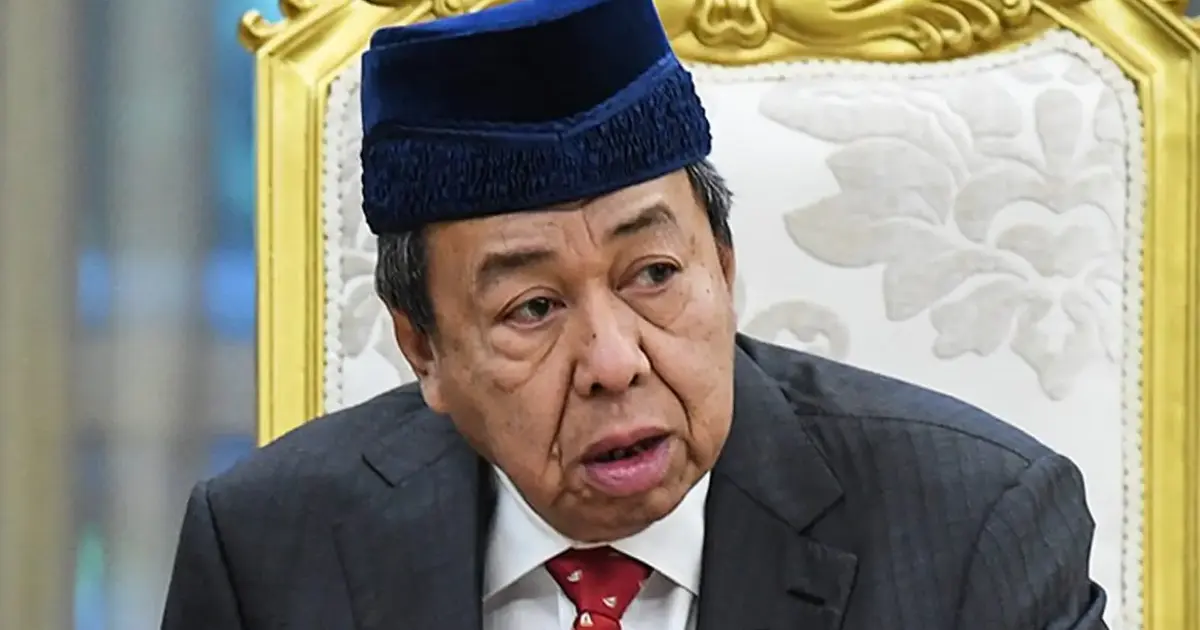
Sultan Sharafuddin of Selangor has publicly acknowledged the contributions of both former Prime Minister Najib Razak and current Prime Minister Anwar Ibrahim toward the Light Rail Transit Line 3 project, marking a rare moment of political consensus across party lines. However, the state ruler tempered his praise by directing sharp criticism toward two prominent Democratic Action Party figures, pointing to specific gaps in their stewardship of the infrastructure initiative.
The LRT3 project represents one of Selangor's most significant urban development undertakings, designed to enhance public transportation connectivity across the state's heavily congested central and northern corridors. Originally conceived during the Najib administration, the scheme underwent multiple revisions and faced considerable delays before progressing under the current federal government. The project's completion is expected to substantially improve mobility for millions of commuters in Malaysia's most populous state.
Sultan Sharafuddin's intervention into the public discussion surrounding LRT3 underscores the continued relevance of Selangor's traditional leadership in matters affecting the state's strategic direction. As the constitutional head of state, the Sultan's voice carries considerable weight in local political discourse, and his willingness to credit multiple administrations suggests a measured assessment of the project's development across different political tenures.
The ruler's acknowledgment of Najib's foundational role reflects recognition that the LRT3 initiative originated during the Barisan Nasional government's tenure, when initial planning, feasibility studies, and preliminary construction contracts were established. Despite the subsequent political upheaval that led to Najib's electoral defeat in 2018, the Sultan appears to distinguish between the project's conceptualization and its execution across different political eras.
Anwar's contribution, meanwhile, relates primarily to the administration's efforts to revive and accelerate the project following its prolonged stagnation. The current government has been tasked with navigating complex financial arrangements, renegotiating contractor commitments, and securing adequate budget allocations to ensure the scheme's timely completion. Sultan Sharafuddin's recognition of these efforts indicates satisfaction with the administration's concrete progress toward project realization.
The Sultan's criticism of Lim Guan Eng and Tony Pua, both senior DAP parliamentarians, raises important questions about the party's specific role or perceived shortcomings in supporting the LRT3 initiative. Lim, as former Finance Minister and current Member of Parliament, and Pua, as an MP and prominent urban development advocate, have been central figures in federal economic and infrastructure discussions. The Sultan's rebuke suggests dissatisfaction with either their advocacy for the project, their budgetary allocations, or their engagement with state-level authorities regarding implementation.
This criticism carries particular significance given DAP's pivotal position within the Pakatan Harapan coalition. As Malaysia's largest Chinese-based political party and a crucial component of the ruling federal alliance, DAP's approach to major infrastructure projects across Selangor—the country's economic powerhouse—directly influences public perception of the government's commitment to development. The Sultan's pointed remarks may reflect broader state-level frustrations with federal decision-making processes that impact Selangor's development agenda.
For Malaysian commuters and urban planners, the LRT3 project remains critical infrastructure designed to decongest the Klang Valley region and support the state's continued economic expansion. Delays or inadequate funding have substantial ripple effects on workforce mobility, business competitiveness, and environmental outcomes through reduced congestion-related emissions. The Sultan's public intervention suggests ongoing concerns about momentum and political commitment.
The Sultan's measured approach—crediting progress where made while criticizing specific actors—reflects a pragmatic assessment that infrastructure success depends upon sustained cross-party effort and resources. In Malaysia's context, where state rulers occasionally intervene in public policy debates, such royal pronouncements carry moral authority that transcends partisan politics. This statement implicitly signals that the state's traditional leadership expects continued prioritization and effective execution of major developmental projects regardless of federal political composition.
Governance analysts suggest that Sultan Sharafuddin's comments highlight the importance of maintaining political consensus around critical infrastructure, particularly in economically vital states like Selangor. As the state continues to serve as Malaysia's industrial and commercial backbone, transportation infrastructure directly affects the nation's competitiveness and residents' quality of life. The ruler's intervention underscores that infrastructure pledges require accountability and follow-through across electoral cycles.
Moving forward, the Sultan's statements create political pressure for both continued federal government commitment and, implicitly, for DAP to demonstrate enhanced engagement with Selangor-level development priorities. Whether Lim and Pua respond substantively to these criticisms remains to be seen, but the public nature of the rebuke signals that infrastructure deficits cannot be overlooked in Malaysian political discourse.
For regional observers, Selangor's LRT3 project exemplifies how Southeast Asian rapidly urbanizing states navigate infrastructure development amid multiple political stakeholders. The Sultan's balanced assessment—neither reflexively defending nor condemning past administrations—suggests a framework where developmental pragmatism can coexist with political competition. As Malaysia continues urbanization and regional rivals invest heavily in transit infrastructure, timely completion of LRT3 will prove essential for sustaining Selangor's economic dynamism and quality of life improvements for its diverse population.

