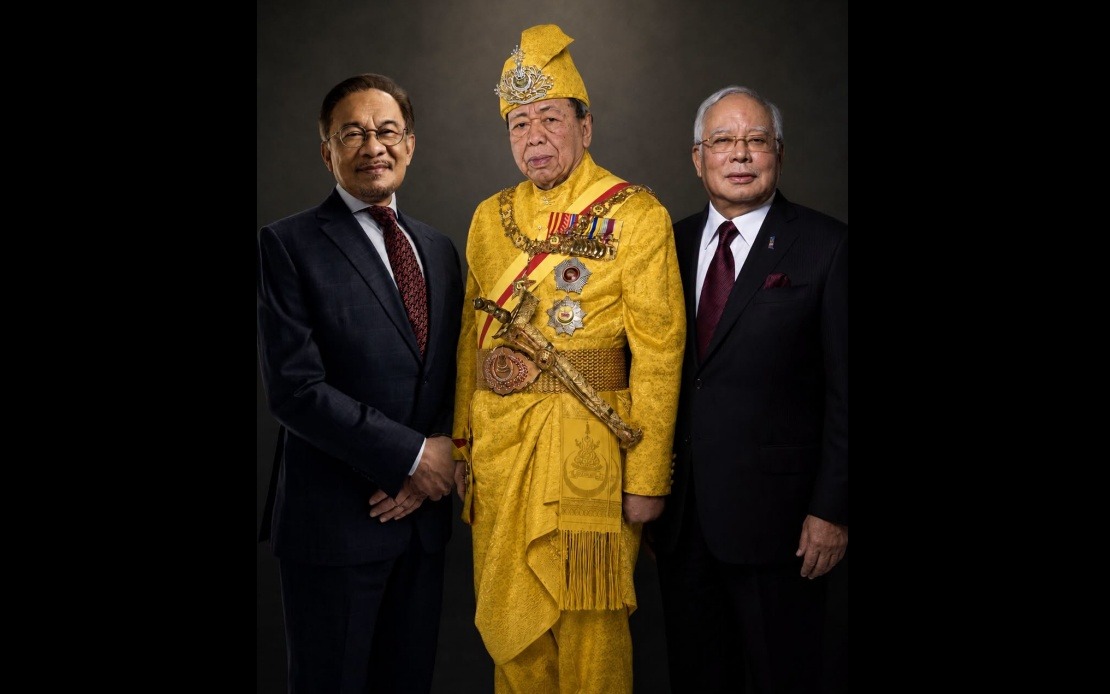
The Sultan of Selangor, Sultan Sharafuddin Idris Shah, has publicly acknowledged Prime Minister Datuk Seri Anwar Ibrahim's role in completing the Shah Alam Line LRT3 project, which commenced operations on Monday. In a statement issued from Shah Alam, the monarch emphasised his gratitude for the project's successful delivery despite the numerous obstacles encountered over its extended development period.
The Sultan's commendation highlights not merely the completion of infrastructure but the specific interventions undertaken since Anwar assumed the dual role of Prime Minister and Finance Minister in 2022. Most notably, Anwar's administration reinstated five stations that had been eliminated under previous planning phases, directly responding to concerns about service coverage across the corridor. Additionally, the government proposed developing affordable housing in proximity to LRT3 stations—an integration strategy designed to maximise accessibility and utility for commuters across income levels.
Origins of the LRT3 concept trace back to public complaints brought directly to the Palace, particularly from residents who highlighted the transportation challenges faced by working families. Women from the Klang Valley region reported that severe traffic gridlock routinely prevented husbands from reaching home at reasonable hours, transforming daily commutes into multi-hour ordeals. This grassroots feedback prompted the Sultan to advocate for a rail connection linking Klang, Shah Alam, and Kuala Lumpur—a proposal that eventually gained traction within government circles.
The infrastructure constraints facing the region were substantial. Klang depended on only two bridges spanning the Klang River, creating a severe bottleneck during peak hours. When the previous administration under Datuk Seri Najib Tun Razak heeded the Sultan's proposal, they implemented immediate relief measures by abolishing the Batu Tiga and Sungai Rasau toll plazas in 2018, attempting to ease congestion while longer-term solutions developed.
The project's timeline reveals a complicated history of disruption and adaptation. Following the 2018 change in government, the LRT3 programme faced a 18-month suspension as new administrations reassessed priorities and scope. This initial delay was compounded by the COVID-19 pandemic, which imposed a further 19-month suspension extending into 2021. These interruptions necessitated significant design modifications: station sizes were reduced, train coach allocations were cut, and the five additional stations were ultimately cancelled to bring the project within fiscal and operational constraints.
Crucially, the Sultan emphasised that the LRT3 should not be characterised as a prestige megaproject designed to showcase political achievement. Rather, he framed it as a pragmatic response to genuine public need—a distinction that reflects tension in Malaysian infrastructure development between symbolic grand projects and utilitarian solutions addressing real mobility challenges. This framing carries particular significance given Malaysia's history of large-scale infrastructure programmes that sometimes prioritised visibility over practical benefit delivery.
The Sultan's statement also contains a deliberate caveat: he explicitly cautioned against any single individual or political party claiming exclusive credit for the project's success. Instead, he positioned the LRT3 as the product of sustained commitment across multiple administrations, emphasising institutional continuity in planning and cross-partisan cooperation. This perspective suggests that despite the frequent changes in Malaysian government, the rail project maintained sufficient political momentum and public support to survive transitions in power.
For commuters across the Klang Valley, the Shah Alam Line promises significant practical benefits. The 57.3-kilometre corridor will provide a faster, more comfortable, and safer alternative to road transport for approximately 1.4 million residents spread across Klang, Shah Alam, Petaling Jaya, and surrounding communities. During peak hours, when road congestion routinely adds 60 to 90 minutes to commutes, reliable rail transit offers transformative potential for quality of life and household economics.
The Sultan expressed confidence that Prasarana Malaysia Bhd, the operator, would maintain rigorous maintenance standards to ensure sustained service reliability. This concern reflects awareness that Malaysian transportation projects sometimes experience performance degradation if maintenance protocols are inadequate—a concern that extends across the region where newer transit systems occasionally struggle with upkeep challenges that undermine initial investment value.
Beyond immediate congestion relief, the Sultan identified broader economic implications. He suggested the LRT3 would catalyse commercial development and strengthen regional integration between Kuala Lumpur's central business district and emerging growth centres in Petaling Jaya, Shah Alam, and Klang. This expectation aligns with international experience showing that rail infrastructure typically generates commercial clustering around stations, creating secondary nodes of economic activity that distribute prosperity beyond traditional downtown concentrations.
The completion of the LRT3 represents a significant milestone in Malaysia's continued expansion of urban rail transit. With the Klang Valley facing sustained population growth and constrained highway expansion potential, rail-based solutions have become essential infrastructure rather than optional amenities. The project's ability to survive political transitions and budget pressures offers a useful case study for other Southeast Asian nations grappling with similar congestion challenges and the competing demands for infrastructure investment.

