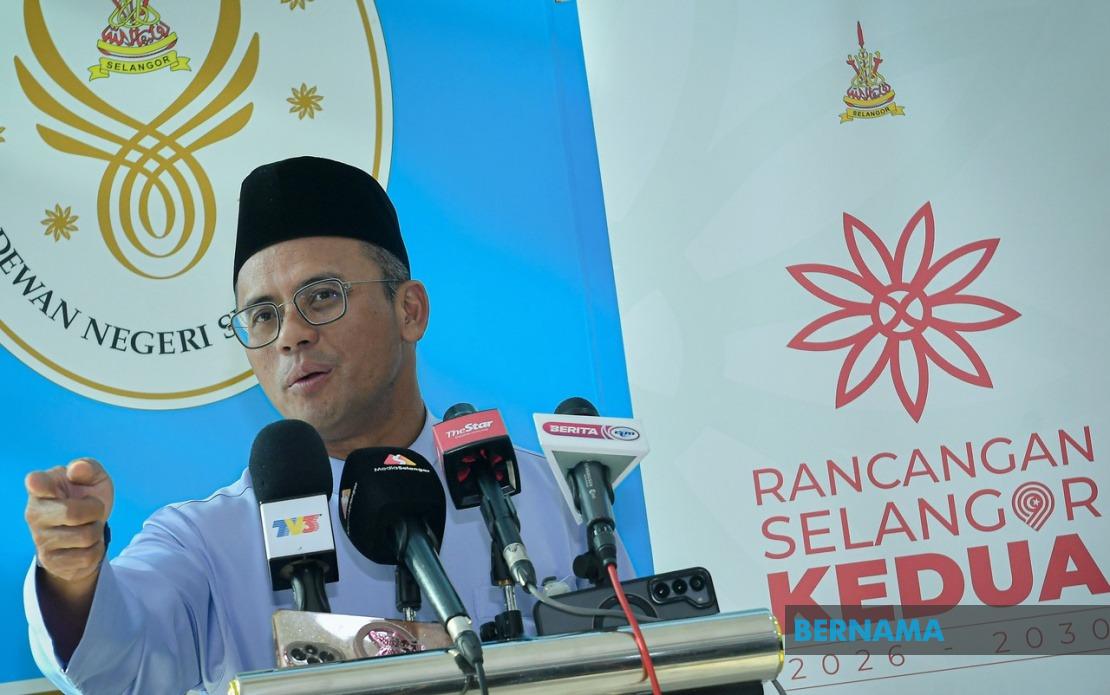
Selangor's housing ambitions have taken concrete shape through an expansive affordability programme announced in the state assembly, with Menteri Besar Datuk Seri Amirudin Shari tabling details of the RS-2 initiative aimed at providing homeownership opportunities to thousands more residents across the state's rapidly growing urban and semi-urban centres.
The scheme targets construction of 200,000 affordable housing units as part of a comprehensive strategy to address the longstanding shortage of low-cost homes that has squeezed middle and lower-income Malaysian families out of property markets. To date, the development trajectory shows substantial momentum, with 64,188 units already handed over to residents and another 69,014 properties currently under construction, collectively representing 133,202 units of the overall target. This progress demonstrates execution capability, though completion of the remaining 67,000 units will require sustained investment and project management over the coming years.
Beyond simple construction numbers, the Selangor government is introducing innovative financing mechanisms designed to overcome the persistent barrier preventing renters from transitioning to homeownership. Under the rental component of the programme, the Selangor Housing and Property Board will implement a savings accumulation system where 30 per cent of monthly rental payments are automatically set aside and retained in the tenants' names. When these renters eventually become ready to purchase their own property, these accumulated funds will be converted into a housing deposit, effectively providing a pathway from rental occupancy to ownership without requiring additional upfront capital beyond the regular rent already being paid.
This approach addresses a critical gap in Malaysia's housing ecosystem where many lower-income families remain trapped in perpetual renting because they lack the cash reserves necessary for down payments, regardless of their capacity to service a mortgage. By converting rental expenditure into forced savings, the state removes one of the primary psychological and practical obstacles to first-time purchase decisions. The mechanism also benefits the Selangor Housing and Property Board through enhanced tenant retention and reduced administrative costs associated with collection and enforcement.
The state government is simultaneously developing a new measurement framework to evaluate housing programme effectiveness with greater precision and frequency. Under this system, a dedicated statistical unit will track and assess household assistance and support programmes with evaluations conducted at six-month and two-year intervals. This structured monitoring approach allows administrators to identify which components of the housing initiative are delivering tangible improvements in living standards and which may require adjustment. Regular progress assessments also enable evidence-based reallocation of resources toward the most impactful interventions.
Connecting housing developments to broader urban mobility infrastructure has emerged as a key component of the policy design. The government recognises that residential developments isolated from reliable public transport networks effectively extend commute times and transportation costs for residents, eroding the affordability gains achieved through lower property prices. Consequently, all Rumah Selangorku Harapan and Rumah Selangorku Idaman developments will now incorporate dedicated bus stops, and the state intends to increase the frequency of LRT and MRT services to improve accessibility to major transit nodes.
Walkability has become a secondary mobility focus, with the state pursuing systematic installation of covered walkways at every public transport station. For a tropical state like Selangor where monsoon rains can be severe, this attention to pedestrian infrastructure removes a practical impediment to using public transport, particularly for vulnerable groups including schoolchildren, elderly residents, and those with mobility limitations. The covered walkway programme represents pragmatic urban design that acknowledges local climate realities rather than importing generic solutions designed for temperate climates.
Data-driven planning lies at the heart of the transport integration strategy. The government will employ technology systems to map traffic patterns, identify high-density public gathering points, and conduct household-level needs assessments across all Selangor residential areas. This analytical approach enables targeted placement of small bus stops in neighbourhood locations rather than relying on centralised transit hubs, making public transport genuinely convenient for residents completing short trips to local markets, schools, and services.
For Malaysian property markets and housing policy discussions, the RS-2 initiative offers a regional model incorporating multiple innovative elements. The automatic savings component addresses a fundamental barrier to homeownership that extends beyond Selangor to include middle-income families across Peninsular Malaysia facing similar affordability constraints. The emphasis on transit-oriented development reflects evolving understanding that housing affordability cannot be addressed in isolation from transportation and urban planning considerations. Selangor's experience implementing these mechanisms over the coming years will likely inform housing policy discussions in other states and at federal level.
The broader context involves Malaysia's persistent affordable housing deficit, with estimates suggesting hundreds of thousands of households require subsidised or controlled-price accommodation that remains in short supply despite decades of government programmes. Selangor, as the most economically dynamic state outside the Federal Territories and facing rapid urbanisation, serves as a testing ground for scaling solutions beyond pilot projects. Successful implementation of the 200,000-unit target and demonstration that the rental savings mechanism effectively converts renters to homeowners could provide a replicable template for other state governments grappling with similar housing shortages.

