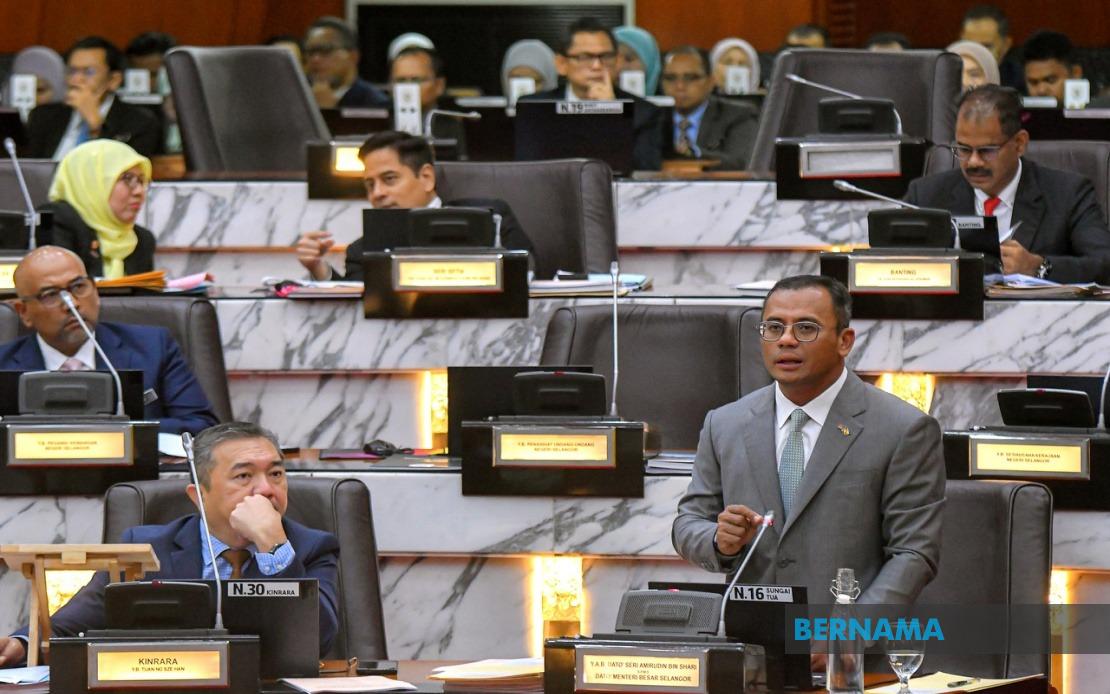
The Selangor government is preparing to significantly expand access to its flagship student financial assistance programme, with Menteri Besar Datuk Seri Amirudin Shari announcing plans to nearly double the number of HPIPT recipients from the current 3,000 to between 5,000 and 6,000 in the 2027 Budget. The decision reflects mounting pressure on the state's education support system as applications consistently exceed available places, indicating strong appetite among young Selangor residents for higher learning assistance.
The Higher Education Institution Study Incentive, or HPIPT, represents a cornerstone of Selangor's human capital development strategy, offering RM1,000 in direct financial aid to qualifying state residents enrolled at recognised higher education institutions. The scheme extends beyond conventional university pathways, also supporting students pursuing Level 4 Skills Certificates, diplomas and bachelor's degrees across both public and private tertiary institutions. This breadth has made the programme particularly valuable for students exploring vocational and technical routes alongside traditional academic trajectories.
Demand for the scheme has substantially outpaced current capacity, with the state government receiving more than 5,000 applications in both 2025 and the current year. These figures starkly illustrate the gap between available assistance and genuine need across Selangor's student population. Amirudin acknowledged this disparity during the recent Selangor State Legislative Assembly sitting, responding to a question from Datuk Noorazley Yahya of PN-Bukit Melawati regarding expansion prospects. The Menteri Besar indicated that the state previously extended support to 5,000 recipients, suggesting the proposed increase represents a return to previous capacity rather than entirely new territory.
The fiscal feasibility of this expansion hinges on Selangor's revenue position, a point Amirudin specifically highlighted. The state government is currently assessing whether its financial envelope can accommodate the RM1,000 per recipient commitment across the expanded cohort. This cautious approach reflects the reality that education spending must be balanced against other developmental priorities, from infrastructure to healthcare. However, the framing suggests confidence in Selangor's economic fundamentals, with the Menteri Besar expressing optimism about restoring the higher recipient number through next year's budget allocation.
Beyond simply increasing recipient numbers, the Selangor administration is examining the temporal mechanics of the HPIPT application process. Officials are reviewing current application windows to ensure students receive adequate time between receiving tertiary institution admission confirmation and the deadline for submitting HPIPT applications. This administrative refinement addresses a practical bottleneck that may prevent eligible students from accessing support due to compressed timelines rather than merit-based deficiencies. The concern reflects growing recognition that bureaucratic efficiency directly impacts equitable access to state assistance.
Most ambitiously, the state is considering bifurcating the application calendar, opening HPIPT submissions twice annually rather than maintaining a single intake window. This modification would accommodate students entering higher education at different points in the academic year, whether through conventional September intakes or mid-year enrolment windows. For international students or those pursuing unconventional pathways, staggered application deadlines would remove timing-based barriers to accessing support. The proposal demonstrates sophisticated thinking about diverse student trajectories and institutional calendars across Malaysia's fragmented higher education landscape.
For Malaysian policymakers and analysts, Selangor's experience offers instructive lessons about education financing in federal systems. The state's willingness to prioritise student financial aid, even as it navigates constrained budgets, contrasts with other jurisdictions' approaches and signals political capital invested in youth development. The HPIPT's specific quantum—RM1,000 per recipient—represents meaningful but modest assistance, typically covering partial accommodation or materials costs rather than comprehensive tuition. This targeting reflects pragmatic allocation of finite resources toward bridging rather than eliminating financial barriers to tertiary education.
The expansion also carries implications for equity within Selangor itself. As a relatively prosperous state with stronger revenue bases than many Malaysian jurisdictions, Selangor possesses greater capacity for targeted social spending. However, the persistent application shortfall suggests that even substantial state-level efforts cannot wholly address financing gaps in higher education access. This reality underscores the case for complementary federal support mechanisms, whether through expanded loan programmes, scholarship schemes or direct institutional subsidies, particularly benefiting students from lower-income backgrounds concentrated in specific constituencies.
The HPIPT expansion should be contextualised within Selangor's broader educational investment strategy. As Malaysia grapples with post-pandemic learning recovery and evolving workforce demands, state governments increasingly recognise that supporting tertiary participation directly influences economic productivity and social mobility. By removing financial obstacles to higher education completion, Selangor aims to enhance its human capital stock and improve graduate employability. This connects education financing to long-term economic competitiveness, framing the HPIPT not merely as social welfare but as productive investment.
Regionally, Selangor's approach mirrors initiatives across Southeast Asia as governments recognise education as crucial to navigating demographic and technological transitions. Neighbouring states and countries implementing similar assistance programmes face comparable design challenges around targeting, quantum and administration. The decision to implement twice-yearly application cycles represents an innovation that other jurisdictions might adopt, particularly as higher education systems become increasingly diverse and non-linear.

