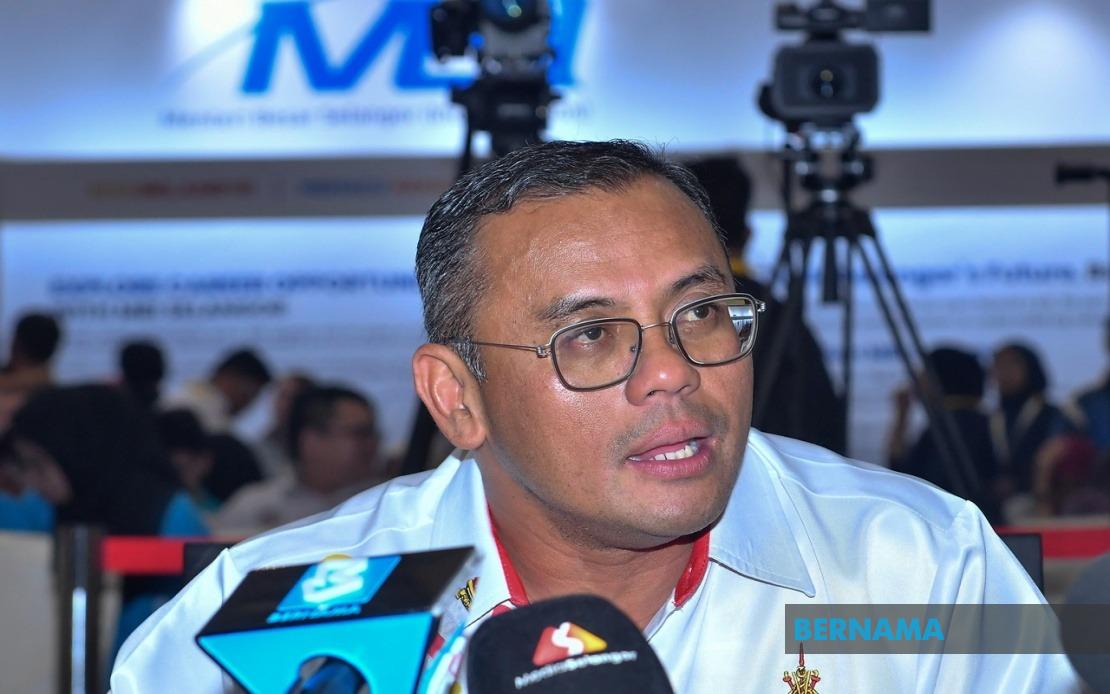
The Selangor state government has committed to stepping in for approximately 400 workers who will be displaced when Panasonic AVC Networks Kuala Lumpur Malaysia ceases its television production operations by the end of March 2025. Menteri Besar Datuk Seri Amirudin Shari announced that the state will conduct meetings with the affected workforce to understand their circumstances and develop support measures, signalling the administration's intent to manage what could otherwise become a significant employment crisis in the state's manufacturing sector.
The intervention effort will be spearheaded by V. Papparaidu, chairman of the State Human Resources, Poverty Alleviation, Indigenous & Minority Affairs Committee, working alongside officials from the Social Security Organisation (PERKESO). This coordinated approach reflects growing recognition among Malaysian policymakers that factory closures require swift, multi-agency responses to mitigate social and economic disruption. The meeting scheduled for next week represents an early intervention strategy designed to gather information directly from workers about their circumstances and employment needs.
Immediate humanitarian support is already being planned, with Amirudin indicating that food baskets and other emergency assistance will be distributed to affected families. Beyond these stopgap measures, however, the state government is positioning job placement as the cornerstone of its response strategy. Officials aim to connect displaced workers with alternative employment within Selangor, allowing them to maintain their livelihoods and continue contributing to the state's economy without the disruption of relocation.
A significant component of the support framework involves PERKESO's newly introduced income protection scheme, which extends financial assistance to workers facing retrenchment and unemployment. Under this initiative, affected employees will receive staged payments beginning at 80 per cent of their previous salary during the first month of joblessness, tapering to 50 per cent in the second month and 30 per cent thereafter. This structured approach provides a financial cushion during the transition period, reducing the immediate financial pressure on families and potentially extending their job-search timelines to secure suitable positions.
Papparaidu emphasised that PERKESO's intervention represents an insurance mechanism specifically designed for circumstances like those confronting the Panasonic workers. The initiative, which he characterised as a job-seeking allowance, addresses a genuine gap in Malaysia's social protection system by acknowledging that retrenchment creates vulnerability periods during which workers require financial support to sustain themselves while seeking new employment. For Selangor residents particularly, the official framed this support as essential infrastructure for managing workforce transitions in an economy subject to periodic industrial restructuring.
The timing of these announcements coincides with Selangor Mega Jobcare 2026, a large-scale employment initiative launched by the state government. The career fair brings together 147 employers offering more than 11,000 job vacancies, creating a potential platform for displaced Panasonic workers to identify alternative opportunities. Notably, 62.2 per cent of the advertised positions offer monthly salaries exceeding RM3,000, suggesting that many available roles fall within the income brackets that could match or approach the compensation levels workers earned at Panasonic.
The Selangor Mega Jobcare 2026 programme deliberately targets participants aged between 18 and 60, a demographic band that encompasses the likely age range of many manufacturing workers affected by the Panasonic closure. Being held at the Shah Alam Convention Centre through consecutive days from 9 am to 5 pm, the career fair provides accessible opportunity for workers to explore job options. This proximity between a major employment crisis and a significant job placement initiative suggests that state planners may be positioning the career fair as a direct response mechanism to the Panasonic situation.
For the broader Malaysian manufacturing sector, the Panasonic closure illustrates ongoing pressures facing electronics and television production facilities in Southeast Asia. Competition from countries with lower labour costs and the region's evolving manufacturing landscape have created uncertainty for traditional assembly operations. The state government's proactive approach contrasts with previous instances in which worker displacement went largely unmanaged, potentially setting a precedent for how authorities address industrial transitions.
The Panasonic situation also underscores the importance of state-level coordination in employment policy, particularly given that manufacturing facilities often operate across multiple jurisdictions and employment contexts. By involving PERKESO, state human resources bodies, and private sector employers simultaneously, Selangor authorities are attempting to create a comprehensive support ecosystem rather than leaving individual workers to navigate displacement alone. This systemic approach may prove more sustainable than ad-hoc assistance.
For workers already employed at the facility, the announcement provides at least some clarity and institutional support during an uncertain period. Many manufacturing workers in Malaysia have experienced sudden closures without warning, making the state government's announcement of advance planning and structured assistance a relatively positive development. However, the success of this intervention will ultimately depend on whether alternative employment at comparable wage levels materialises within Selangor's labour market and whether the PERKESO scheme operates smoothly in practice.
The challenge for Selangor authorities lies in ensuring that 400 displaced workers can transition smoothly into equivalent or superior employment without extended periods of joblessness. The breadth of opportunities available through Mega Jobcare 2026 suggests possibility exists, but matching specific workers with specific positions requires individualised attention and potentially retraining for some roles. The coming weeks will reveal whether the state's intervention architecture can effectively bridge this gap.

