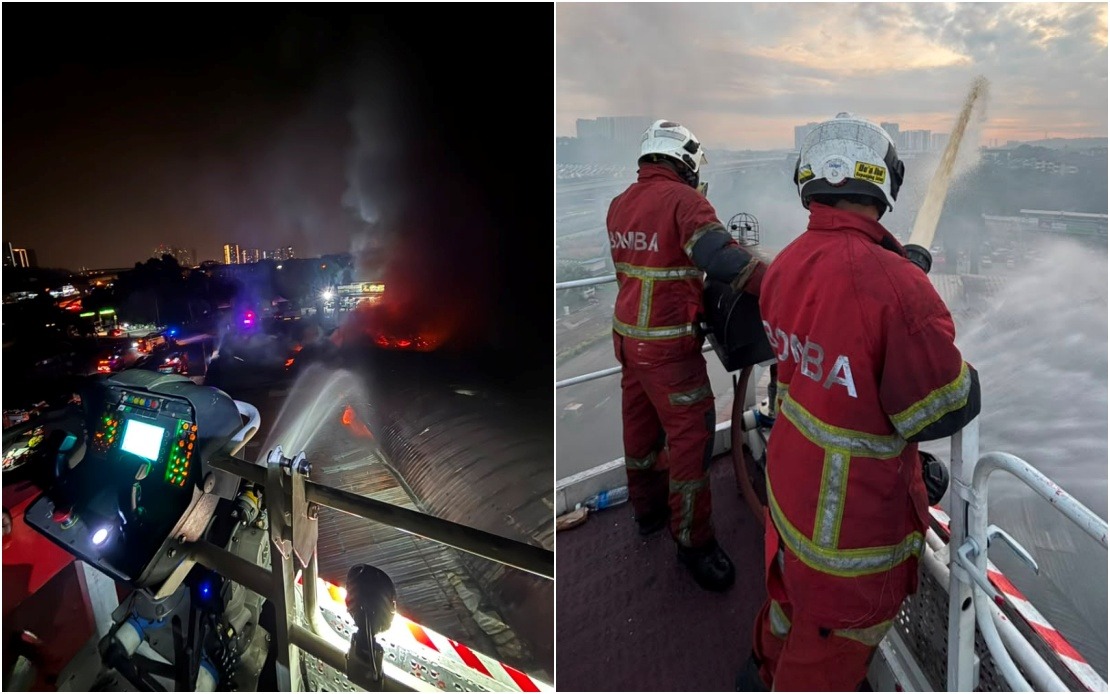
The Selangor Wholesale Market in Serdang returned to normal trading operations on July 24 despite a major fire that razed three commercial units overnight, signalling the resilience of the facility that serves as a critical distribution hub for the state's agricultural and consumer goods sectors. The blaze, which erupted around 11 pm on July 23, consumed a kitchenware retail outlet, an egg wholesale business, and a hardware shop before firefighters brought it under control early the following morning. Market management and state officials moved quickly to reassure vendors and customers that the incident would not disrupt the broader commercial activities that sustain the livelihoods of hundreds of traders operating from the sprawling complex.
Datuk Izham Hashim, chairman of the Selangor Agriculture Committee, inspected the market site the day after the fire and confirmed that the vast majority of tenants were conducting business normally. He underscored that the Selangor Agricultural Development Corporation (PKPS), which operates the facility, had taken stock of the situation and found that the damage was contained to the three destroyed units. This assessment provided relief to the broader merchant community, many of whom rely on the market's continuous operation to supply grocers, restaurants, and retailers across Selangor and neighbouring regions. The chairman's statement during his site visit emphasised that infrastructure damage was minimal and that access roads and shared facilities remained unaffected.
Response to the emergency demonstrated the coordination between multiple agencies tasked with fire suppression and disaster management in the state. Sixty-eight personnel from the Selangor Fire and Rescue Department (JBPM) deployed to the market, supported by volunteer firefighting teams, police units, and officials from the Subang Jaya City Council (MBSJ). The combined effort succeeded in containing the fire to the three identified shoplots, preventing it from spreading to adjacent premises where inventory and equipment worth millions of ringgit stood vulnerable. The operation lasted approximately seven hours, from the initial alarm at 11 pm until the fire was declared extinguished at 6.20 am, a crucial timeframe given the density of combustible materials typically stored in a wholesale market environment.
The investigation into the fire's origin is now underway, with forensic teams examining the remnants of the destroyed units. Ashrul Riezal Asbar, assistant director of the JBPM Operations Division, indicated that a preliminary report identifying the cause of the blaze would be completed within 14 days. Such information will be essential for reviewing safety protocols and identifying any systemic vulnerabilities that may have contributed to the rapid spread of the fire. Notably, no casualties were recorded despite the intensity of the blaze and the overnight timing, when fewer people would have been present on the premises.
Lee Chee Leong, owner of the kitchenware shop that was destroyed, arrived at the market approximately 20 minutes after receiving an emergency call from his staff around 11 pm. By the time he reached the scene, the fire had already achieved such intensity that no one could approach the burning structure to mount even an initial firefighting effort. For Lee, who had operated the business from the same location for 18 years, the loss represents not merely financial damage but the destruction of an established enterprise. He estimated his personal losses at several million ringgit, a figure that encompasses inventory, fixtures, and equipment accumulated over nearly two decades of trading. The rapid escalation of the fire left his workers powerless to intervene, a situation that underscores the dangers inherent in wholesale markets where goods are densely packed and fire suppression infrastructure may be limited.
The incident has prompted the state government to accelerate its long-planned modernisation of the facility. Officials announced that a comprehensive redevelopment project would commence early in 2025, replacing the existing wholesale market with a purpose-built modern supermarket designed to meet contemporary commercial and safety standards. This strategic pivot reflects recognition that while the current market has served Selangor's wholesale needs for decades, ageing infrastructure and safety configurations demand replacement rather than incremental repair. The new facility will consolidate disparate wholesale operations under one roof, creating integrated business environments rather than the traditional open-plan shoplots that currently characterise the market.
The planned modernisation carries significant implications for Selangor's agricultural supply chain and food distribution networks. A newly constructed market will incorporate centralised facilities such as refrigerated storage, standardised loading bays, and professional-grade logistics infrastructure that current wholesale operations lack. These upgrades will enhance the efficiency of the supply chain serving Selangor's 6.5 million residents and regional distribution networks. The new design will also address compliance with contemporary building regulations and fire safety codes, implementing features such as fire-rated compartments, automated suppression systems, and multiple emergency egress routes that were unavailable in the damaged premises.
The timing of the fire, occurring just as finalisation of redevelopment plans was underway, may accelerate the state government's approval processes and budget allocation for the new facility. Rather than treating this incident as a setback, policymakers may view it as validation of the urgent need for wholesale market infrastructure renewal. The convergence of this damaging event with the completion of detailed plans for replacement suggests that construction timelines announced for early 2025 may be feasible if procurement and land arrangements are already substantially advanced. For traders like Lee who have lost premises, the commitment to a modern replacement represents a path toward rebuilding businesses in upgraded facilities, though the interim period will present challenges.
The broader lesson from the Selangor Wholesale Market fire resonates across Malaysia's commercial real estate and logistics sectors. Wholesale markets and distribution hubs remain critical infrastructure for the nation's food security and economic functioning, yet many operate in facilities that predate contemporary safety standards. This incident provides a case study in both the consequences of delayed modernisation and the potential for strategic reimagining of ageing commercial spaces. As Selangor moves forward with its redevelopment plans, other states managing comparable facilities may evaluate whether their own wholesale markets require similar upgrades to mitigate fire risk, improve operational efficiency, and support growing population demands for reliable food distribution.

