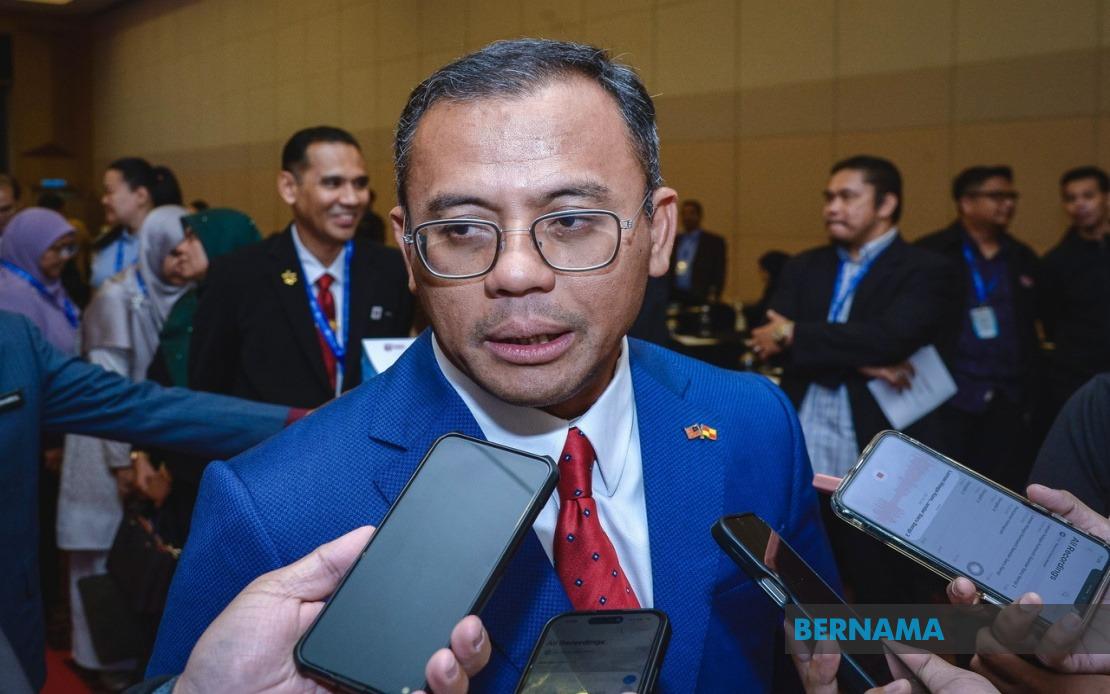
Selangor Menteri Besar Datuk Seri Amirudin Shari has called for a fundamental rethinking of how governments design and implement policies, arguing that the traditional approach of treating distinct areas as separate domains fails to address the lived reality of citizens. Speaking at the Human Ecology International Conference II 2026 in Bangi, Amirudin contended that effective governance must recognise the deeply interconnected nature of the challenges facing individuals, families and communities across Malaysian society.
The concept Amirudin articulated represents a departure from conventional policy-making frameworks that have dominated development discourse across Southeast Asia for decades. Rather than crafting independent solutions for healthcare, childcare, transport, employment and affordability in isolation, he suggested that governments should view these elements as inseparable components of an integrated human ecosystem. This perspective carries significant implications for how Malaysia structures its bureaucracy and allocates resources, particularly as economic pressures intensify on middle and lower-income households.
Amirudin's observation about the actual experience of families reflects observable patterns in Malaysian society. When a working parent struggles with the decision between accepting a job offer in another district or maintaining proximity to childcare facilities, they are simultaneously wrestling with transport costs, childcare availability, employment prospects and housing affordability. These are not five separate problems awaiting five separate policy interventions; they represent a single, multidimensional challenge that most traditional government structures address through different agencies operating independently of one another.
The Selangor leader identified several structural pressures bearing down on contemporary families that policymakers must acknowledge: escalating living expenses, lengthy commutes that consume time and resources, responsibilities for caring for dependents, evolving employment arrangements that lack the stability of previous generations, insufficient housing options relative to demand, and the rapid acceleration of technological disruption across employment sectors. Selangor, as Malaysia's most economically dynamic and demographically diverse state, experiences these pressures acutely, making it a natural laboratory for testing integrated policy responses.
Crucially, Amirudin reframed the question policymakers should ask themselves. Rather than limiting assessment to whether families are managing to survive financially, governments should evaluate whether the ecosystem surrounding those families actively enables them to flourish and develop their potential. This philosophical shift has profound consequences. It suggests that a policy succeeds not merely because it delivers cash transfers or subsidises services, but because it creates conditions in which human beings can thrive rather than simply endure.
The Menteri Besar emphasized that universities must evolve beyond their traditional role as knowledge producers and become active partners throughout the entire policy development cycle. This includes problem definition, intervention design, and critically, rigorous evaluation of what actually produces results. Malaysian universities possess substantial research capacity and deep community connections that remain underutilised in government policy formulation. Greater academic involvement could inject evidence-based rigor into decision-making processes that often rely on political instinct or international best practices adopted without adequate local adaptation.
Simultaneous to articulating this vision for integrated policymaking, Amirudin witnessed the signing of a Memorandum of Understanding between Universiti Putra Malaysia and the University of the Philippines Los Baños, signalling regional interest in collaborative approaches to human ecology research. More significantly, this occasion marked the announcement of a new ASEAN Human Ecology Consortium, an initiative designed to establish a regional platform for joint research activities, exchange of students and faculty, collaborative publications, policy dialogue, and community engagement among institutions across the association's member states.
The consortium represents recognition that challenges confronting human well-being transcend national borders throughout Southeast Asia. Rapid urbanisation, demographic shifts, economic inequality, and environmental degradation create similar pressures across Malaysia, Indonesia, the Philippines and other regional economies. By establishing mechanisms for researchers and policymakers to share findings and methodologies, ASEAN member states can accelerate learning and avoid duplicating unsuccessful approaches. This is particularly valuable for smaller economies that lack the research infrastructure of larger nations.
The Human Ecology International Conference II 2026, held under the theme "Sustaining Human Well-being", convened a deliberately diverse assembly of participants including academics, researchers, practitioners, policymakers, institutional leaders, students and representatives from affected communities across multiple countries. This composition reflects implicit recognition that sustainable solutions to complex human challenges require input from multiple knowledge systems and lived experiences, not merely expert pronouncements delivered from above.
For Malaysian policymakers, Amirudin's arguments arrive at a critical juncture. As economic growth moderates and wage stagnation affects significant portions of the workforce, traditional approaches of sector-specific interventions have demonstrably failed to improve household security or mobility. The cost of living crisis affecting urban centres like Kuala Lumpur, Selangor and Penang requires responses that simultaneously address housing affordability, transport infrastructure, employment quality and childcare availability. Treating each in isolation perpetuates the disconnect between policy design and citizen experience.
The regional consortium initiative also positions Malaysia and ASEAN more broadly to contribute to global conversations about sustainable development at a time when international frameworks increasingly emphasise integrated approaches. The Sustainable Development Goals adopted by the United Nations recognise interdependencies across economic, social and environmental dimensions. Malaysia's ability to demonstrate practical policy integration grounded in human ecology research could enhance its standing as a development model for other middle-income countries navigating similar transitions.

