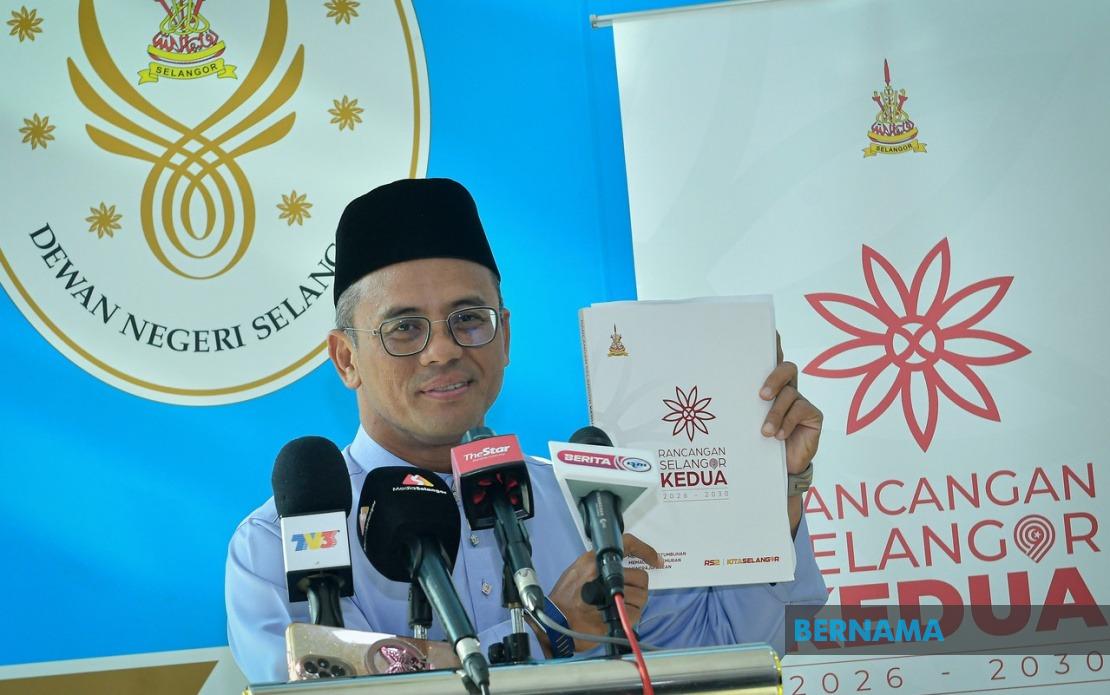
Selangor's Menteri Besar Datuk Seri Amirudin Shari has announced a sweeping performance mandate that will require every municipal and local council across the state to achieve a 95 per cent rating under the PBT Star Rating System by the end of this decade. Unveiled during the tabling of the Second Selangor Plan (RS-2) at the State Legislative Assembly in Shah Alam, the directive signals the state government's intent to raise service delivery standards uniformly across all 16 local authorities, ensuring that citizens in even the most underperforming jurisdictions benefit from comparable administrative quality and responsiveness.
The 95 per cent target represents a significant shift in governance philosophy for Malaysia's most economically dynamic state. Rather than accepting disparities in service standards between affluent and less-developed districts, Amirudin has positioned the benchmark as a non-negotiable floor for municipal performance. This approach acknowledges a fundamental equity principle: that Malaysian taxpayers, irrespective of postcode, should expect professional, timely handling of permits, complaints, and administrative matters from their local authorities.
Central to achieving these standards will be a companion initiative aimed at digital transformation. The Selangor government plans to expand End-to-End Digital Government Service Sharing to 85 per cent coverage, automating workflows and reducing bureaucratic friction across the local authority network. This push reflects recognition that digitisation addresses two persistent weaknesses in Malaysian municipal governance: slow processing times and inconsistent service quality caused by paper-dependent systems and human discretion. When residents can lodge complaints or submit applications online with automatic tracking and transparent timelines, performance gaps narrow considerably.
The Second Selangor Plan explicitly acknowledges a structural vulnerability in the state's fiscal foundations that underpins these service delivery ambitions. Currently, approximately 75 per cent of state revenue derives from land premiums and rental income—a dependency that exposes Selangor to market volatility and creates perverse incentives favouring property speculation over sustainable economic development. By tying service improvements to stricter accountability metrics, the RS-2 signals that the state is simultaneously addressing its revenue concentration problem through diversification and efficiency gains rather than relying on further land sales.
Amirudin emphasised that local authorities must fundamentally reorient their operational culture around citizen feedback, whether complaints arrive through social media, email, or traditional channels. This language reflects global best practice in municipal governance but represents a notable cultural shift for Malaysia, where many PBTs historically treated public grievances as nuisances rather than quality indicators. The mandate to address all complaints systematically, coupled with measurable performance ratings, creates institutional accountability that transcends personality-driven governance.
The alignment and rationalisation of government-linked companies supporting local authorities forms another pillar of the strategy. The RS-2 proposes establishing a unified State Investment Holding company that will consolidate fragmented GLC operations under clearer governance, eliminate redundant functions, and redirect resources toward technology and service sectors that generate sustainable revenue. This restructuring is particularly relevant for Selangor, where dozens of subsidiary entities have historically operated with minimal strategic coherence, duplicating roles and dispersing state capital inefficiently.
For residents and businesses across Selangor, the implications are concrete. A local authority scoring consistently at 95 per cent on the PBT Star Rating System would demonstrate measurable improvements in the speed of processing development applications, consistency in code enforcement, responsiveness to public health complaints, and transparency in procurement decisions. Small enterprises requiring multiple permits would face shorter administrative delays; residents reporting illegal dumping or water contamination would see tracked, accountable investigation processes rather than complaints disappearing into bureaucratic voids.
The digitalisation target carries particular significance for Selangor's position as a regional economic hub competing for multinational investment. Multinational corporations evaluating location decisions weigh administrative efficiency heavily; jurisdictions with cumbersome, opaque regulatory processes lose competitiveness to rivals offering streamlined digital approvals. By mandating 85 per cent digital government service uptake, Selangor signals to regional and global investors that the state is modernising its administrative infrastructure to match private-sector expectations.
The revenue diversification dimension reveals longer-term thinking about Selangor's development model. Land-dependent revenues have funded infrastructure and services for decades, but this model becomes unsustainable as urbanisation accelerates and available developable land diminishes. The RS-2's emphasis on strengthening GLC returns and encouraging private-sector participation in state programmes suggests a pivot toward income-generating investments in utilities, transportation, and digital infrastructure—sectors that generate recurring revenue streams less vulnerable to property cycles.
Implementation will test the state government's capacity for sustained institutional change. Achieving 95 per cent across all 16 PBTs demands not just targets but substantial capacity-building, technology investment, and cultural reorientation in municipal organisations accustomed to operating with minimal external scrutiny. Some authorities may require receivership-style intervention; others may reach the standard relatively quickly. The RS-2 does not detail remedial mechanisms for persistently underperforming councils, leaving questions about consequences and enforcement open.
For Southeast Asian observers, Selangor's initiative offers a potential template for elevating municipal governance across the region. Most Southeast Asian states struggle with delivering consistent service standards across dispersed local authorities, particularly in secondary cities and rural areas. Selangor's willingness to establish a precise, measurable, time-bound target—and to complement it with technology and institutional restructuring—demonstrates that improving municipal performance need not require massive budget increases, merely disciplined reallocation and accountability.
The Second Selangor Plan ultimately reflects recognition that modern economic competitiveness increasingly depends on invisible infrastructure: administrative reliability, regulatory transparency, and digital efficiency. By 2030, Selangor residents should benefit from local authorities that function as professionally managed service providers rather than patronage-dispensing bureaucracies. Whether that transformation materialises depends on the state government's willingness to enforce the 95 per cent standard consistently, retrain municipal workforces, and insulate local authorities from political pressures that traditionally compromise accountability.

