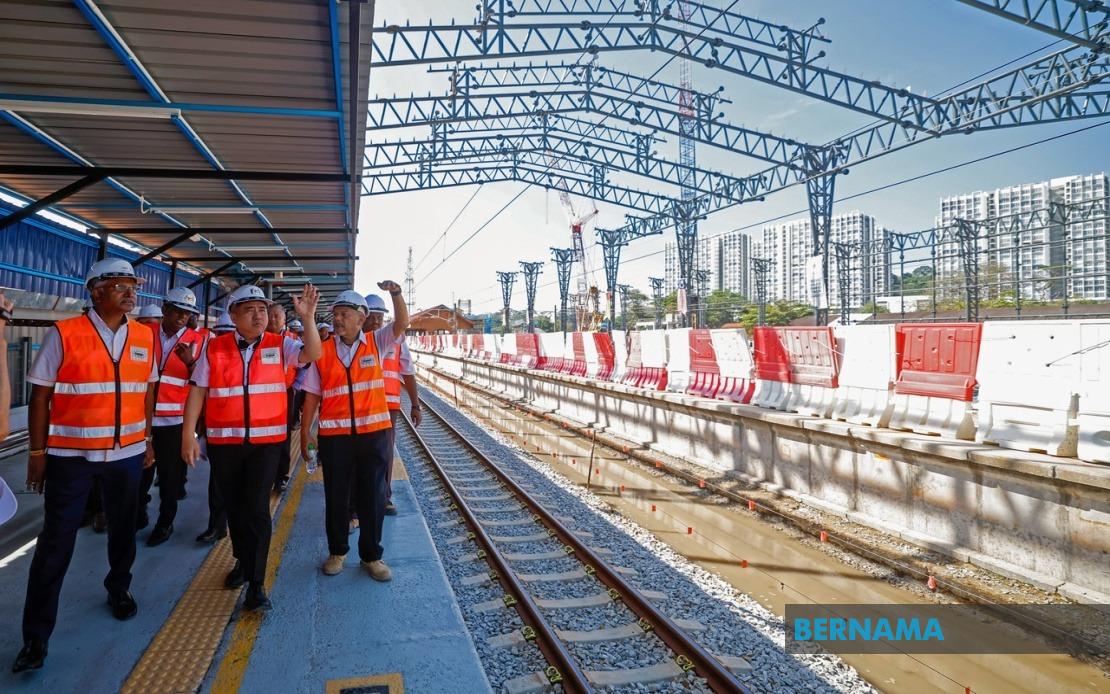
Transport Minister Anthony Loke has provided an optimistic progress update on Seremban Sentral, the region's transformative new railway hub, which has now reached the 35 per cent completion mark with an anticipated opening in March 2027. Speaking during an inspection of the nearly RM100 million project in Seremban, Loke outlined how the station's foundational challenges have largely been overcome, clearing the path for substantially faster construction momentum in the coming months.
The most labour-intensive phase of development—underground piling work and the relocation of utilities including electrical cables and water infrastructure—has been successfully concluded, according to Loke. These preliminary works, which consumed more than two years of the project timeline, were inherently slow because engineers required precision in determining exact piling depths and locations while carefully disconnecting and rerouting essential services running beneath the construction site. This groundwork, though protracted, has established a stable structural foundation essential to supporting the station's architectural vision.
With the foundational hurdles behind the project, construction teams can now focus on above-ground elements that typically proceed more rapidly. Loke highlighted that upcoming phases will concentrate on roof installation, glass façade assembly, and various finishing works that define the station's modern aesthetic. The structural completion of underground works essentially marks the psychological and logistical turning point, where visible progress should accelerate and public perception of forward momentum should improve significantly.
The new Seremban Sentral represents far more than a simple replacement for aging railway infrastructure. Loke, who also represents Seremban as Member of Parliament, emphasised that the facility will seamlessly integrate the heritage Seremban KTMB Station—a structure exceeding 100 years in age—with contemporary transport amenities, creating a unified and efficient movement hub for the city. The architectural design incorporates a green building concept with aesthetic elements inspired by Minangkabau heritage, reflecting Malaysia's commitment to preserving cultural identity while modernising critical infrastructure.
Capacity planning reveals ambitious long-term thinking. The station will initially accommodate 30,000 daily passengers, with future expansion capability reaching 120,000 passengers per day. This modularity is built into the design through a six-platform configuration, with three platforms constructed initially and three additional platforms reserved for future development as passenger demand grows. Loke suggested the facility's design anticipates regional transportation needs across the next three to five decades, positioning Seremban advantageously for population growth and increased rail utilisation.
Doubling the frequency of Komuter and Express Train Service (ETS) operations represents a strategic priority once the double-track upgrade completes. More frequent services should attract commuters and residents to the area, supporting broader economic development goals. The station's dual entrance system—with separate drop-off facilities at Jalan Tunku Antah frontage and rear access—aims to distribute traffic flows and minimise congestion in surrounding streets, reflecting contemporary urban mobility planning principles increasingly adopted across Southeast Asia.
The heritage Seremban KTMB Station renovation concluded last month, with conservation work modernising electrical systems and wiring while preserving the structure's historical character and ensuring operational safety. Beyond renovation, the ministry has implemented a new sewerage infrastructure addressing chronic flooding challenges that previously disrupted station operations during heavy monsoon periods. The innovative solution diverts rainwater directly into Sungai Temiang rather than channelling it through station areas, thereby protecting platforms and tracks from inundation and reducing service disruptions.
This project carries significance extending beyond Seremban's municipal boundaries. The station anchors the transit-oriented development mega-project known as TOD Seremban Sentral, positioned immediately adjacent to the railway facility. Such integrated development models, combining high-capacity public transport with residential and commercial mixed-use spaces, have proven successful in regional cities and represent increasingly important planning strategies for managing urbanisation sustainably across Malaysia and Southeast Asia.
Progress on the broader Klang Valley Double Track Phase 2 network upgrade currently stands at 55.8 per cent completion. Temporary afternoon reductions in Komuter service frequency, though initially inconvenient for commuters, reflect strategic operational choices aimed at accelerating construction timelines. With one track temporarily closed for construction purposes, service rationalisation allows engineering teams to work more intensively, supporting the overall infrastructure modernisation agenda critical to supporting Greater Kuala Lumpur's continued economic competitiveness and livability.
The Seremban project exemplifies Malaysia's contemporary infrastructure ambitions—balancing heritage preservation, cultural identity, sustainable urban development, and modern transportation efficiency. By March 2027, the station should emerge as a defining landmark for Seremban, potentially catalysing broader regional economic activity while demonstrating how Southeast Asian cities can modernise critical infrastructure while respecting historical and cultural dimensions.

