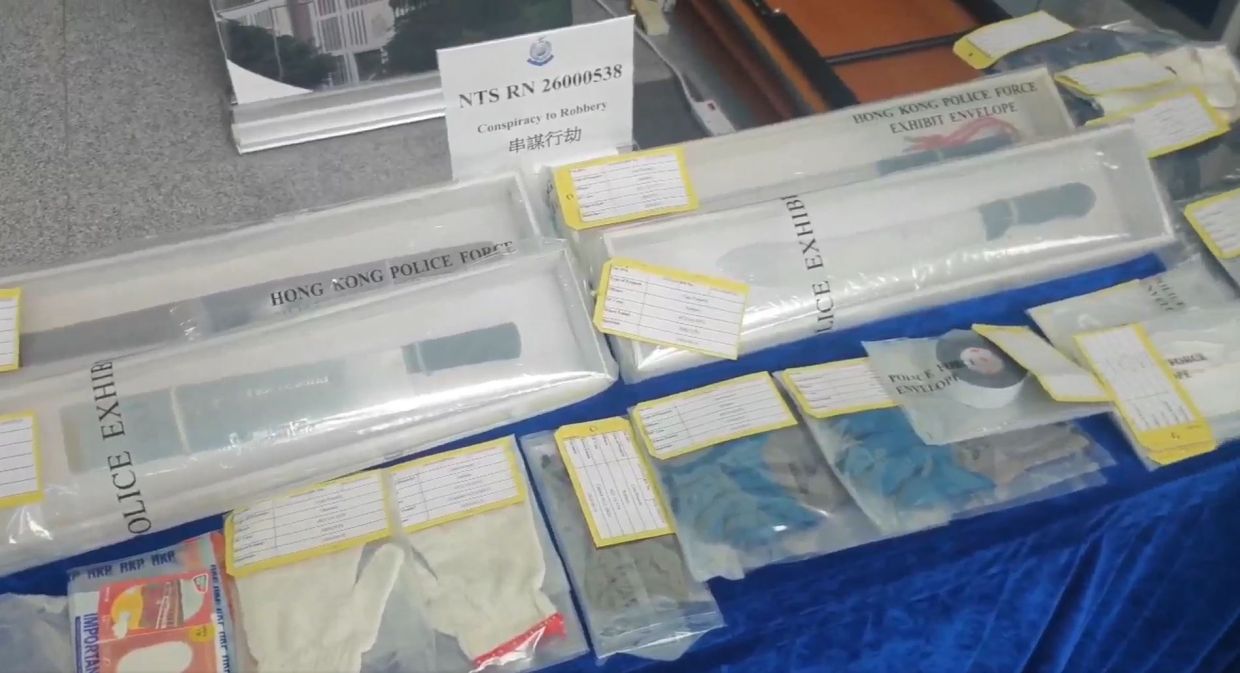
Seven suspects have been taken into custody following a violent robbery at Hong Kong International Airport's car park, where a man was stabbed and relieved of gold bars worth HK$7 million. Authorities apprehended four men and three women, aged between 20 and 39, within 12 hours of the incident occurring on Thursday, June 18. The swift arrests represent a significant operational success for the police force, which launched an intensive investigation immediately after the crime was reported.
The victim, a courier transporting valuables for a mainland businessman, had just completed a flight from Bali, Indonesia, when the attack took place. He was carrying six gold bars concealed in his backpack as he made his way through the airport terminal towards car park 3, where his vehicle was parked. The timing of the assault raises serious questions about how the perpetrators obtained such precise information regarding the victim's arrival, flight number, and exact parking location—details that would ordinarily remain confidential.
Three assailants, their faces concealed, ambushed the victim as he approached his vehicle. Armed with knives, they launched a vicious attack that left him wounded in both his left hand and foot. The attackers managed to seize the backpack containing the gold before escaping in a seven-seater vehicle. The speed and coordination of the operation suggests the crime was meticulously planned rather than an opportunistic street robbery, a distinction that carries significant investigative implications for triad-related organised crime in the territory.
Investigators have recovered crucial evidence from the crime scene and surrounding areas. The seven-seater vehicle used as a getaway conveyance was located, along with the knives employed during the assault, discovered in the Tsuen Wan district. These recoveries have provided police with tangible forensic material that will be instrumental in building their case against the arrested individuals. The rapid retrieval of the vehicle suggests the perpetrators abandoned it quickly, possibly indicating panic or a predetermined handover point for the stolen merchandise.
Among those arrested, several have documented connections to organised crime syndicates, introducing the triad element into what initially appeared to be a standard robbery. However, authorities have indicated that additional suspects remain at large and are believed to have crossed into mainland China, potentially following pre-arranged escape routes. Police have formally requested assistance from their counterparts in mainland law enforcement agencies, marking a cross-border coordination effort typical of major crimes involving international dimensions.
The victim was transported to Princess Margaret Hospital, where medical staff stabilised his condition. Although he sustained injuries requiring hospitalisation, his prognosis appears favourable, and he has been able to provide investigators with crucial eyewitness testimony regarding the perpetrators' appearance, behaviour, and the vehicle's characteristics. His survival and cooperation significantly strengthen the prosecution's position in any forthcoming legal proceedings.
What elevates this case beyond a conventional robbery is the working hypothesis that an insider may have been involved in the conspiracy. The precision with which the attackers knew the victim's movements—his arrival time, flight origin, and parking location—suggests information was leaked from within either the airport's operations, airline staff, or the legitimate business operation coordinating the gold transport. This dimension transforms the investigation into a potential white-collar crime matter, with authorities now examining employee records and communications from relevant airport and transport security personnel.
The case reflects broader concerns about cargo security at Hong Kong International Airport, one of Asia's busiest aviation hubs and a frequent transit point for high-value goods destined for mainland China and throughout the region. The airport's car parks, despite their proximity to security infrastructure, have proven vulnerable to organised criminal activity. The incident may prompt a review of security protocols, escort procedures for high-value cargo carriers, and information compartmentalisation measures designed to prevent premature disclosure of sensitive shipment details.
The involvement of suspected triad members adds complexity to the investigation and suggests connections to larger criminal networks operating across Hong Kong and mainland China. The decision by some suspects to flee across the border indicates awareness of law enforcement capabilities and a preference for the mainland's legal jurisdiction, where extradition proceedings can be protracted. Cross-border crime coordination between Hong Kong and mainland authorities has become increasingly important as criminal organisations adapt to the territory's autonomous legal status while maintaining networks throughout the region.
For Malaysian readers and regional security analysts, this incident underscores vulnerabilities in airport cargo security systems and the persistent threat posed by transnational organised crime networks. As Southeast Asian nations, including Malaysia, increasingly serve as transit routes for high-value goods between Asia's major economic hubs, similar security breaches represent real risks. The case demonstrates how even sophisticated modern airports remain susceptible to well-planned crimes when information security is compromised and organised criminal elements coordinate their activities with precision and violence.

