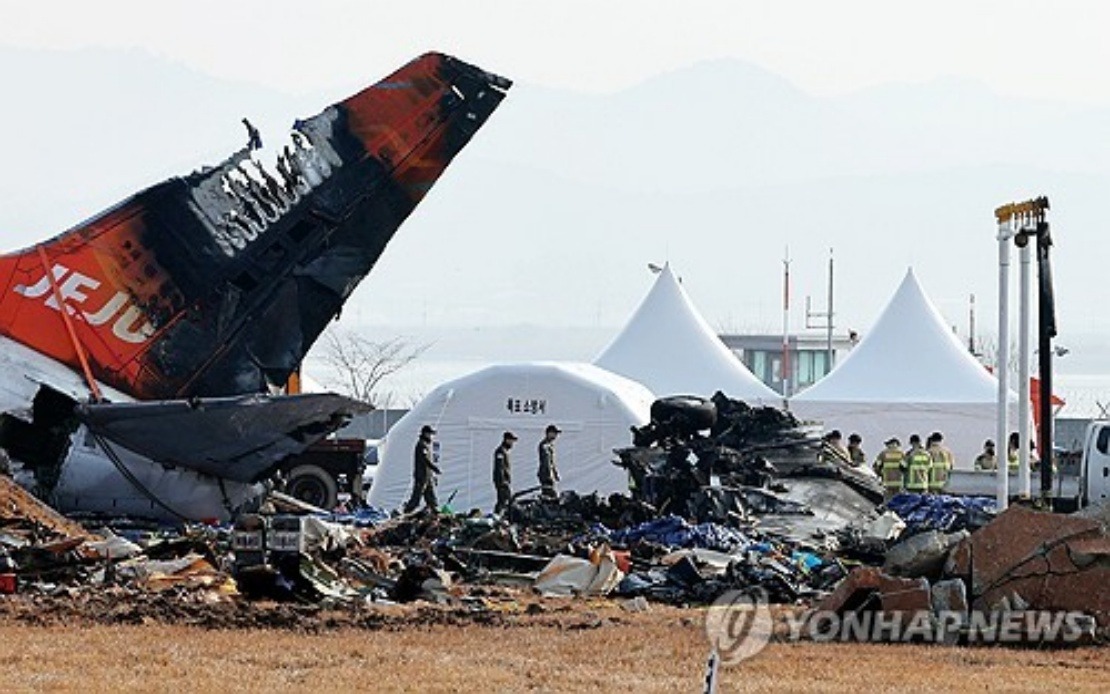
South Korean police have escalated their investigation into the catastrophic Jeju Air crash by referring seven transport ministry officials to prosecutors on allegations of systematically concealing critical safety defects. The officials are accused of issuing misleading public statements that downplayed regulatory breaches connected to equipment directly implicated in one of the country's deadliest aviation accidents in decades.
The tragedy unfolded on December 29, 2024, when Jeju Air Flight 2216 made an emergency belly landing at Muan International Airport, situated approximately 290 kilometres south of the capital Seoul. During the harrowing landing sequence, the aircraft struck a concrete structure housing a localiser—a sophisticated navigational aid system designed to guide pilots during their final approach to the runway. The collision proved catastrophic, claiming the lives of 179 passengers and crew members aboard the aircraft.
Investigators have zeroed in on the positioning and structural integrity of the localiser installation as a significant contributing factor to the severity of casualties. The navigation system's placement within a concrete mound raised immediate questions about whether its location amplified the destructive impact when the aircraft made contact. Rather than transparently communicating these concerns to the public, the seven officials allegedly crafted press releases portraying the localiser as having been properly installed in full compliance with international aviation safety standards.
According to a special police investigation team, the officials possessed clear knowledge that the equipment did not meet all regulatory requirements yet proceeded to issue statements asserting its compliance. This deliberate misrepresentation constituted an apparent obstruction of public understanding regarding the incident's causative factors and raises profound questions about accountability within South Korea's aviation oversight mechanisms.
The decision to refer the officials to prosecutors represents a significant escalation in the legal response to the disaster. Rather than treating the incident as a purely technical failure, authorities are now pursuing criminal charges related to what they characterise as intentional institutional deception. The move signals that the investigation has expanded beyond examining the immediate mechanical and operational factors to encompassing broader questions of governmental transparency and ministerial accountability.
For Southeast Asian readers and aviation professionals monitoring this case, the implications are substantial. The incident underscores vulnerabilities in how transport agencies communicate safety information to the public, particularly when preliminary findings suggest systems failures. Many regional governments operate similar oversight frameworks and navigation infrastructure, making this investigation relevant to broader discussions about procedural integrity and public trust.
The localiser system itself remains central to understanding how a survival-rate gap emerged in this incident. Modern aircraft accident investigations typically reveal that the sequence of failures—mechanical, operational, and structural—combine to produce catastrophic outcomes. The presence of the concrete mound appears to have transformed what might have been a survivable emergency landing into a mass casualty event. The question of whether officials understood this risk differential becomes crucially important when evaluating their decision to issue reassuring public statements.
South Korea's aviation sector has long maintained high safety standards, making this incident particularly noteworthy. The crash and subsequent investigation have prompted soul-searching within the country's transport ministry regarding how safety information flows from technical investigators to public communications. The referral of seven officials suggests that internal processes may have permitted political or institutional concerns to override transparency requirements.
The criminal referral process in South Korean law represents a serious stage in prosecution. Prosecutors will now review the evidence gathered by police and determine whether sufficient grounds exist to file formal charges. Given the public prominence of the Jeju Air disaster and ongoing media scrutiny, the prosecution's decisions will likely influence how transport ministries throughout the region approach safety communication protocols in future incidents.
Broader industry implications extend to how airports, airlines, and aviation authorities manage the tension between rapid operational recovery and thorough transparency. In the aftermath of major incidents, pressure often mounts to restore normal operations and provide public reassurance. However, this case demonstrates that regulators who prioritise institutional messaging over factual disclosure face potential criminal liability. The investigation suggests that South Korean authorities consider such behaviour inconsistent with the public's right to understand the safety environment they depend upon.
For Malaysian aviation authorities and industry stakeholders, monitoring how this case unfolds offers instructive lessons. The intersection of technical safety investigation and public communication represents an area where procedural integrity becomes as important as the technical findings themselves. Clear separation between investigative and communications functions, documented decision-making processes, and explicit protocols for transparency during inquiries all emerge as institutional safeguards worthy of examination.
The criminal investigation also highlights evolving standards regarding official accountability in transport safety matters. Where previous eras might have viewed press releases as routine administrative functions, contemporary legal frameworks increasingly scrutinise them as potential evidence of institutional intent. This shift reflects growing recognition that public trust in aviation safety depends not merely on technical competence but also on institutional honesty regarding known risks and failures.

