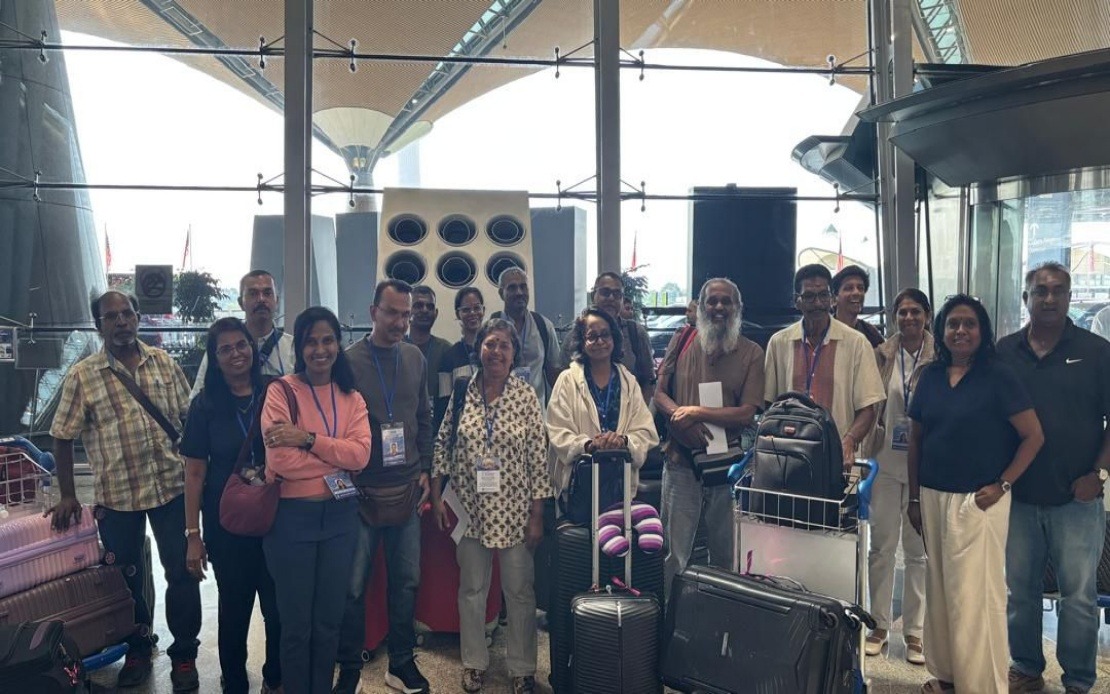
A group of 17 Malaysian pilgrims travelling to Mount Kailash in Tibet has been out of contact for more than a day following devastating flash floods that struck the Nepal-Tibet border region on August 26, prompting urgent government intervention and raising alarm among family members awaiting news of their loved ones' safety.
The pilgrimage group, organised by Nepal-based Fishtail Tours & Travels, had arrived in Nepal on August 23 and was scheduled to complete its spiritual journey by September 5. Among those unaccounted for are four family members of R. Logadashini: her father S. Raman, 59; mother M. Neelavany, 54; uncle S. Murukan, 60; and aunt G. Padmahwathi, 58. The last confirmed communication with the expedition came at approximately 8.18 am Nepal time on August 26—equivalent to 10.33 am Malaysian time—when members were reported to be roughly two kilometres from the Nepal-Tibet Immigration Checkpoint. Subsequently, all communication channels went silent, and despite attempts to reach the tour operator and the Malaysian Embassy in Kathmandu, no updates have been provided to anxious families.
The Ministry of Foreign Affairs reported that 55 Malaysians had been flagged as uncontactable in the region following the floods, though no official confirmation of Malaysian casualties has yet been received. This broader figure suggests the crisis extends beyond the initially identified Fishtail Tours group, indicating that multiple expeditions and travel arrangements may have been disrupted by the disaster. The discrepancy between the 17 initially mentioned and the 55 uncontactable individuals underscores the fluid nature of the situation and the difficulty in obtaining reliable information from affected areas.
Flash flooding in Nepal's Rasuwa and Nuwakot districts was triggered by torrential rainfall combined with a glacial collapse, conditions that rapidly overwhelmed natural drainage systems and swept away critical infrastructure. The flooding has obliterated communication networks and severed major road links connecting the affected zones to Kathmandu, creating a dual crisis: those caught in the disaster face immediate physical danger, while rescue and recovery operations are hampered by the destruction of access routes. This region lies on a heavily trafficked pilgrimage corridor used by thousands annually, making the timing particularly significant during the peak season for Mount Kailash journeys.
Prime Minister Datuk Seri Anwar Ibrahim has ordered all relevant government departments to mobilise resources immediately to locate and establish contact with affected Malaysians. The Malaysian Embassy in Kathmandu and the diplomatic mission in New Delhi have been placed on high alert and tasked with coordinating with Nepalese authorities, international search and rescue teams, and local travel agencies. This diplomatic engagement reflects the seriousness with which Malaysian officials are treating the crisis and indicates that official channels are being leveraged to obtain real-time information and facilitate any necessary evacuation or medical assistance.
Family members have been reduced to piecing together fragmentary information from the last messages received before communications collapsed. Logadashini's family received their final WhatsApp message at approximately 8.40 am Malaysian time, providing only a snapshot of their relatives' location and condition moments before the disaster struck. The agonising uncertainty that now confronts families is compounded by the geographical remoteness of the area and the destruction of infrastructure needed to conduct systematic searches and provide updates.
However, a parallel development offers some reassurance regarding the broader pilgrim community. Datuk N. Mohanadas, the legendary Malaysian mountaineer renowned for his Everest ascents, was leading a separate expedition comprising 56 individuals—including 39 Malaysians, four Singaporeans, and three Canadians—which has been confirmed safe and unaffected by the floods. Mohanadas reported that his group, having taken a different route, remained unimpacted by the rainfall and glacial collapse and was proceeding safely with their Mount Kailash pilgrimage. This distinction between affected and unaffected groups underscores that the disaster was geographically specific, affecting those in the immediate vicinity of the Nepal-Tibet border crossing at the time of the catastrophe.
The Mount Kailash pilgrimage holds profound religious significance for many Hindus, Buddhists, and adherents of other faiths who journey to the sacred mountain annually. The trek typically follows established routes through Nepal that lead toward the Tibet plateau, with the Nepal-Tibet Immigration Checkpoint serving as a critical juncture for international pilgrims. The area is not merely a pilgrimage site but also a major trekking destination, with climbers heading toward Everest and other Himalayan peaks regularly passing through these same corridors. This makes the infrastructure fragile and disaster response capabilities limited in such remote, high-altitude terrain.
For Malaysia specifically, Mount Kailash pilgrimages have become increasingly popular among religious and cultural enthusiasts, with multiple tour operators organising annual expeditions. The involvement of Fishtail Tours & Travels, a Nepal-based agency, highlights how Malaysian travellers rely on regional operators to navigate complex logistical arrangements across international borders and challenging geography. The incident raises questions about safety protocols, communication contingencies, and emergency preparedness for tour groups operating in geologically volatile regions prone to flash flooding and glacial instability.
The broader implications for Southeast Asian travel to high-altitude spiritual sites are significant. The Hindu Kush and Himalayan regions experience periodic natural disasters that can rapidly transform accessible pilgrimage routes into impassable terrain. While such events are inherent risks in mountain tourism, the delayed communication and limited real-time information about affected groups suggest that travel operators may need to implement more robust satellite communication systems and pre-established emergency protocols with relevant diplomatic and rescue authorities in host countries.
As of the latest reports, the Malaysian government's efforts to establish contact and assess the situation remain ongoing. The coordination between Malaysian diplomatic missions and Nepalese authorities represents standard crisis management protocol, but the destruction of communication infrastructure and road networks means that definitive updates may take several days to materialise. Family members of the missing pilgrims continue to await concrete information, while the government works through official channels to clarify the status and location of all affected Malaysians in the disaster zone.

