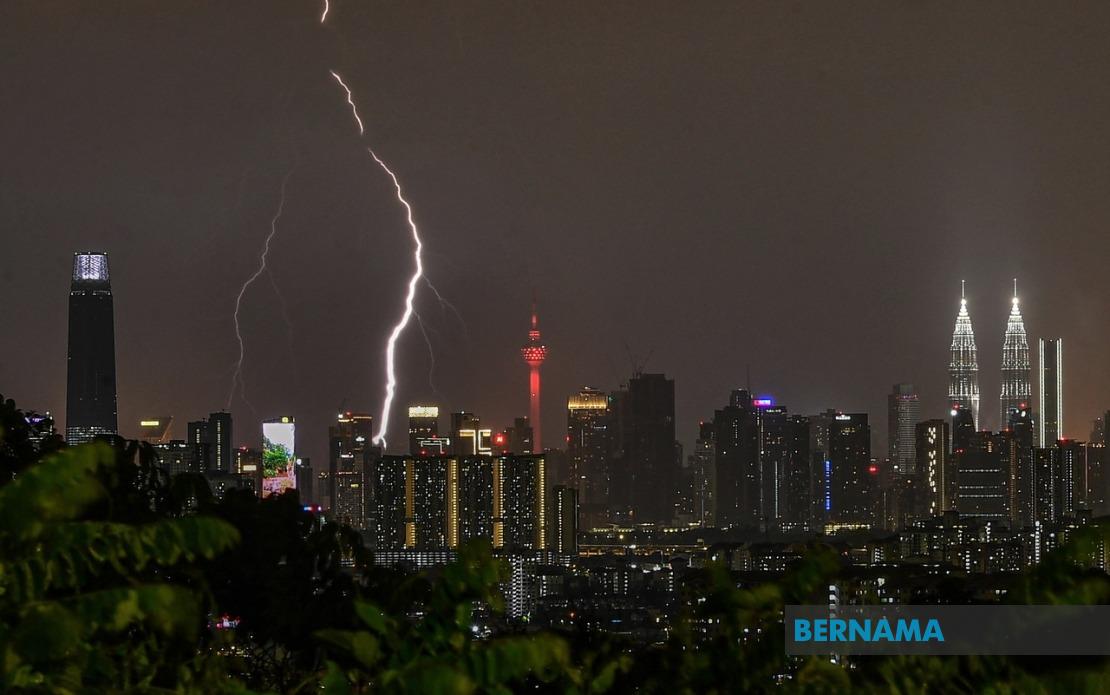
The Malaysian Meteorological Department issued a widespread thunderstorm warning on Thursday afternoon, alerting residents across Kuala Lumpur and eight states to prepare for severe weather conditions featuring heavy precipitation and gusty winds through the remainder of the day. The advisory, released at 2pm, represents a significant weather system affecting a broad geographical swathe of peninsular Malaysia and carries implications for transportation, outdoor activities, and public safety across densely populated regions.
The warning encompasses the entirety of Melaka and Penang, two states on Malaysia's western seaboard that regularly experience intense convective weather patterns during seasonal transitions. These areas, with their coastal and island characteristics, are particularly vulnerable to rapidly developing thunderstorms that can produce localised flooding in low-lying districts and flash flooding in drainage-poor areas.
In Kedah, the meteorological alert applies specifically to Kuala Muda, Sik, Baling, Kulim and Bandar Baharu, concentrating on both northern and central portions of the state. These districts encompass both urban and agricultural zones where sudden downpours can disrupt farming operations and compromise drainage infrastructure designed for moderate rainfall events.
Perak faces the most extensive list of affected localities, with thunderstorm conditions forecast across Kerian, Larut, Matang and Selama, Hulu Perak, Kuala Kangsar, Kinta, Kampar, Batang Padang and Muallim. This broad coverage reflects the state's varied topography, from coastal plains to interior highlands, each presenting distinct vulnerability profiles to severe convective weather. The inclusion of Highland districts suggests that orographic effects—where air is forced upward by mountainous terrain—may intensify rainfall in already moisture-saturated regions.
Pahang's warning zones include Cameron Highlands, Lipis, Raub, Bentong, Pekan and Rompin, encompassing both the state's famous hill station and its lowland agricultural heartland. The inclusion of Cameron Highlands, despite its elevated position, indicates that the meteorological system possesses sufficient energy to affect even mountainous terrain, suggesting an unusually vigorous weather pattern.
Selangor, Malaysia's most densely populated state and economic engine, faces thunderstorm conditions across Sabak Bernam, Kuala Selangor, Hulu Selangor, Klang, Gombak, Petaling and Hulu Langat. This represents coverage of both the state's northwestern coastal regions and its strategically important central areas. Given Selangor's critical infrastructure, transportation networks, and residential concentration, meteorological hazards here carry heightened consequences for daily operations and public disruption.
The warning extends to smaller administrative areas including Jelebu in Negeri Sembilan and multiple districts in Johor's southern regions—Tangkak, Segamat, Muar, Batu Pahat, Kluang and Mersing. This distribution indicates a coherent weather system capable of affecting disparate geographical zones simultaneously, reflecting a substantial atmospheric disturbance rather than isolated thunderstorm cells.
Thunderstorms accompanied by heavy rainfall pose multifaceted risks across affected regions. Beyond the immediate hazard of intense precipitation, strong winds associated with these systems can damage structures, uproot vegetation, and disrupt power supply networks. For Malaysia, where monsoon patterns and tropical convection create seasonal vulnerabilities, such warnings serve as critical public safety mechanisms.
The Malaysian Meteorological Department's guidance urged members of the public to maintain heightened awareness and regularly consult updated weather forecasts, acknowledging that atmospheric conditions may evolve rapidly. This cautionary language reflects the inherent unpredictability of convective systems, which can intensify, shift direction, or dissipate faster than initial projections suggested. Residents in affected areas should consider securing outdoor items, avoiding unnecessary travel, and monitoring emergency services communications.
For businesses and infrastructure operators, such warnings necessitate contingency planning. Transportation providers must anticipate potential disruptions to road conditions and visibility, while utility companies activate protocols for managing potential power outages. Schools and public institutions in affected zones may adjust schedules or operations to accommodate severe weather conditions.
The concentration of warnings across western peninsular Malaysia reflects the region's exposure to moisture-laden air masses and its position relative to prevailing wind patterns. As Malaysia enters transitional monsoon seasons, such widespread thunderstorm alerts become increasingly common, requiring sustained public preparedness and awareness.
Residents should remain vigilant throughout the afternoon, particularly those in low-lying areas prone to flash flooding or infrastructure-dependent zones where power interruptions create secondary hazards. The 5pm deadline suggests the meteorological department expects conditions to moderate as evening approaches, though localised impacts may persist beyond this timeframe depending on system movement and intensity evolution.

