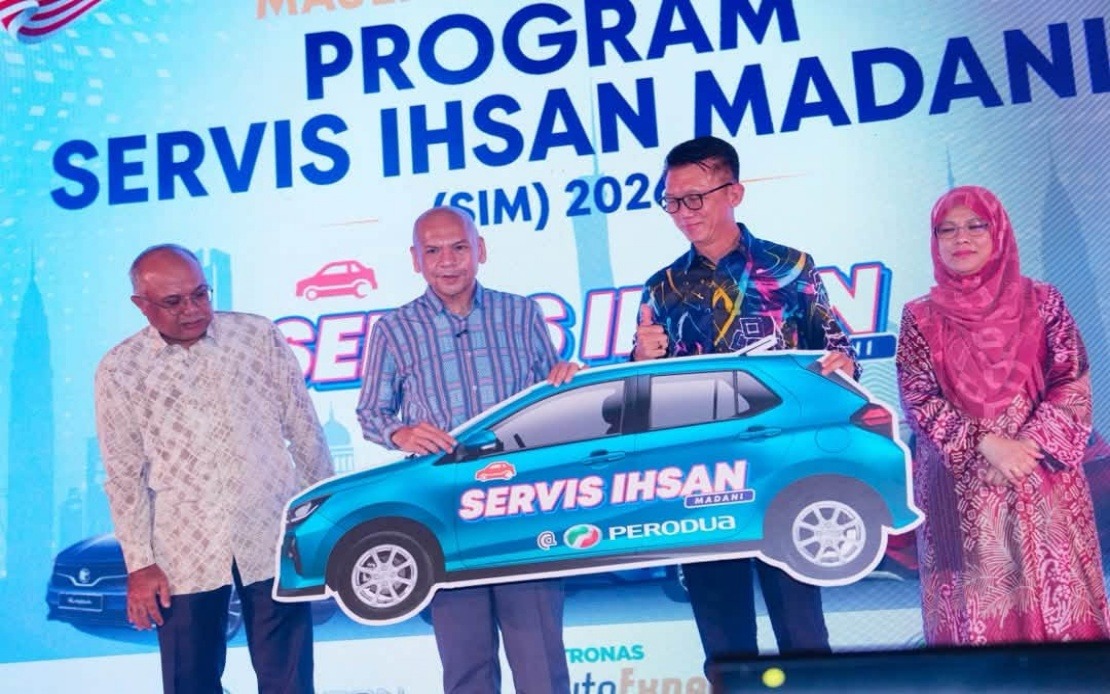
Malaysia's vehicle maintenance subsidy programme has entered a new phase with the inclusion of Perodua and Proton dealerships, marking a significant expansion of consumer benefits under the Payung RAHMAH MADANI umbrella initiative. Minister Datuk Armizan Mohd Ali announced on Tuesday that the Ministry of Domestic Trade and Cost of Living (KPDN) would distribute RM70 vouchers for maintenance services when vehicle owners visit participating outlets during the National Month 2026 period, contingent on standard programme terms.
The broadened scheme encompasses a substantial network spanning the entire nation. A total of 531 service facilities have joined the initiative, comprising 221 Perodua service centres, 186 Proton service centres, and 124 PETRONAS AutoExpert workshops. This geographic spread ensures that motorists in both urban and rural areas can access the subsidised maintenance services, reducing geographic disparities in consumer benefit distribution. The inclusion of PETRONAS AutoExpert facilities adds a third tier to the programme's reach, creating overlapping service networks that give customers genuine choice and convenience.
Access to the subsidy operates through a digital-first approach, reflecting Malaysia's push towards digital governance and consumer engagement. Interested vehicle owners can reserve their maintenance slots by using dedicated mobile applications operated by each service provider. This streamlined booking mechanism reduces administrative friction and allows real-time capacity management across the extensive network. The shift away from manual processing towards app-based reservations also generates valuable data that can inform future policy decisions and identify service bottlenecks.
Armizan framed the expansion as integral to the government's Malaysia MADANI development philosophy, specifically the 'Kesejahteraan Dinikmati' (shared prosperity) pillar that emphasises tangible benefits reaching ordinary Malaysians. The programme pursues dual objectives beyond simple cost reduction. While alleviating financial burden on vehicle owners represents the immediate goal, the initiative also aims to cultivate better maintenance habits among the driving population. Regular servicing directly correlates with vehicle safety and longevity, potentially reducing accident rates and extending the usable life of automobiles—outcomes with positive externalities for public safety and environmental sustainability through reduced premature vehicle disposal.
The maintenance subsidy expansion arrives alongside a broader acceleration of consumer-focused initiatives branded under RAHMAH MADANI. The KPDN itself orchestrated National Day and Malaysia Day celebrations featuring the National Month RAHMAH MADANI Sales Programme, complemented by cultural activities including the Batik Hues Exploration Competition and a Patriotic Challenge competition. This multi-pronged approach creates a narrative of sustained government commitment to household welfare during the festive season, reinforcing the Malaysia MADANI messaging across multiple consumer touchpoints and demographic segments.
Beyond KPDN's direct initiatives, strategic partners have mobilised parallel promotional campaigns that amplify the overall impact. The forthcoming Jualan Ihsan RAHMAH 9.9 online sale represents perhaps the most significant of these collaborative efforts, with TikTok Shop Malaysia hosting a September 9 sales event offering discounts ranging from 10 to 30 percent on essential goods. The selection of TikTok—a platform dominant among younger Malaysian consumers—as the digital venue demonstrates sophisticated understanding of demographic engagement patterns and shopping behaviour among key consumer segments. Prime Minister Datuk Seri Anwar Ibrahim previously confirmed government backing for this September 9 initiative, lending it official endorsement and signalling coordination between multiple governmental bodies and private sector partners.
The integration of private sector platforms into government consumer assistance frameworks reflects a broader trend of public-private collaboration in Malaysian economic policy. By leveraging TikTok Shop's existing infrastructure, user base, and technological capabilities, policymakers avoid substantial government expenditure while achieving wider reach than parallel government-operated channels could achieve independently. This partnership model has become increasingly common in Southeast Asian governance, where governments recognise that private platforms often possess superior technological sophistication and user engagement capabilities compared to government-built alternatives.
For Malaysian consumers, particularly middle and lower-income households, these stacked initiatives create meaningful cumulative benefits. A vehicle owner can simultaneously access RM70 maintenance support through the SIM programme while shopping for household essentials at discounted rates through the online sales event. Pensioners, gig economy workers, and families operating on constrained budgets experience tangible relief during the National Month period. This layering of benefits also encourages broader participation in the Malaysia MADANI narrative, transforming abstract political philosophy into concrete, lived experience.
The emphasis on vehicle maintenance through the SIM programme carries particular significance for Malaysia's automotive ecosystem. Both Perodua and Proton remain strategically important local manufacturers whose long-term viability depends partly on domestic market health and brand loyalty. By subsidising maintenance at authorised service centres—rather than allowing customers to seek cheaper aftermarket alternatives—the programme indirectly supports these manufacturers' service revenue streams and quality control standards. Vehicle owners servicing at authorised facilities receive genuine parts and qualified technicians, potentially reducing long-term repair costs and safety risks compared to informal garage alternatives.
Regional observers note that Malaysia's consumer subsidy approach contrasts with other Southeast Asian models. While Indonesia and Thailand have experimented with targeted voucher systems for specific demographics, Malaysia's breadth of coverage—combining vehicle maintenance, essential goods, and cultural engagement—demonstrates ambitious scope. However, sustainability questions linger regarding programme longevity and funding sources, particularly if government revenue faces constraints or economic conditions deteriorate. Programme designers will need to monitor take-up rates and cost-benefit outcomes to justify continued investment.

