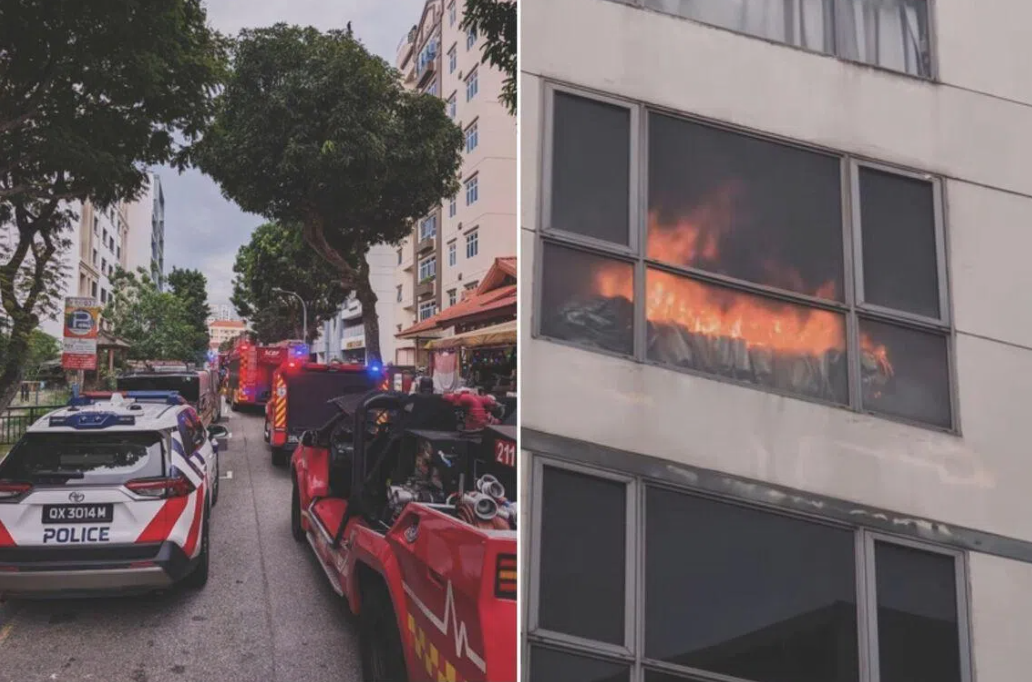
A fire sparked by an unattended power-assisted bicycle battery in a Singapore condominium on Sunday evening forced the evacuation of five residents and served as a stark reminder of the hazards posed by improper charging practices for active mobility devices. The Singapore Civil Defence Force responded to the incident at 9 Lorong 26 Geylang, identified as Casa Aerata condominium, shortly after 5.35pm on June 21. Emergency responders quickly contained the situation, and fortunately no injuries were sustained, though the incident highlighted vulnerabilities in residential safety that extend beyond Singapore to the wider Southeast Asian region where such devices are increasingly common.
The fire originated in a seventh-floor unit where the power-assisted bicycle battery had been left plugged in and unattended within the living area. This placement proved particularly dangerous given the proximity to residential spaces and flammable materials typically found in homes. The SCDF deployed conventional firefighting equipment, including a hosereel and a compressed air foam backpack, to suppress the flames and prevent them from spreading to adjacent units. The rapid response prevented what could have escalated into a multi-unit disaster, a concern that resonates across densely populated urban environments throughout Southeast Asia where similar housing configurations are prevalent.
The precautionary evacuation of neighbouring residents demonstrated proper emergency protocol, with both police and SCDF personnel systematically removing people from potentially affected units. Local MP for Bishan-Toa Payoh GRC Cai Yinzhou responded to the incident after observing smoke and hearing emergency sirens, taking the initiative to clear areas beneath the burning unit as a safeguard against falling debris. His actions underscored the unpredictability of such fires, as the intense heat eventually caused windows to shatter, creating additional hazards that could have injured residents below had the area not been evacuated.
Investigations into the fire's cause revealed an electrical origin linked directly to the power-assisted bicycle charging system. While the exact technical failure remains under examination, preliminary findings point to the inherent risks of keeping such devices plugged in for extended periods without supervision. This finding carries significant implications for Malaysian urban dwellers, as power-assisted bicycles and personal mobility devices have witnessed growing adoption in major cities like Kuala Lumpur and Penang, particularly among delivery workers and commuters seeking convenient transport alternatives.
The SCDF's subsequent advisory addressed several critical safety lapses that contributed to the incident. The use of non-original or third-party batteries for active mobility devices substantially increases fire risk, as these components may lack proper safety mechanisms and thermal management systems built into manufacturer-approved units. Furthermore, the practice of leaving batteries charging overnight or for prolonged periods without attention creates conditions where thermal runaway—a dangerous situation where internal chemical reactions accelerate uncontrollably—can occur without immediate human intervention to disconnect power.
Statistical data from Singapore's fire services reveals the expanding scope of this problem across the region's residential areas. In 2025, the SCDF documented 304 electrical fires in residential premises, with 34 directly involving active mobility devices. While the overall number of active mobility device fires showed a modest decline from 67 cases in 2024 to 49 in 2025, personal mobility device fires specifically increased from 25 to 31 cases during the same period. This shifting pattern suggests that as the technology becomes more prevalent and diverse, certain device types present greater challenges than others.
For Malaysian readers, these statistics carry practical relevance as the nation adopts similar mobility solutions in response to urban congestion and environmental concerns. Cities across Malaysia have seen explosive growth in the use of e-scooters, power-assisted bicycles, and other active mobility devices, often without corresponding public awareness campaigns regarding safe charging and storage practices. The Singapore incident provides a cautionary case study for residential associations, building management companies, and individual users considering how to safely integrate these technologies into home environments.
The distinction between personal mobility devices and power-assisted bicycles within the regulatory framework matters significantly, as each category presents distinct hazard profiles. Personal mobility devices, which include electronic scooters, have shown a proportionally higher increase in fire incidents, possibly reflecting their smaller battery capacity but higher power density compared to power-assisted bicycles. Understanding these variations helps residents and property managers implement targeted safety measures appropriate to the specific devices present in their communities.
The incident raises important questions about responsibility distribution across the supply chain. Users who purchase non-original batteries often do so seeking cost savings, sometimes unaware of the safety implications or unable to distinguish counterfeit from genuine products. Retailers, both physical and online, bear responsibility for ensuring only approved batteries reach consumers. Building management must consider whether common areas should accommodate charging stations with proper ventilation and monitoring, rather than forcing residents to charge devices within living spaces.
Regulatory oversight in Southeast Asia has generally lagged behind rapid technology adoption in the active mobility sector. While Singapore has demonstrated proactive fire safety monitoring through detailed statistical tracking, many Malaysian municipalities lack comparable data collection systems. Developing such infrastructure would enable better-informed public health decisions and more targeted safety campaigns addressing the specific risks posed by different device categories.
The safety culture surrounding active mobility devices remains relatively nascent across the region. Many users view these devices as simple, low-technology solutions without fully appreciating the fire hazards inherent in lithium-ion battery systems. Educational initiatives must reach beyond just warning labels on devices and reach consumers through accessible, community-based channels that explain not only what constitutes safe practice but why these practices matter for protecting families and neighbours.
Moving forward, the experience from this incident suggests that comprehensive solutions require coordination among multiple stakeholders. Device manufacturers should continue improving battery management systems and thermal protection mechanisms. Regulatory bodies must establish clear standards for imported devices and batteries, particularly given the significant cross-border trade in active mobility components throughout Southeast Asia. Building authorities could mandate that charging stations be located in designated, well-ventilated areas rather than inside residential units. Most immediately, public awareness campaigns must emphasise that convenience cannot justify the risks posed by unattended charging, non-original batteries, and overnight charging practices that have proven to create dangerous conditions as demonstrated by this Geylang incident.

