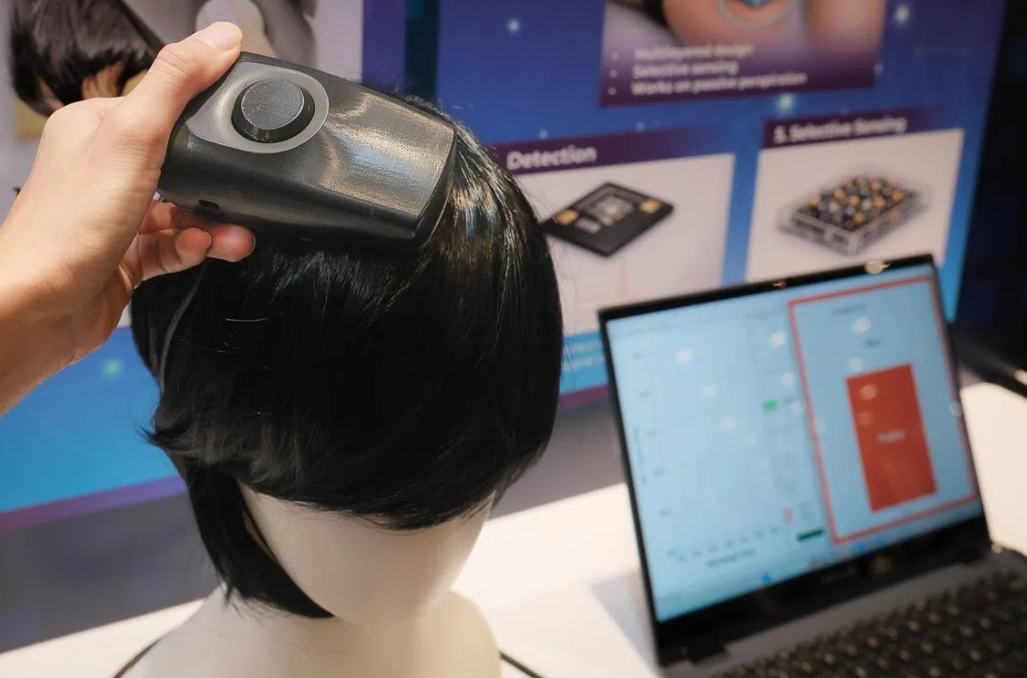
Singapore is intensifying its war on drugs with a suite of cutting-edge technologies designed to detect substance abuse faster and streamline criminal investigations. The centrepiece of this technological arsenal is a hair-scanning device that can identify drug use in under sixty seconds without requiring samples to be cut, marking what officials believe to be a first-of-its-kind deployment globally. Showcased at the CNB Workplan Seminar 2026 held at Singapore Expo in late July, the scanner represents a significant evolution in how law enforcement approaches drug screening in an era of rising global drug consumption and regional trafficking pressures.
The handheld scanner, no larger than a laptop mouse, operates through spectroscopy—a technique that analyses the wavelengths of light absorbed or reflected by hair samples to identify chemical markers of drug use. Developed internally by the Home Team Science and Technology Agency (HTX), the technology eliminates the need for invasive sampling procedures, promising operational advantages for the Central Narcotics Bureau (CNB). Forensic scientist Ong Sheau Wei from HTX's Forensic Centre of Expertise emphasised that Singapore stands alone in pursuing such a device for drug detection purposes, positioning the city-state as a pioneer in law enforcement innovation.
Beyond the scanner, Singapore has developed NarcoNet, an artificial intelligence platform that represents a paradigm shift in how drug investigations are conducted. The system, jointly created by CNB and HTX, automatically processes evidence gathered during drug probes—including mobile phone data, chat logs, and photographic evidence—to identify incriminating communications and detect drug transactions regardless of the language used. What previously consumed investigative hours can now be accomplished in moments, with NarcoNet capable of generating a statement of facts instantly. This automation not only accelerates case preparation but also reduces human error and frees investigators to focus on higher-order analytical work rather than repetitive data entry.
The deployment of these tools reflects urgency driven by alarming regional trends. In 2024, approximately 331 million individuals aged fifteen to sixty-four globally engaged in drug use over a twelve-month period, representing a thirty-four per cent surge over the preceding decade. More troublingly for Southeast Asia, methamphetamine seizures in the East and Southeast Asia region reached 349 tonnes in the latest reporting period—a forty-eight per cent jump from 236 tonnes in 2024. This escalation underscores how the region has become a critical battleground in the global drug trade, with trafficking networks exploiting geographic proximity and supply routes to flood markets with synthetic stimulants.
Singapore's own law enforcement statistics illustrate the intensity of the domestic challenge. During 2025, the CNB dismantled twenty-five drug syndicates and confiscated narcotics valued at over twenty-three million dollars, yet these successes mask a deeper crisis affecting younger populations. Of the 1,188 new drug abusers arrested in 2025, precisely half were under thirty years old—a demographic distribution that suggests substance abuse is becoming entrenched among adolescents and young adults. The concern extends beyond methamphetamine, the most commonly abused drug. Cannabis presents a particularly acute worry for child welfare advocates, with one in two newly arrested cannabis users falling below the age of thirty, indicating a significant generational shift in drug use patterns.
Senior Minister of State for Home Affairs Sim Ann, who delivered the opening address at the seminar, positioned these technological innovations within a broader societal context. She pointedly described the statistics not as abstract figures but as representatives of actual lives—Singapore's children, students, neighbours, and friends whose futures are jeopardised by addiction. This humanising rhetoric signals official recognition that technological solutions alone cannot address the root causes driving young people toward drug use. The framing also implicitly critiques a purely enforcement-oriented approach, acknowledging that prevention, education, and family engagement remain equally vital.
Complementing the hair scanner and NarcoNet is the Next Generation Reporting Centre, operational at Tanglin Police Division since July 1. This facility automates the urine testing procurement process, reducing direct officer contact with biological samples while simultaneously improving hygiene standards and operational throughput. Together, these three systems represent a comprehensive modernisation of Singapore's drug enforcement infrastructure, designed to handle the volume and complexity of contemporary drug investigations whilst maintaining procedural integrity and worker safety.
Dr Chew Tuan Chiong, vice chairman of the National Council Against Drug Abuse, introduced a crucial perspective often overlooked in technology-focused discussions: parental engagement and education. He observed that contemporary children possess substantially greater knowledge about drugs than previous generations, yet many parents remain unprepared to engage in meaningful conversations about substance abuse risks. When parents lack accurate information and respond defensively to questions, the result can be counterproductive, eroding trust and pushing young people toward peer networks for drug-related guidance. This insight highlights a critical gap that no amount of scanning or artificial intelligence can bridge—the interpersonal, family-level interventions that form the foundation of effective prevention.
For regional observers, Singapore's technological pivot offers both inspiration and cautionary lessons. The city-state's investment in research and development reflects resources unavailable to most neighbouring countries, yet the underlying challenge—rising drug abuse among youth in a region of significant trafficking activity—affects the entire region. Malaysia, Thailand, Indonesia, and the Philippines all grapple with similar demographic trends and methamphetamine surges. Singapore's emphasis on early detection and investigation efficiency may prove more easily transferable across borders than the expensive hardware itself, suggesting that regional cooperation on investigative methodologies and data-sharing protocols could multiply the impact of individual nation-states' efforts.
The timeline for full NarcoNet deployment by end-July signals Singapore's determination to translate development into operational reality with minimal delay. This urgency reflects political and social pressure to demonstrate tangible progress against drugs at a moment when youth-focused synthetic drug abuse is rising sharply. However, sustained success will ultimately depend on whether technological acceleration of enforcement is matched by equally innovative prevention and treatment initiatives. The hair scanner and NarcoNet may identify drug users more efficiently, but without corresponding investments in rehabilitation, family support programmes, and youth engagement, Singapore risks optimising the detection of a problem it remains unable to prevent at its source.

