Singapore's internal security authorities have moved against two citizens radicalised by the Gaza conflict, highlighting the vulnerability of young people to extremist ideologies that blend multiple violent narratives into a coherent worldview justifying harm. The Internal Security Department announced the cases on June 24, issuing a restriction order against Cyrus Dzulqarnain Al-Shahriar, 19, a student, and a detention order against Tarmizi Mohd Taha, 30, a customer service officer. These bring to eight the total number of Singaporeans dealt with under the Internal Security Act whose radicalisation traces directly to events surrounding Hamas's October 7, 2023 attacks on Israel.
Cyrus's journey into extremism demonstrates how online platforms enable incremental exposure to radical content across seemingly disconnected ideological domains. The teenager began by joining religious study groups in 2022 seeking Islamic knowledge, but encountered anti-Western and anti-LGBTQ material that shaped his worldview. When the Gaza conflict erupted, he became susceptible to pro-Hamas narratives circulating online, eventually supporting the killing of Israeli civilians as a valid form of religious struggle. By 2024, he had progressed from passive consumption to active participation, considering travel to Gaza to fight alongside the militant group before practical and psychological barriers prevented execution of those plans.
The transition from generalised extremism to organised participation marked a critical escalation in Cyrus's case. In early 2025, he joined a private online chat associated with a niche Islamist extremist group advocating violent accelerationism—the notion that creating societal chaos through violence would ultimately establish Islam as the dominant global civilisation. This group viewed first-world countries, including Singapore, as extensions of American and Zionist control requiring destruction to rebuild an Islamic world order. Cyrus's recruitment into this structured network transformed his isolated ideological sympathies into collective commitment, evidenced by his November 2025 pledge of allegiance through carefully choreographed social media posts.
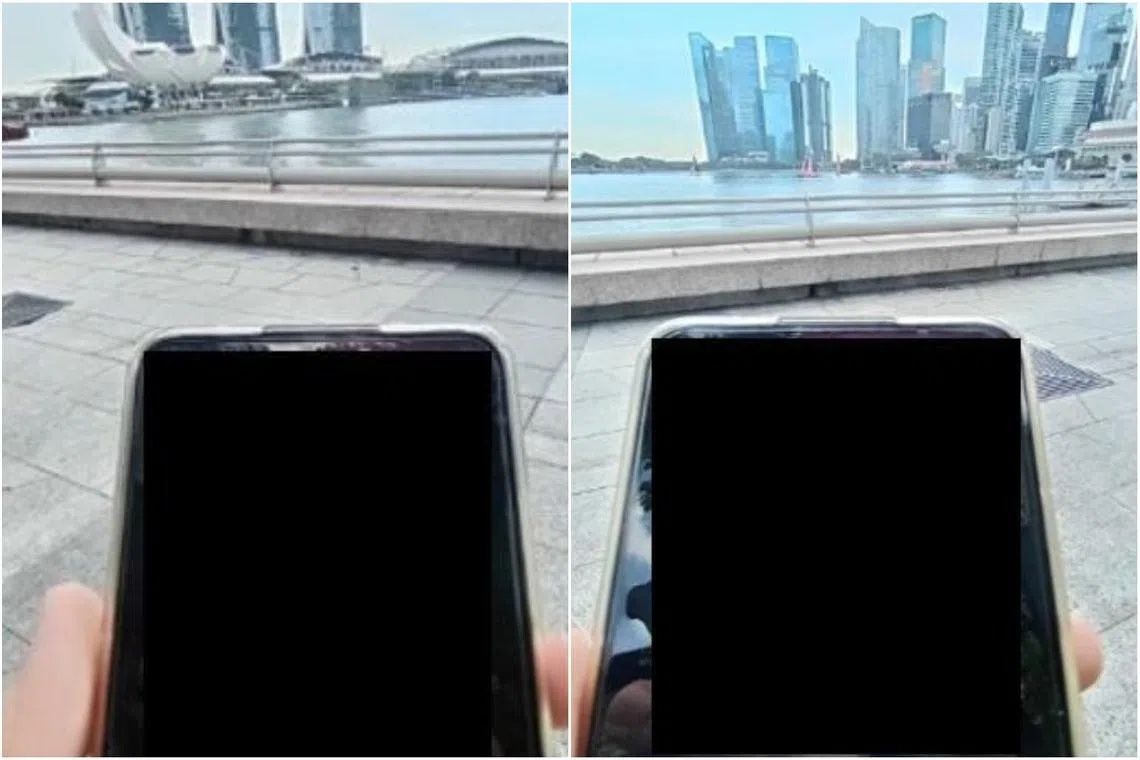
The photographs that triggered authorities' intervention reveal the theatrical dimensions of contemporary extremism. At the request of group members, Cyrus travelled to Marina Bay Sands twice to photograph a publication produced by the extremist collective, positioning Singapore's iconic waterfront as a backdrop for his ideological declaration. By publicising these images on social media, he signalled his acceptance into the group and committed himself to what members termed "digital jihad"—coordinated online harassment of critics of Islam. His participation evolved from harassment campaigns to fabricating disinformation designed to defame specific individuals whilst inciting violence against them, extending to public glorification of Hamas and the Syrian militant faction Hay'at Tahrir al-Sham.
Whatwhile Cyrus's initial radicalisation centred on religious extremism and anti-Western ideology, authorities identified a disturbing secondary dimension: his exposure to incel narratives and figures like school shooter Elliot Rodger. Incels, a subculture of predominantly male individuals identifying as involuntarily celibate, harbour deep resentment toward women and society broadly for romantic rejection. Rodger's 2014 mass shooting in California, which killed six and injured fourteen, has become a touchstone for this community. Cyrus's exploration of incel forums led him to identify with this worldview, producing online posts containing threats of sexual violence against women alongside fantasies about committing attacks at educational institutions targeting LGBTQ individuals and heterosexual couples. This merger of religious extremism with incel ideology exemplifies what security officials term Composite Violent Extremism—a "salad bar" approach where individuals construct personalised belief systems by selecting elements from multiple, sometimes contradictory extremist frameworks.
Tarmizi Mohd Taha's case presents a more immediately operational threat assessment. The 30-year-old customer service officer explicitly confessed willingness to conduct attacks in Singapore should Hamas provide instruction, viewing such actions as pathways to martyrdom. Critically, Tarmizi possessed specialist knowledge that might have enhanced operational capability—during national service with the Singapore Police Force, he worked as a logistics assistant. He believed these skills could be weaponised for Hamas operations, demonstrating how even apparently peripheral expertise becomes conceptually integrated into extremist planning. His detention order reflects assessment that Tarmizi represents an active security risk, distinguishing him from Cyrus, whose violent ideations remained at the fantasy stage without concrete preparation or communication of those thoughts to associates.
The authorities' framing of Cyrus's case emphasises that ideation unaccompanied by preparatory action still warrants intervention under Singapore's security framework. Officials stated that whilst Cyrus never advanced beyond fantasy planning and failed to communicate extremist views to family or schoolmates, his demonstrated support for terrorist organisations, online incitement to violence, and pledge to extremist networks constitute legitimate security concerns justifying preventive detention and rehabilitation. This threshold reflects the precautionary logic governing internal security approaches in Singapore and comparable jurisdictions—the assumption that without intervention, ideological commitment combined with online extremist networks creates unacceptable future risk potential.
The concentration of eight ISA cases linked to Gaza conflict dynamics reveals how geopolitical events in distant regions rapidly permeate Singapore's information ecosystem, particularly affecting young people navigating identity formation and ideological exploration. The temporal pattern is striking: radicalisation accelerated following October 2023, intensifying through 2024 and culminating in the structured group recruitment visible in Cyrus's case during early 2025. This trajectory suggests that the initial shock of the Gaza conflict created vulnerable populations, whilst subsequent months of sustained coverage and online organising transformed passive sympathy into active extremist participation. For Malaysia and other Southeast Asian nations, the pattern carries urgent implications regarding youth vulnerability to conflict narratives emanating from distant theatres yet disseminated through globalised digital channels.
The Internal Security Department's identification of Composite Violent Extremism as an escalating threat reflects recognition that contemporary radicalisation defies traditional categorical boundaries. Rather than individuals adhering coherently to singular ideological traditions—whether Islamist, far-right, or other categories—contemporary cases evidence hybrid belief systems incorporating religious extremism, accelerationist violence doctrine, anti-feminist incel narratives, and anti-Western geopolitical frameworks. The apparent incoherence of such combinations obscures their internal logic for adherents, who construct personalised justifications for violence by selectively drawing from available extremist resources. This fragmentation complicates deradicalisation and rehabilitation programmes premised on countering specific ideological frameworks, requiring instead engagement with the psychological mechanisms enabling individuals to reconcile contradictory beliefs under the umbrella of opposition to prevailing social arrangements.
Both cases underscore that radicalisation pathways remain disproportionately accessible to youth with limited real-world social integration. Cyrus appears isolated from schoolmates, lacking romantic relationships, and primarily embedded in online communities providing ideological validation and collective identity previously unavailable through offline networks. Tarmizi's motivation toward martyrdom suggests similarly insufficient grounding in counter-narrative social support systems. Neither individual had familial or institutional relationships providing alternative frameworks or intervention opportunities prior to security agency involvement. For Malaysia, where youth unemployment and social atomisation present parallel vulnerabilities, the Singapore experience suggests that prevention strategies must extend beyond content regulation and law enforcement toward proactive investment in offline community spaces, mentorship programmes, and employment pathways offering youth the tangible belonging that extremist networks currently provide.
The rehabilitation regimes both individuals will undergo represent Singapore's attempt to reverse radicalisation once security detention has interrupted group connection and online activity. The effectiveness of such programmes remains contested across security jurisdictions, with success rates varying substantially based on programme design, individual motivation, and post-release community reintegration support. Cyrus's case presents a potentially more amenable rehabilitation candidate given his ideation remained theoretical, whilst Tarmizi's explicit operational commitment presents greater risks. Nonetheless, both cases highlight the reality that detention, whilst operationally necessary, represents only the initial phase of addressing radicalisation—the more demanding work of ideological disengagement and prosocial reintegration extends indefinitely beyond institutional confinement, particularly in a region where returned detainees face considerable social stigma and limited reintegration support mechanisms.

