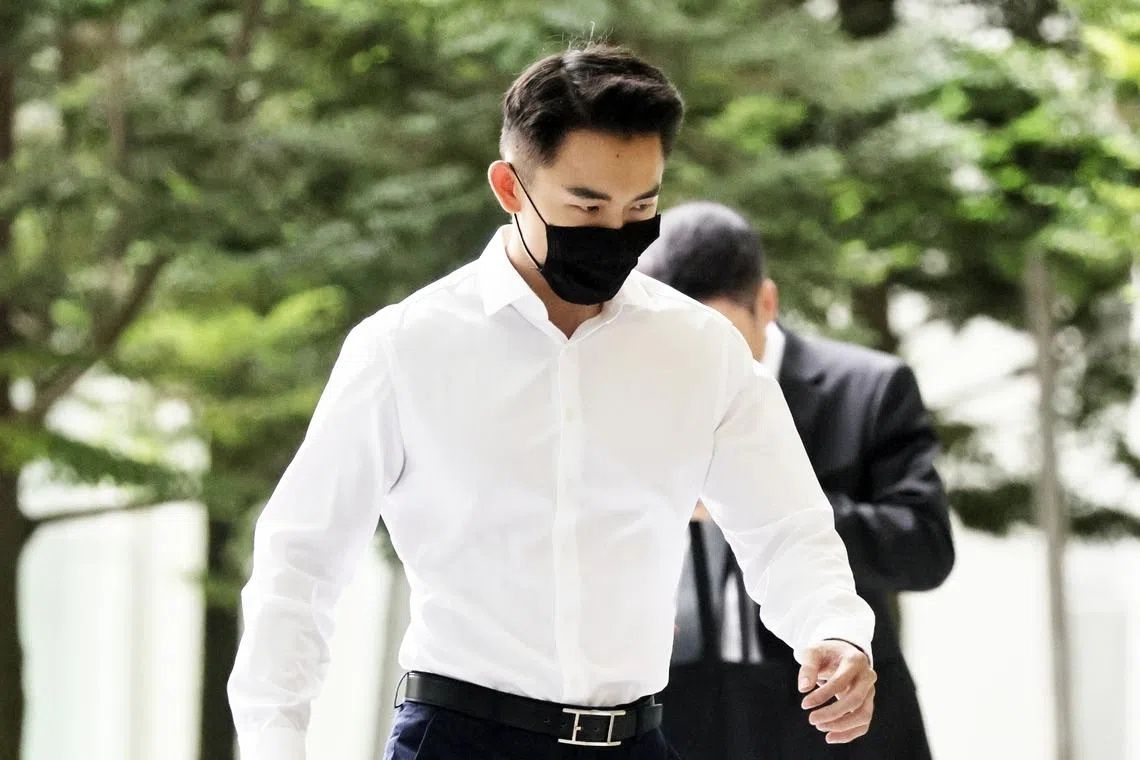
A 36-year-old medical doctor in Singapore has been found guilty of drug consumption after participating in a party at a luxury hotel villa that ended in a dramatic police operation. Rayson Lee Rui Sheng was convicted on Tuesday of consuming MDMA, commonly known as ecstasy, following his arrest during a coordinated enforcement action at the Sofitel Singapore Sentosa hotel in August last year. The conviction marks the conclusion of legal proceedings against one of 49 men detained during what authorities described as a significant drug operation at the upmarket venue.
The incident unfolded early on the morning of August 9, 2023, when police received information prompting them to conduct checks at the hotel just after 5:30am. Officers discovered what appeared to be controlled substances on the premises, leading them to summon the Central Narcotics Bureau to escalate the operation. During the subsequent search, authorities recovered multiple suspected drug items, including ecstasy and ketamine, along with apparatus associated with drug consumption. The scale of the operation reflected growing concerns about recreational drug use among affluent demographics in Singapore's expatriate and professional communities.
Lee was not alone in facing charges. A 29-year-old associate, Tan Li Ming, was similarly convicted of one count of drug consumption during the same Tuesday court session. Both men underwent toxicological testing, with their urine and hair samples subsequently analysed by the Health Sciences Authority. The laboratory results proved decisive in the legal proceedings, revealing traces of both MDMA and ketamine in their biological samples. These findings formed the cornerstone of the prosecution's case against the defendants, providing objective evidence of substance ingestion regardless of the circumstances under which consumption occurred.
Despite the scientific evidence, both defendants maintained that they were unknowing victims of drink spiking, a defence strategy that ultimately failed to convince District Judge A Sangeetha. Lee claimed that strangers at the villa had handed him three beverages without his knowledge of their contents, while Tan presented a more elaborate account of witnessing unidentified individuals using syringes to inject liquid into plastic cups. Tan alleged that after questioning one of these individuals, he was informed the substance was "G-water," a term he claimed not to understand. However, the judge found these narratives unconvincing, particularly noting that both men continued consuming additional drinks despite their suspicions about contamination.
The credibility assessment proved fatal to the defendants' legal position. Judge Sangeetha highlighted a critical contradiction: if the men genuinely believed their drinks had been tampered with, their decision to consume further beverages demonstrated remarkable recklessness. More damaging still, hair sample analysis revealed a pattern of prior drug consumption among both defendants, suggesting familiarity with narcotic substances rather than accidental exposure. The judge stated explicitly that "neither man was a stranger to drug use," implying a deliberate pattern of behaviour inconsistent with innocent victimhood claims. This historical evidence shifted the narrative away from individual circumstance and toward character assessment.
The prosecution team, represented by Deputy Public Prosecutors Jocelyn Teo and Dhiraj G Chainani, systematically dismantled the defendants' narrative by highlighting logical inconsistencies and absence of corroborating evidence. They noted that despite claiming to observe strangers spiking drinks, neither defendant could provide specific identifying details about these alleged perpetrators. The prosecutors emphasized that the defendants had constructed what amounted to "hypothetical scenarios and unexplained possibilities" rather than coherent, verifiable accounts. They further pointed out that even if the contested plastic cups had tested positive for drugs, such results would merely confirm consumption of drug-laced beverages rather than prove unknowing ingestion.
Lee's account of his movements that evening provided additional context to the court's assessment. He had initially attended a birthday celebration at the villa starting around 8pm on August 8, subsequently travelled to a nightclub in Clarke Quay where he met Tan, and then returned to the villa in the early morning hours. By the time of his return, significantly more guests had assembled, many of whom he did not recognize. This narrative structure actually undermined his credibility, as it suggested he maintained agency over his movements and choice to return to an environment he described as increasingly unfamiliar and potentially dangerous.
Tan's version of events contained similarly problematic elements that attracted judicial skepticism. His detailed description of witnessing individuals employing syringes to manipulate drinks, combined with his claim of subsequently questioning someone about "G-water," presented a scenario where he appeared to have adequate opportunity to remove himself from the situation or seek assistance. Instead, he remained at the venue and continued consuming beverages. The prosecution effectively argued that no reasonable person, having observed such suspicious activity, would persist in drinking without either departing or alerting authorities. This gap between Tan's professed observations and his subsequent behaviour suggested that his recollection of events diverged substantially from what actually occurred.
The case reflects broader enforcement patterns in Singapore, where authorities have intensified scrutiny of recreational drug use among higher-income, professional demographics. The Sentosa hotel location, popular among expatriates and visiting professionals, suggests that drug consumption extends beyond traditionally identified vulnerable populations. The arrest of 49 individuals indicates organized activity rather than isolated, opportunistic use. For Malaysian readers and regional observers, the case underscores Singapore's stringent drug enforcement approach and the serious consequences for professionals convicted of substance offences, which can include professional sanctions beyond criminal penalties.
The toxicological findings in both cases demonstrated the utility of hair sample analysis in establishing not merely acute consumption but historical patterns of drug use. This scientific evidence proved more persuasive to the court than eyewitness accounts or claims of external contamination. The prosecution's argument that credible evidence must identify specific perpetrators rather than rely on generic allegations of misconduct reflects contemporary judicial thinking about the burden of proof in drug-related cases. Where defendants claim victimization through spiked beverages, courts increasingly demand concrete evidence: identifiable individuals, documented threats, or supporting testimony from other attendees.
The convictions carry significant professional implications for Lee beyond the criminal penalty. Medical professionals in Singapore face mandatory reporting to the Singapore Medical Council, which maintains strict standards regarding substance abuse. A drug consumption conviction typically triggers disciplinary proceedings that can result in suspension or cancellation of medical registration, effectively ending a career in clinical practice. This collateral consequence extends the impact of criminal conviction far beyond sentencing imposed by the court, serving as a powerful deterrent within professional communities where reputation and licensure status constitute irreplaceable career assets.
The case also highlights the vulnerability of claims regarding drink spiking, particularly when presented retrospectively without contemporary corroboration. While drink spiking represents a genuine public health concern, especially regarding predatory offences, courts require substantial evidence when defendants invoke this defence in drug consumption charges. The absence of complaints to venue management, security staff, or other guests at the time of the alleged incidents weakens post-hoc claims of victimization. Lee and Tan's failure to pursue immediate remedies or alert authorities, combined with their continued engagement with the social environment where they claimed misconduct occurred, suggested deliberate rather than coerced participation in drug consumption.

