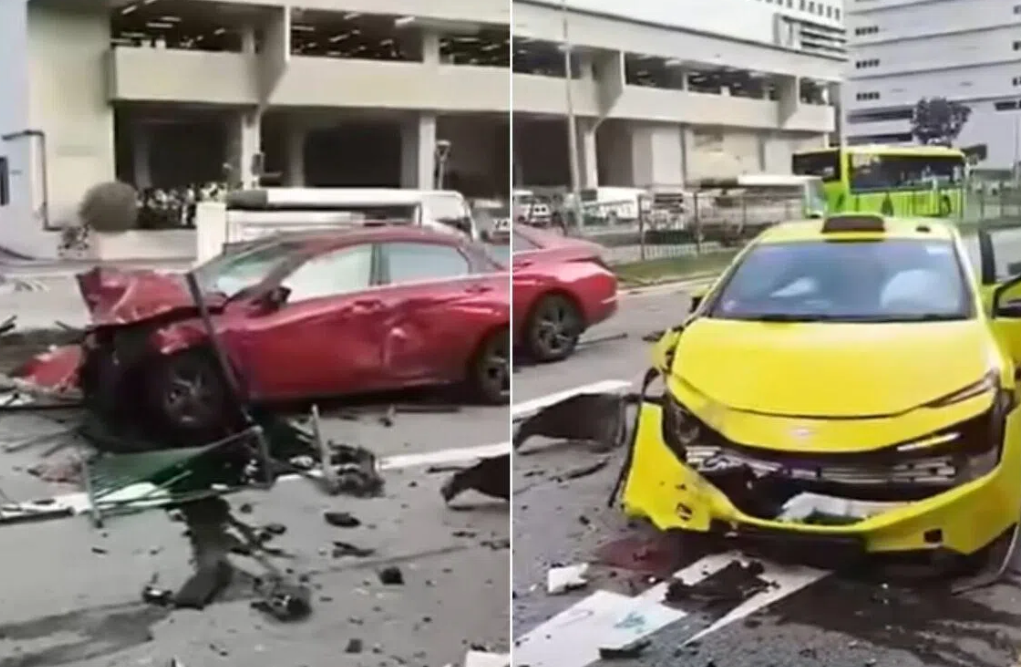
A Singapore motorist accused of driving recklessly while under the influence of methamphetamine caused a collision that left two people injured in the Kallang area, prompting authorities to file multiple serious charges against him. Mohamed Firdouz Mohamed Akram, 36, faced his initial court appearance on June 19 with allegations spanning dangerous driving, operating a vehicle without proper licensing, drug-related offences, and weapon possession.
The incident unfolded on the morning of June 17 when Firdouz allegedly operated a motor vehicle along Kallang Bahru at approximately 8am despite being under the influence of the illicit substance commonly referred to as Ice. According to court documents, he failed to maintain adequate control of the vehicle, leading to a direct collision with a licensed taxi operating in the vicinity. The impact of the crash resulted in injuries to both occupants of the taxi—a 60-year-old driver who subsequently reported experiencing chest pains and a 43-year-old passenger who sustained pain in her tailbone region.
What complicated the matter further was Firdouz's decision to abandon his vehicle at the crash scene and depart before law enforcement personnel arrived to investigate. This decision to flee demonstrated consciousness of guilt and triggered an immediate police response. Officers moved swiftly to identify and apprehend the suspect, achieving his arrest within five hours of the initial incident report, displaying the efficiency of Singapore's law enforcement coordination.
A subsequent search of Firdousz's abandoned vehicle revealed a concerning array of items that authorities seized as evidence. Police disclosed that suspected drug materials, drug paraphernalia including vaporisers, and a knuckleduster were discovered and confiscated. This discovery suggested premeditation and a broader pattern of illegal activity beyond the single driving incident. Further investigations led officers to a room at the Village Hotel Katong located on Marine Parade Road, where at approximately 1pm on the same day, Firdouz allegedly possessed two knives in his possession.
The cumulative nature of the charges underscores the seriousness with which Singapore's authorities treat dangerous driving incidents combined with drug use. Firdouz faces accusations including causing injuries to others through dangerous driving—a category of offence designed to protect public safety on roads. Additionally, he is charged with operating a motor vehicle without holding the requisite Class 3 driving licence, suggesting he may not have been legally authorised to drive the vehicle in question. The weapon possession charges related to the knuckleduster and knives represent separate criminal concerns that compound his legal jeopardy.
For Malaysian readers and regional observers, this incident highlights the escalating problem of drug-impaired driving across Southeast Asia. The prevalence of methamphetamine use in the region has created a significant public safety concern, as individuals under the influence of stimulants often exhibit impaired judgment, reduced reaction times, and dangerous driving behaviours that endanger innocent road users. This case exemplifies how a single act of drug use can rapidly escalate into multiple criminal charges and cause lasting physical harm to bystanders.
The legal consequences Firdouz potentially faces are substantial. Singapore law prescribes imprisonment of up to one year, a fine reaching S$10,000, or both for those convicted of driving under the influence of drugs. Additionally, those found guilty of causing injuries to persons while driving dangerously may receive up to one year imprisonment coupled with fines ranging from S$2,000 to S$10,000. The accumulation of multiple charges suggests sentencing could be significantly more severe than these individual penalties.
The weapon possession charges introduce another dimension to the case that raises questions about Firdouz's overall criminal intent and character. The discovery of multiple weapons—a knuckleduster and two knives—combined with drug paraphernalia suggests a pattern of behavior indicating propensity toward violence. This information, while not directly related to the driving incident, may influence judicial sentencing and paint a picture of systemic criminality rather than isolated misconduct.
For the victims in this case, the incident represents an involuntary encounter with danger through no fault of their own. The 60-year-old taxi driver was simply performing his occupational duties when subjected to a collision caused by another's recklessness and intoxication. The 43-year-old passenger similarly had no control over her exposure to this risk. Their injuries, while perhaps not classified as severe, nonetheless represent physical and emotional trauma resulting from preventable conduct.
Singapore's rapid apprehension of the suspect and prosecution demonstrates the city-state's commitment to road safety and swift justice. The five-hour timeframe between report and arrest reflects effective police work and coordination. However, the incident also raises broader regional questions about managing drug-related offences and their intersection with transport safety. As methamphetamine use expands throughout Southeast Asia, the region's law enforcement agencies face mounting challenges in detecting and deterring drug-impaired driving before tragedies occur.
The case will return to court on July 17 for further mention, where the prosecution will presumably present evidence substantiating the multiple allegations. Firdouz's legal team will have opportunity to mount a defence and potentially negotiate charges or sentencing. The outcome of this case may set precedent regarding how Singapore's courts balance the competing public safety concerns of dangerous driving, drug use, and weapon possession when these offences occur simultaneously.
This incident serves as a cautionary reminder to all road users across the region about the devastating consequences of driving while impaired. Whether through alcohol, prescription medications, or illicit drugs like methamphetamine, operating a vehicle under the influence transforms an ordinary person into a potential instrument of harm. For taxi drivers, delivery personnel, and others whose livelihoods depend on road safety, such incidents underscore the everyday risks they undertake.

