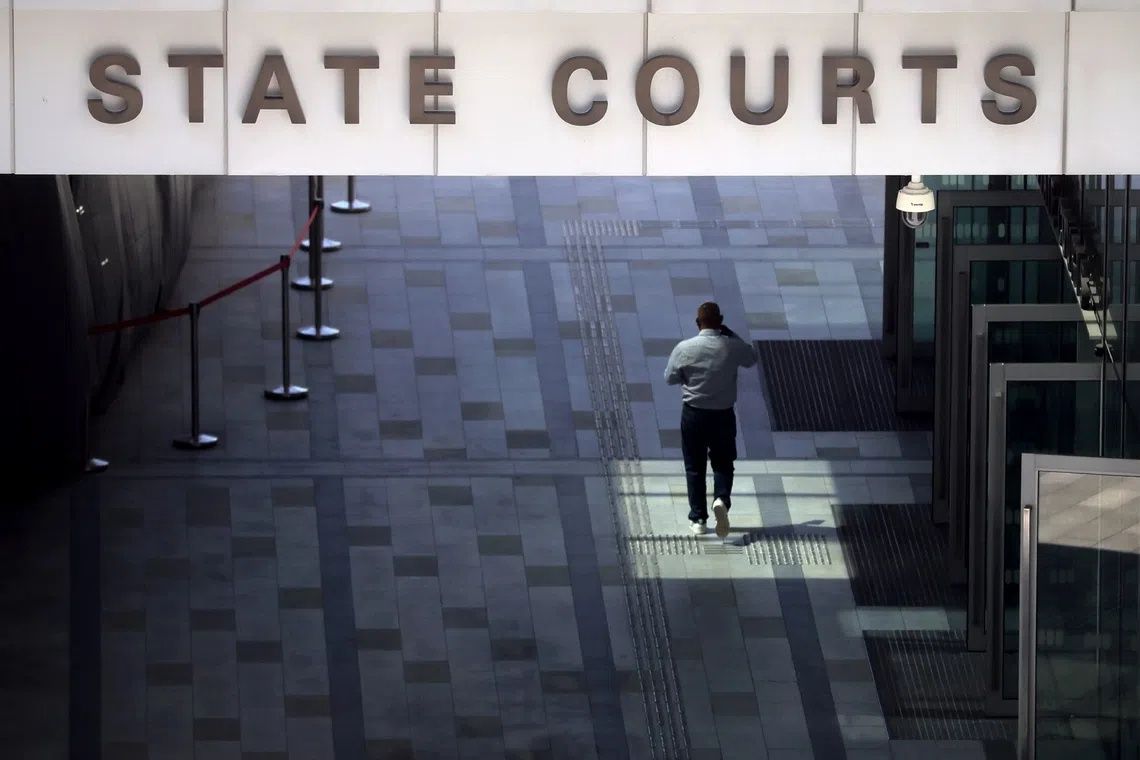
A 40-year-old Singapore father appeared in court on Thursday after being charged with two separate instances of child abuse involving his young son and daughter, raising fresh concerns about domestic violence and child protection in the city-state. The allegations span from September to October last year and include directing his 10-year-old son to undress at a flat as well as physically assaulting his eight-year-old daughter in a public setting, underlining the troubling reality that vulnerable minors may face threats both at home and in otherwise secure environments.
According to court documentation reviewed by The Straits Times, the first incident allegedly took place on September 8 last year at approximately 8:40 in the morning inside a residential unit on the eighth floor of an HDB block. The father is accused of instructing his young son to remove his clothing and subsequently take the lift unaccompanied down to ground level. While the court documents remain silent on whether the child actually followed through with these instructions, the alleged command itself has prompted authorities to investigate potential psychological harm and breach of duty of care owed by a parent to their offspring.
The second and separate allegation emerged from an incident at Changi Airport Terminal 3 on October 3 of the same year, occurring shortly before 6 in the evening during what would typically be a routine family movement through one of Southeast Asia's busiest transportation hubs. During this encounter, the father is said to have struck his eight-year-old daughter repeatedly through slapping, punching, and pushing, resulting in visible injuries to her face and neck regions. The public nature of this alleged assault—occurring in a major airport frequented by thousands of daily travellers—demonstrates how such incidents can unfold in spaces where child protection mechanisms and surveillance systems might theoretically offer safeguards.
The prosecution has filed two counts against the defendant under provisions governing child ill-treatment, a serious classification within Singapore's legal framework that reflects legislative intent to protect minors from parental negligence and violence. The identity of the father cannot be disclosed due to legal protections established to safeguard the privacy and psychological wellbeing of the two child victims, a measure consistent with Singapore's approach to shielding young complainants from media exposure and potential secondary victimization.
Court records notably contain no explanation for the motivations or circumstances that precipitated either alleged act, leaving observers and advocates wondering about the underlying family dynamics, stressors, or other factors that may have contributed to the incidents. This absence of disclosed reasoning complicates public understanding of the case and prevents fuller analysis of whether issues such as parental stress, mental health challenges, substance misuse, or relationship breakdown played any role in the alleged behaviour.
The case carries significant implications for child welfare policy in Singapore, where child abuse statistics and intervention mechanisms remain subjects of ongoing policy review. Each prosecution sends ripples through the social work community and raises questions about early identification systems, school-based reporting protocols, and whether healthcare providers, educators, or community members had prior indications of distress that might have enabled earlier intervention.
For Malaysian readers observing regional developments in child protection law, Singapore's handling of such cases provides instructive contrast and comparison points. While Malaysia has its own framework through the Children Act 2001 and various state-level provisions, the manner in which Singapore enforces penalties and constructs its legal apparatus reflects differing cultural and institutional approaches to family privacy, state intervention in domestic matters, and the balance between parental authority and children's rights.
The coming weeks will likely reveal additional details as the case progresses through Singapore's judicial system. A subsequent court mention has been scheduled for August 13, when prosecutors and defence counsel will present further arguments, potentially including submissions regarding bail conditions, psychological assessments, or other factors influencing how the matter advances. Given the seriousness of the charges and the involvement of young children, the court's eventual ruling could establish or reinforce important precedents regarding sentencing standards for child abuse offences in Singapore.
Civil society organizations and child advocacy groups have long emphasized that physical and emotional abuse within families requires coordinated responses spanning law enforcement, social services, mental health professionals, and educational institutions. This case underscores the ongoing necessity for public awareness campaigns, training programmes for professionals who interact with children, and accessible reporting mechanisms that empower community members to raise concerns without fear of retaliation or bureaucratic obstruction.
The broader context within which such incidents occur includes widespread recognition across Southeast Asia that child protection remains an evolving challenge despite legislative frameworks and institutional commitments. Economic pressures, evolving family structures, migration patterns, and pandemic-related stressors have all featured in sociological analyses of changing parenting practices and potential vulnerability factors. Singapore's typically low reported rates of child abuse may reflect both strong preventive infrastructure and the possibility that underreporting remains problematic, a tension familiar to analysts across the region.
As the case proceeds through Singapore's courts, attention will naturally focus on how the legal system balances punishment for wrongdoing with opportunities for rehabilitation, family support, and protection of the children involved. The outcome will serve as a data point within broader regional conversations about state responsibility for child welfare, the appropriate scope of parental authority, and how societies can better protect minors without unnecessary state intrusion into family life.

