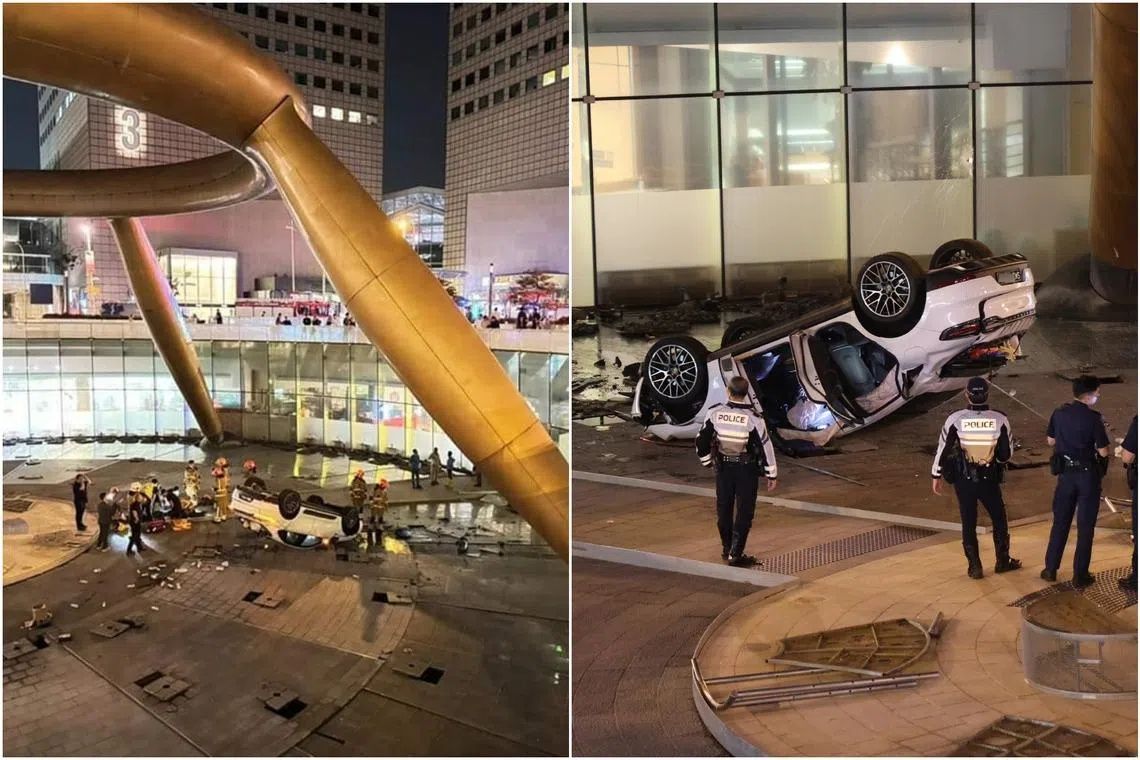
A 58-year-old man has been handed a five-week jail sentence in Singapore after consuming approximately one litre of beer and subsequently driving his vehicle directly into the Fountain of Wealth at Suntec City on July 13, 2024. The incident, which caused substantial property damage estimated at nearly S$64,600, highlighted the serious consequences of drink-driving and the thin margin between a traffic incident and potential tragedy in urban environments.
Then Shing Chong arrived at the shopping mall around 6pm on July 12, 2024, having left his home to meet a friend for an evening drinking session. He parked his vehicle in the basement carpark and proceeded to a bar, where he consumed the beer between 6:15pm and midnight. During the District Judge's court proceedings this week, the prosecutor established a clear timeline demonstrating the accumulation of alcohol consumption before the defendant attempted to drive home.
While exiting the carpark, Then's vehicle remained stationary for approximately ten seconds after the gantry barrier lifted to allow passage. However, his subsequent driving along Temasek Boulevard revealed the impairment that would lead to the accident. He failed to maintain focus and ignored directional signage indicating a required left turn into a roundabout, instead continuing straight through three lanes before striking the barricade surrounding the iconic fountain and plummeting into its basement level.
The severity of the situation became apparent through the Deputy Public Prosecutor's submission to the court. Three construction workers were actively engaged in maintenance work at the basement of the fountain when the vehicle crashed through. The workers managed to flee the area without injury, but the prosecutor emphasised that had they been positioned directly beneath the impact zone, the consequences would have been catastrophic. This observation underscores how drink-driving incidents carry not merely financial implications but genuine risks of serious harm or death to unsuspecting third parties.
Compounding the incident's seriousness was the fact that Then admitted to consuming either an antihistamine or a sleeping pill before the alcohol consumption. When questioned by the Institute of Mental Health, he disclosed this medication use, raising questions about his judgment and the potential compounding effects of combining pharmaceutical substances with significant alcohol intake. Notably, his blood and breath alcohol content were not measured immediately following the accident, as he was instead rushed to Tan Tock Seng Hospital where he received treatment for injuries including a lacerated scalp sustained during the crash.
The court proceedings involved notable debate regarding sentencing considerations. The defence team, representing Then through lawyers from Invictus Law Corporation, submitted an IMH report indicating that their client suffered from major depressive disorder at the time of the offence. They requested a mandatory treatment order rather than custodial sentencing, arguing a causal link between his psychiatric condition and the dangerous driving behaviour. This argument sought to position mental health treatment as more appropriate rehabilitation than imprisonment.
However, the prosecution vigorously opposed this approach. The Deputy Public Prosecutor contended that the circumstances demanded a deterrent sentence, emphasising that drink-driving represents highly irresponsible behaviour requiring strong societal messaging. The prosecutor highlighted not only the substantial property damage but also the genuine risk of serious injury or fatality that Then's actions had created. District Judge Koo Zhi Xuan sided with the prosecution's position, rejecting the mandatory treatment order request and imposing the five-week custodial sentence instead.
Beyond the jail term, Then faces significant restrictions on his driving privileges. He has been disqualified from holding or obtaining any class of driving licence for two and a half years from his release from custody. This lengthy disqualification reflects judicial concern about his fitness to operate vehicles and aims to prevent future incidents of similar nature. Importantly, the defendant has already made full restitution for the property damage, demonstrating financial accountability if not necessarily acceptance of responsibility for his actions.
The case resonates particularly in the Southeast Asian context, where urban areas increasingly grapple with the intersection of alcohol consumption culture, motorised transport, and public safety. Singapore's strict approach to drink-driving enforcement and sentencing serves as a benchmark for regional jurisdictions considering their own traffic safety policies. The incident at Suntec City, a landmark shopping destination frequented by residents and tourists alike, underscores how dangerous driving incidents affect not only the immediate perpetrator but public confidence in urban spaces.
For Malaysian readers and regional observers, the Suntec incident illustrates the tangible consequences of decisions made after alcohol consumption. The narrow escape by the construction workers serves as a stark reminder that drink-driving carries consequences extending far beyond the driver and their vehicle. The judicial emphasis on deterrence over purely therapeutic approaches also reflects broader questions across ASEAN jurisdictions about balancing rehabilitation with public protection in traffic safety matters.
The sentencing underscores that even when psychiatric factors are present, courts will not necessarily prioritise treatment options when public safety and deterrence concerns are paramount. Then's case demonstrates that courts increasingly view drink-driving as sufficiently serious to warrant custodial sentences despite mitigating mental health circumstances. For drivers across the region, the message is unambiguous: operating a vehicle under the influence of alcohol carries severe legal and personal consequences, regardless of underlying health conditions.

