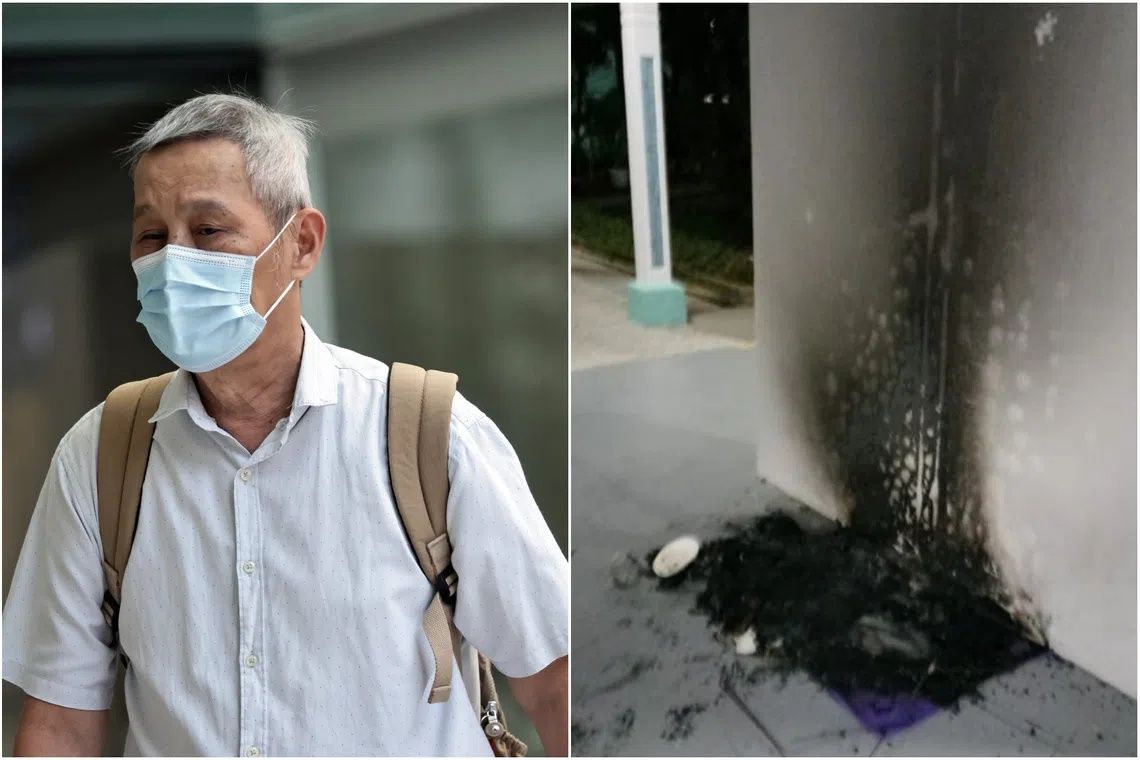
A Bukit Batok retiree has been sentenced to three months in jail after deliberately setting fire to cardboard shelters built for stray cats near his home in Singapore. Koh Teng Boo, 68, pleaded guilty to committing mischief by fire on Tuesday following two separate incidents in late 2025 that resulted in more than S$900 worth of damage to the ground and walls of the void deck pavilion area. The case highlights the tensions that can emerge when community welfare initiatives, particularly those involving animal care, clash with residential concerns over hygiene and neighbourhood conditions.
Koh's frustration with the cat houses began in September 2025 when he observed cardboard structures being erected around the pavilion and void deck area near his residence at Bukit Batok East Avenue 4. According to Deputy Public Prosecutor Stephen Yeo, these shelters were specifically designed to provide refuge for stray cats and were stocked with food and water as part of a community care programme. Koh's primary objections centred on what he perceived as secondary consequences of the scheme: he believed the cat houses attracted birds to the area and, more significantly, feared they would become a magnet for pests. Rather than accepting the situation passively, he chose to escalate his concerns formally by bringing the matter to the attention of his Member of Parliament.
The initial conversation with his MP did not yield the results Koh desired. In October 2025, having observed no visible action taken in response to his representations, Koh decided to take matters into his own hands. He removed three of the cat houses and placed them into an incense burner bin before igniting them, destroying the structures through fire. His rationale, as later explained to investigators, was straightforward: since his appeal to the MP had produced no tangible outcome, he felt justified in removing the structures himself. However, his actions proved ineffective as a deterrent. Just two days after the initial incident, Koh noticed that fresh cat houses had been installed around his residential block by what he assumed were community volunteers or animal welfare advocates.
Instead of accepting defeat, Koh pursued a dual strategy. On November 17, approximately one month after his first destructive act, he arranged another meeting with his MP. During this second engagement, he reiterated his earlier concerns about the cat houses, emphasising that his objections were not rooted in any personal animosity towards cats themselves. Rather, he contended that the practice of maintaining feeding stations with water and shelter was fundamentally unhygienic. He additionally noted that some residents had begun using the cat houses as convenient receptacles for litter, further compounding his concerns about sanitation and neighbourhood cleanliness.
The warnings went unheeded, and Koh's patience finally snapped. Two days after his second meeting with his MP, on November 19 at approximately 1.30am, Koh returned home after consuming alcohol. He encountered one of the cat shelters and, acting on impulse or deliberate intent, used a lighter to set it ablaze before walking away and leaving the fire to burn unattended. The circumstances surrounding how the fire was eventually extinguished remain unclear, as investigations yielded no definitive information on this point. Nevertheless, the damage to the void deck's flooring and walls was substantial enough to require professional repair.
Koh's arson spree continued the following day. Angered that the cat houses remained in place despite his repeated complaints and destructive actions, he targeted another shelter on November 20. Once again, he ignited the structure and departed the scene. This time, however, his actions were observed by two passers-by who, recognising the danger and demonstrating greater civic responsibility than Koh, extinguished the fire before it could spread or cause additional damage. Koh's criminal escapade ended shortly thereafter when he was apprehended later that same day.
The financial toll of Koh's actions was quantified by authorities. The Jurong-Clementi-Bukit Batok Town Council determined that repairs to the flooring and walls near the burnt cat houses amounted to S$913. This figure, whilst seemingly modest, represents the direct monetary cost of his destructive behaviour. Significantly, Koh demonstrated remorse and a willingness to take responsibility by making full restitution to the town council, a factor that likely influenced the sentencing decision in his favour.
Under Singapore law, the offence of committing mischief by fire—defined as deliberately causing damage to property through fire—carries substantial penalties. Individuals convicted of this crime face potential imprisonment of up to seven years and may be subjected to financial fines. Koh's three-month sentence, therefore, represents a relatively lenient outcome within the legal framework governing such offences. This leniency may reflect his age, his guilty plea, his restitution, and the absence of injury to persons, though the courts clearly deemed the conduct serious enough to warrant custodial punishment.
The case raises broader questions about community dispute resolution and the mechanisms available to residents dissatisfied with neighbourhood initiatives. Rather than pursuing additional formal channels—such as lodging complaints with town councils, attending residents' committee meetings, or seeking legal injunctions—Koh opted for direct action through property destruction. His actions, whilst understandable as expressions of frustration, crossed a clear legal and ethical line. The incident also underscores the growing tensions between animal welfare advocates and residents in densely populated urban environments, a phenomenon not unique to Singapore but increasingly evident across Southeast Asia as animal rescue and community cat feeding programmes expand in cities.
For Malaysian readers and residents of other Southeast Asian nations, Koh's case serves as a cautionary tale about the consequences of vigilante responses to civic grievances. Community concerns about hygiene, pest control, and neighbourhood aesthetics are legitimate matters worthy of serious discussion and formal resolution. However, taking the law into one's own hands, particularly through acts of arson, invariably results in criminal liability and can endanger lives. The case also demonstrates that even retirees acting from what they perceive as reasonable motivations face serious jail time if they resort to property destruction. Moving forward, the incident may prompt Singapore authorities and community leaders to develop clearer protocols for addressing resident concerns about animal welfare initiatives, ensuring that future disputes can be resolved through dialogue and compromise rather than confrontation.

