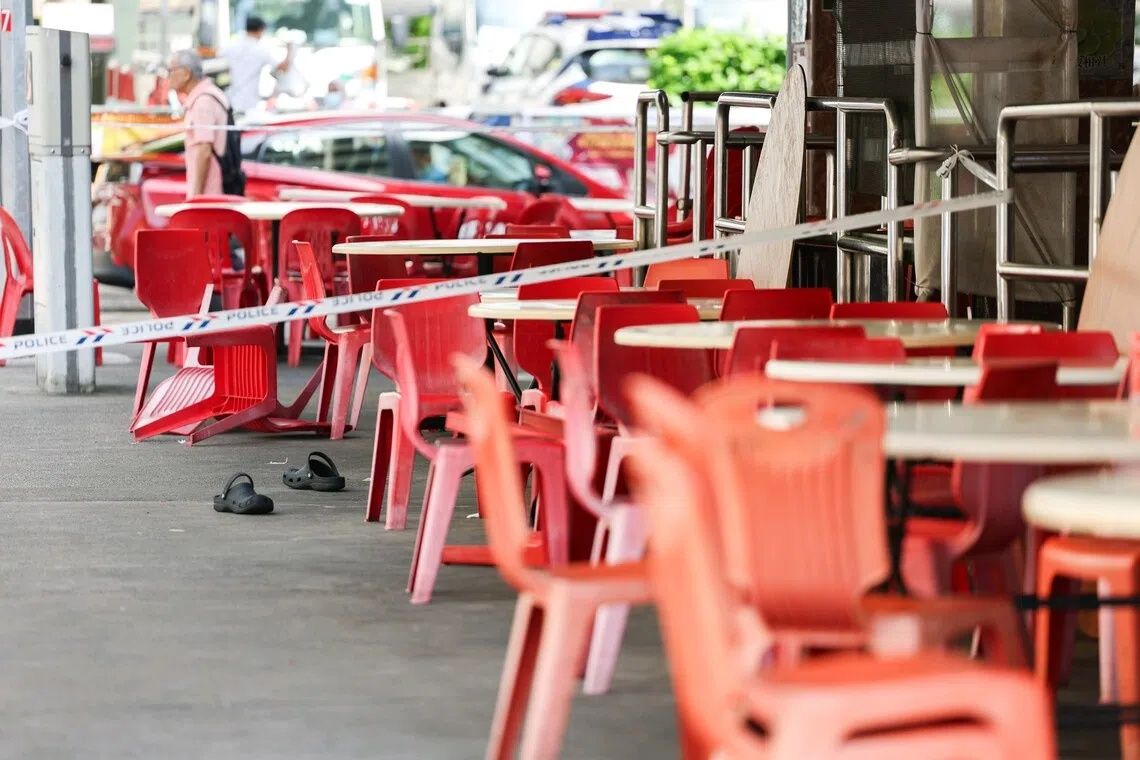
A Singapore court has imprisoned a 22-year-old man for 17 months following his guilty plea to charges arising from a violent street altercation that claimed a life. Pradave Shashi Kumar admitted to voluntarily causing hurt using a dangerous weapon—specifically, a chair he wielded during the incident along Kitchener Road on September 22, 2024. The case underscores the severity of mob violence in Singapore and how secondary participants in group attacks face serious criminal consequences, even when not wielding the primary weapon.
The victim, 25-year-old Dhinessh Vasie, died from critical injuries sustained during the brawl, including a stab wound to the heart. His death transformed what might have been treated as a typical street fight into a homicide investigation, with prosecutors building cases against four men accused of playing distinct roles in the fatal violence. Kumar's conviction marks the first resolution in what has become a multi-defendant proceeding, with the remaining three accused facing far graver charges that could result in substantially longer prison terms.
The sequence of events leading to the tragedy began innocuously enough when Kumar and his companions—including Muhammad Sajid Saleem, Satish Jason Prabhas, and Kirrthik Roshan Prem Ananth—departed a nightclub at Golden Mile Tower in the early hours of the morning. The group, accompanied by two women, travelled by private hire vehicle to a pub along Sam Leong Road to extend their night out. Around 4 a.m., as they walked through a back alley, they encountered another group of eight men embroiled in a heated dispute with three women, among whom was Vasie.
The confrontation escalated when Satish engaged in verbal altercation with one of the men in Vasie's group before throwing punches, according to testimony presented to the court by Deputy Public Prosecutor Jonathan Tan. This initial physical exchange rapidly spiralled into a chaotic melee involving multiple participants from both sides. The situation became increasingly dangerous when Vasie's group attempted to retreat toward the back alley near Verdun Road, prompting pursuit from Kumar and his associates.
Witnesses observed Sajid wielding a knife with a 7.5-centimetre blade during the pursuit, holding it with the blade pointed downward in an aggressive stance. Upon seeing the weapon, Vasie and his companions attempted to flee further, running in the direction of a coffee shop located at the intersection of Verdun Road and Sam Leong Road. However, the pursuing group managed to catch up with them as Vasie began to slow and eventually halted near the coffee shop entrance.
The prosecution's account reveals that Sajid caught Vasie and inflicted the fatal stab wound to his upper back while the victim was in a vulnerable position. Simultaneously, Kirrthik seized a chair from the coffee shop and used it as a weapon to repeatedly strike Vasie. Kumar then joined this assault phase by picking up a second chair and forcefully striking Vasie twice—once on the head and once on the chest. Throughout this violent assault, Vasie remained slumped and unable to defend himself, presenting no resistance to his attackers.
Following the attack, the assailants quickly fled the scene and made their way toward City Square Mall, leaving Vasie critically wounded at the coffee shop. Emergency services arrived shortly thereafter, but Vasie's injuries proved fatal. Police arrested Kumar at approximately 5:15 a.m. on the same day, initiating the formal investigation process that would eventually lead to charges against all four men involved in the incident.
Kumar's sentencing reflects judicial recognition that participating in a fatal group assault, even in a supporting capacity rather than as the primary weapon wielder, warrants substantial custodial punishment. The 17-month sentence sits within the possible range for voluntarily causing hurt using a dangerous weapon, which carries maximum penalties of up to seven years' imprisonment, fines, caning, or combinations thereof. The court's decision suggests consideration of both the severity of the victim's eventual death and Kumar's role in the broader assault, though his culpability was assessed as somewhat lesser than those directly responsible for the stabbing.
The three remaining defendants face markedly different legal jeopardy. Sajid, identified as the knife wielder, confronts a murder charge carrying potential life imprisonment or capital punishment under Singapore law. Satish and Kirrthik face rioting charges, which address their participation in the larger group violence and their roles in the violent assault. These prosecutorial distinctions reflect the specificity of Singapore's criminal statutes in differentiating between those who inflict fatal wounds and those who participate in the supporting violence.
For readers across Southeast Asia, the case illustrates how common street violence can rapidly escalate into tragedy through group dynamics and weapon availability. The incident demonstrates the particular danger posed when initial altercations, however mundane their origins, occur in late-night entertainment districts where alcohol consumption and social tensions converge. Singapore's response—pursuing convictions against all four participants rather than focusing solely on the primary weapon wielder—reflects a legal philosophy that holds group members collectively accountable for fatal outcomes, even when their individual contributions vary significantly.
The circumstances surrounding Vasie's death also highlight vulnerabilities that occur when victims become immobilised or cornered. His decision to slow down and halt near the coffee shop, whether from exhaustion or disorientation, proved catastrophic as it allowed the pursuing group to close the distance and cornered him in a location where improvised weapons were immediately accessible. The presence of readily available chairs transformed an already dangerous pursuit into an opportunity for amplified violence.
As Kumar begins his prison term, the judiciary awaits the resolution of the three remaining cases, which will likely generate substantial publicity given the serious charges involved. These proceedings will test Singapore's criminal justice system's response to organised group violence and provide precedent for how courts balance individual culpability against collective responsibility. For the region's broader law enforcement community, the case underscores ongoing challenges in preventing escalation of minor altercations into fatal encounters and the particular danger posed by mob dynamics in urban entertainment precincts.

