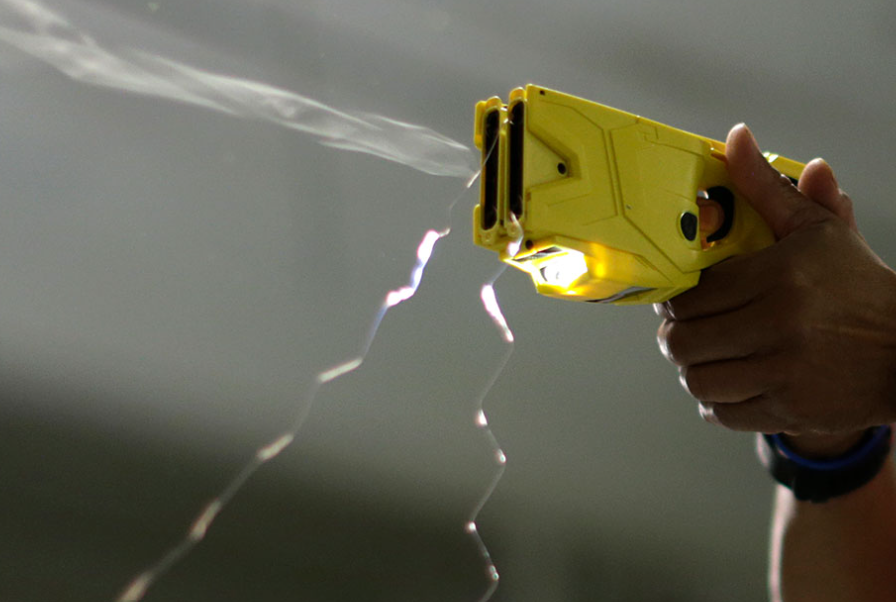
A 55-year-old man in Singapore was arrested on July 5 following an incident in which he wielded a saw while refusing to obey police instructions at a Housing Board residential block in Bedok North, prompting officers to deploy a Taser device to bring the situation under control.
Police received a distress call around 3.25 p.m. regarding the man's behaviour near Block 539 Bedok North Street 3. Officers dispatched to the scene found the individual brandishing the saw and displaying erratic conduct that posed an immediate public safety concern in the crowded residential area.
According to the police statement issued the same day, the man repeatedly ignored officers' directions to relinquish the saw and instead continued to exhibit disruptive behaviour. His incoherent shouting and refusal to comply with lawful police commands escalated the tension at the scene and prevented immediate resolution of the crisis.
Recognising the need to neutralise the threat without causing unnecessary harm, police officers made the tactical decision to deploy a Taser—an electroshock weapon designed for rapid incapacitation in volatile situations. The device proved effective in subduing the man and enabling officers to safely apprehend him without reported injury to him or other parties present.
The intervention highlights Singapore's law enforcement approach to managing public safety incidents involving armed or threatening individuals. The use of less-lethal force options such as Tasers represents a middle ground between verbal de-escalation and more severe force measures, and their deployment reflects established protocols for containing situations where subjects present genuine danger to themselves or the public.
Following his arrest, the man faced four distinct charges relating to his conduct. These included creating a public nuisance through disruptive behaviour in a public space, unlawfully possessing what police classified as an offensive weapon in a public area, and a suspected drug-related offence based on preliminary findings at the scene. The seriousness of these charges underscores how Singapore's criminal law treats both weapons-related offences and substance-related matters with considerable gravity.
The man was transported to Changi General Hospital while conscious, indicating that the Taser deployment and subsequent arrest did not result in serious injury requiring emergency intervention. This stands in contrast to some international incidents where police use of force has resulted in significant medical complications, suggesting the officers' actions achieved their immediate objective of containing the threat while preserving the man's health and wellbeing.
The suspected drug consumption element of the case has been forwarded to Singapore's Central Narcotics Bureau, the national agency responsible for drug enforcement and investigation. This referral suggests that officers detected preliminary indicators of controlled substance use—potentially through observation of the man's behaviour, statements made during arrest, or physical evidence discovered at the scene. Such referrals are standard protocol when substance involvement is suspected in criminal incidents.
Investigations into both the weapons possession and drug-related aspects remain ongoing, meaning authorities have not yet finalised their findings or determined whether additional charges may be warranted. The referral to the Central Narcotics Bureau will likely involve testing or further evidence gathering to substantiate the drug allegations and determine which controlled substances, if any, were involved.
For Malaysian observers, this incident reflects broader regional challenges around public safety and the management of individuals in psychological distress or under the influence of substances. Singapore's swift response and documented use of controlled force demonstrate the protocol-driven approach that many Southeast Asian police services aspire toward, even as questions persist internationally about the appropriateness and proportionality of Taser use in various contexts.
The case also illustrates how residential areas remain vulnerable to sudden disturbances that can alarm nearby residents and disrupt communal life. The Bedok North incident, occurring in a densely populated neighbourhood, would have attracted attention from residents and potentially required police to manage not only the suspect but also public anxiety and safety concerns among those living in proximity to the incident location.
No injuries to police officers, bystanders, or the arrested individual were reported, indicating that the situation was resolved without escalating to violence. This outcome is the preferred result in such scenarios, even though it required deployment of force technology. The case exemplifies how police training and decision-making in real-time crisis situations aim to minimise harm while protecting public safety and upholding law and order in densely populated urban environments.

