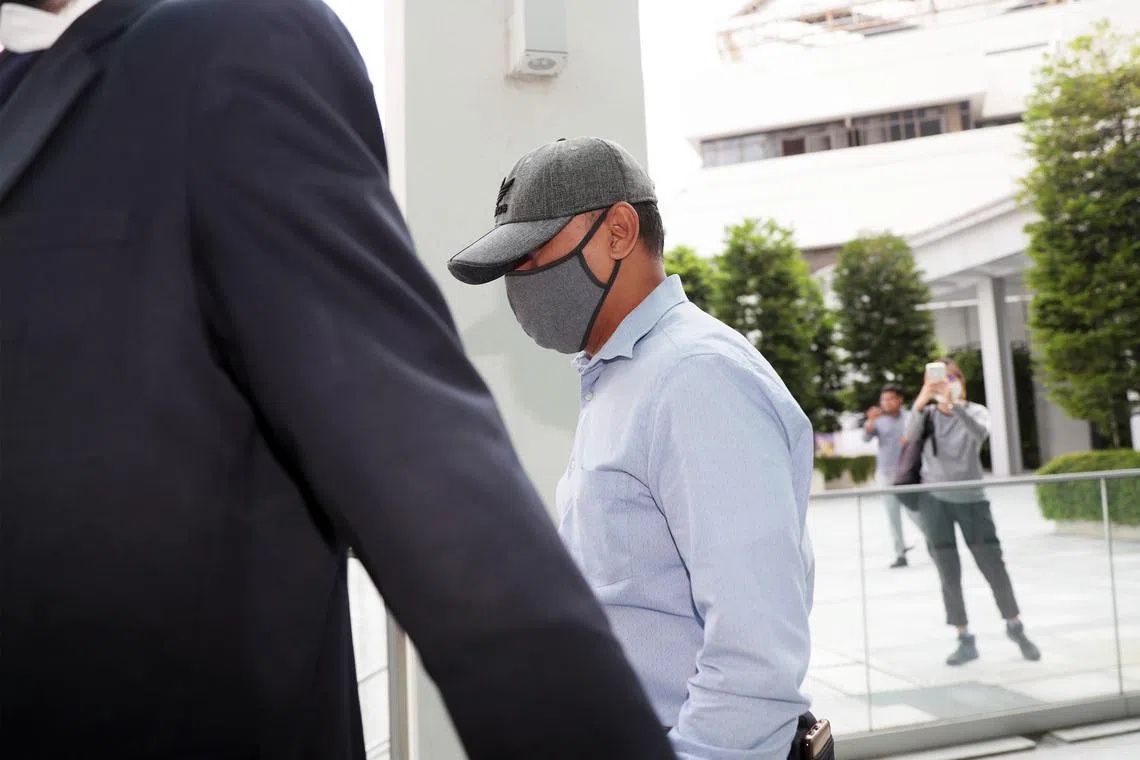
Abdul Rahim Mawasi, the 59-year-old former executive chairman of Darul Aman Mosque and Sallim Mattar Mosque in Singapore, has been handed a 14-month jail sentence following his conviction on corruption charges. The sentence, delivered on June 26, stems from his role in steering construction contracts worth S$223,000 to a business associate in exchange for equity stakes in a travel company venture. The case underscores persistent vulnerabilities in institutional procurement processes and the personal networks that can compromise public trust in religious organisations managing community resources.
At the time of the offences, Mawasi held a senior position with the Islamic Religious Council of Singapore (MUIS), having joined the body in 2005. He was seconded to lead the management boards of both mosques, positions that granted him significant influence over purchasing decisions and vendor selection. This dual institutional responsibility—combining his MUIS role with direct mosque governance—created structural opportunities for conflicts of interest that appear to have gone undetected for months before authorities intervened. The case raises questions about oversight mechanisms within religious institutions and whether secondment arrangements adequately segregate decision-making authority.
The corrupt arrangement emerged from a personal relationship spanning over a decade. In July 2018, Mawasi proposed to his longtime friend Mohd Mustaqim Kam, then 66 years old and a director at construction firm Zeal-Con Engineering, that they establish a pilgrimage travel company together. The partnership operated on an unusual basis: Mawasi would contribute no initial capital but would instead leverage his institutional position to secure construction contracts for Zeal-Con. The company would then channel profits from these contracts into the travel venture as paid-up capital, effectively monetising Mawasi's access and influence without any direct financial investment on his part.
Darul Aman Mosque initiated the first opportunity in 2018 when it sought vendors for yard construction work. Zeal-Con submitted competing quotes on August 20 and September 12, with prices of S$128,600 and S$118,000 respectively. Court evidence established that Mawasi had engaged in extensive discussions with Kam regarding bidding strategy and provided crucial price intelligence that guided the revision downward. The final Zeal-Con quote of S$118,000 undercut the next-closest competitor, whose bid stood at S$125,500. On September 26, 2018, the mosque's management board awarded the contract to Zeal-Con, unaware that their chairman had actively negotiated pricing details with the winning bidder outside formal procurement channels.
The pattern repeated at Sallim Mattar Mosque, where a similar sequence of quote submissions and price reductions occurred. Zeal-Con initially quoted S$115,700 in September 2018 for roof and reception area works, then lowered this to S$105,000 by July 2019. Mawasi again advised Kam to reduce the quotation to secure the contract award. When Sallim Mattar issued contract letters the following month, the total value of both mosque projects approached S$223,000—a substantial sum representing the accumulated benefit of the corrupt arrangement. The prosecutor emphasised that while the physical construction work itself was completed satisfactorily, neither mosque nor the broader community benefited from genuine competitive tendering.
To obscure his personal financial interest in the scheme, Mawasi orchestrated an arrangement involving his own son. By November 2019, Kam had converted an existing shell company into Amal Travel and Tour (ATT), increasing its paid-up capital from S$37,500 to S$100,000 across 100,000 shares. Kam then allotted 25,000 ATT shares valued at S$1 each to Mawasi's son, effectively transferring the corrupt proceeds to the next generation while maintaining plausible deniability. This layering tactic—routing equity through a family member rather than holding shares directly—constituted an additional deceptive element designed to evade detection by MUIS oversight authorities.
During trial proceedings, Mawasi denied all involvement with ATT and noted accurately that he held no direct shareholdings in the company. However, the cumulative evidence proved his active participation in structuring the arrangement precisely to avoid formal disclosure obligations. The prosecution argued forcefully that Mawasi had committed a serious public sector corruption offence motivated by personal financial gain, regardless of whether he technically held equity certificates. His defence counsel, Satwant Singh Sarban Singh, emphasised his client's clean record and sought a more lenient sentence of no more than six months imprisonment, arguing for mitigation based on first-time offender status.
The court rejected the lenient submission, sentencing Mawasi to 14 months imprisonment and setting bail at S$30,000 pending the July 10 commencement date. His co-conspirator, Kam, had already received a six-month jail sentence in February 2025 after his own conviction. The differential sentencing reflects judicial recognition that Mawasi, as the trusted institutional insider, bore primary responsibility for the corruption. He exploited his positional authority and insider knowledge in ways that a mere contractor could not replicate, making his culpability more serious despite their shared participation in the scheme.
The case carries significant implications for religious and community institutions across Southeast Asia that manage substantial resources through governance boards. Many such organisations rely on goodwill and personal trust rather than implementing rigorous procurement protocols and conflict-of-interest declarations. Mawasi's activities remained undetected for months despite the mosque communities directly bearing the procurement costs. The absence of routine competitive tendering audits, independent procurement committees, or mandatory disclosures about board members' commercial relationships enabled what prosecutors characterised as straightforward corruption.
For Malaysian readers, the Singapore case provides instructive parallels to governance challenges within religious institutions here. Local mosques, Islamic councils, and wakaf management boards similarly manage substantial construction projects and vendor relationships. While Malaysia has formalised frameworks through bodies like Jakim and state Islamic authorities, individual mosque management committees sometimes operate with limited external scrutiny. The Mawasi case demonstrates how senior officials with dual institutional roles can exploit procurement ambiguity, particularly when personal relationships with vendors remain undisclosed. It underscores the necessity for transparent bidding processes, mandatory conflict-of-interest declarations, and independent verification mechanisms—protections that benefit institutional credibility and community confidence.
The conviction also highlights evolving enforcement approaches to white-collar corruption in the region. Rather than viewing the modest S$223,000 figure as negligible, Singapore authorities pursued prosecution vigorously, recognising that institutional corruption erodes public trust disproportionately to the financial amounts involved. The careful documentation of price discussions, the tracing of equity transfers, and the reconstruction of decision-making timelines demonstrate sophisticated investigation capabilities focused on establishing mens rea—criminal intent—rather than simply proving contract irregularities. This investigative rigour sends a signal to public officials across the region that procurement manipulation and hidden financial interests will face serious consequences, regardless of whether measurable financial losses can be quantified.

