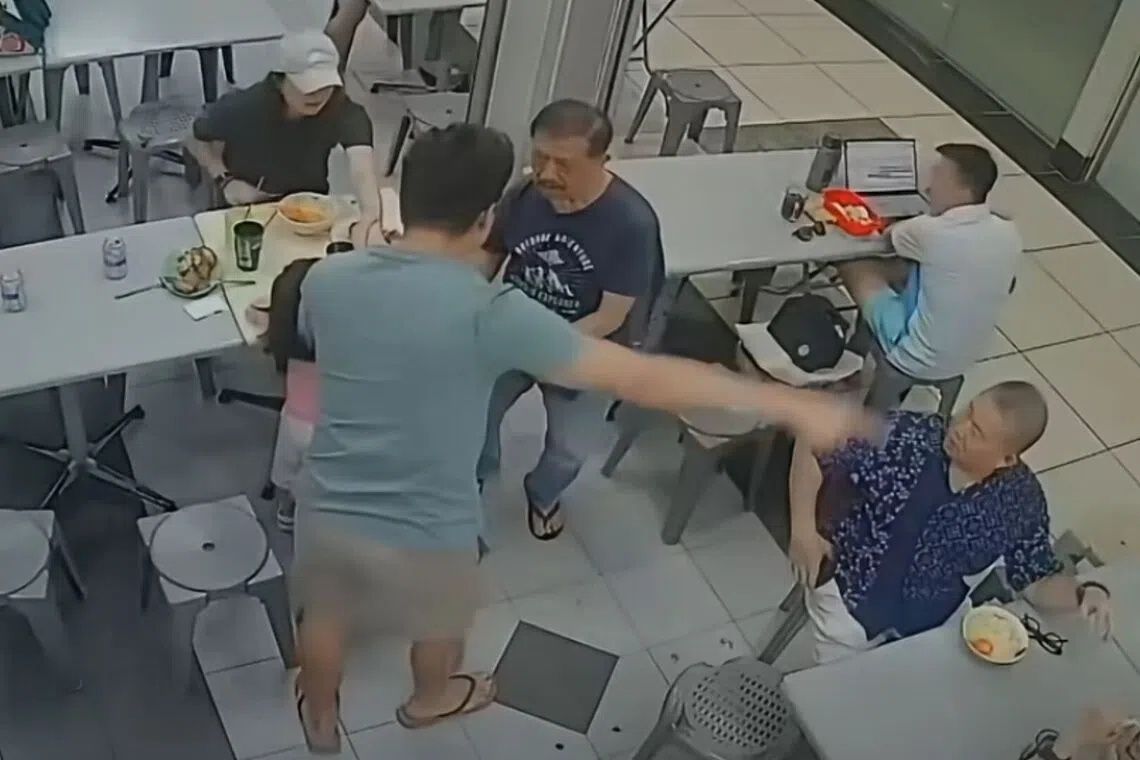
Singapore's police force has opened an investigation into a confrontation at an East Coast coffee shop that resulted in an elderly man being forcibly knocked to the ground, following a casual gesture toward a young girl that escalated into physical violence. Officers confirmed on Sunday, 16 August, that a formal report was lodged and that inquiries are actively proceeding into the matter.
The incident came to public attention through a social media post made by the elderly man's son on Facebook late on 15 August, in which he described his father as being in his 70s and asked the online community to help identify the person responsible for shoving him. The son explained that his aging father, who had mobility challenges and worked part-time assisting at a food stall within the same coffee shop, had encountered an unexpected confrontation while moving through the establishment.
Security camera footage released by the family provides a clear visual account of how the situation unfolded. The footage shows the elderly man navigating the coffee shop floor by gripping tables on either side for balance and support as he made his way between customers. His movement pattern demonstrates the physical limitations he contends with daily, suggesting caution was warranted given his fragile condition.
As the elderly man proceeded along his path, he extended his hand in a patting gesture toward a girl seated at one of the tables—a common, informal gesture in many Asian cultures when greeting or acknowledging children. His action, however, prompted an immediate response from a woman sitting at the same table, who raised her hand to deflect his touch away from the child.
The situation escalated rapidly when a man seated at the table, who had stepped away moments earlier, returned to the scene upon witnessing or being informed of the interaction. Rather than engaging in conversation, he moved directly toward the elderly man and began a verbal altercation with him, his body language and tone suggesting considerable agitation and anger over the patting incident.
Within seconds of beginning this verbal confrontation, the man physically shoved the elderly visitor, causing him to fall forcefully to the ground. The sudden nature of the push, combined with the elderly man's pre-existing mobility difficulties and age, made him particularly vulnerable to serious injury from such a fall.
Following the incident, the man who had pushed him approached the elderly victim and offered an apology, along with an offer of a beverage to make amends. However, this gesture of reconciliation came too late to prevent harm: the elderly man's son reported that his father suffered severe back pain in the aftermath, suggesting the fall caused significant physical trauma that required medical attention and continued recovery.
In a follow-up social media post published the morning after the initial appeal, the son expressed gratitude to the online community for the sympathetic responses and for members of the public who had come forward with relevant information about the incident. Despite these efforts and the willingness of concerned citizens to assist, the family indicated they had not yet succeeded in identifying the man responsible for the assault.
The incident raises broader questions about community responsibility and appropriate responses to perceived boundary violations involving children. While the patting gesture clearly crossed personal space boundaries that the girl's family found uncomfortable, the forceful physical response—particularly given the victim's age and vulnerability—raises concerns about proportionality and whether such a reaction was justified or necessary.
For Malaysia and the wider Southeast Asian region, this case serves as a reminder of the importance of de-escalation in public settings and the potential consequences when situations are allowed to escalate physically. The rapid progression from a social gesture to physical violence, captured in full on camera, demonstrates how quickly misunderstandings can become serious incidents with genuine injury outcomes. The case also highlights the role that security footage plays in modern law enforcement, as it provided clear evidence of the sequence of events and the respective actions of all parties involved.
The ongoing police investigation will likely examine witness statements, interview all parties involved, and assess whether charges might be considered given the documented evidence of assault on a vulnerable elderly person. The outcome of this investigation could carry implications for how similar public incidents are handled in Singapore's increasingly security-conscious urban environment, where cameras document daily interactions and social media rapidly amplifies local disputes into matters of public concern.

