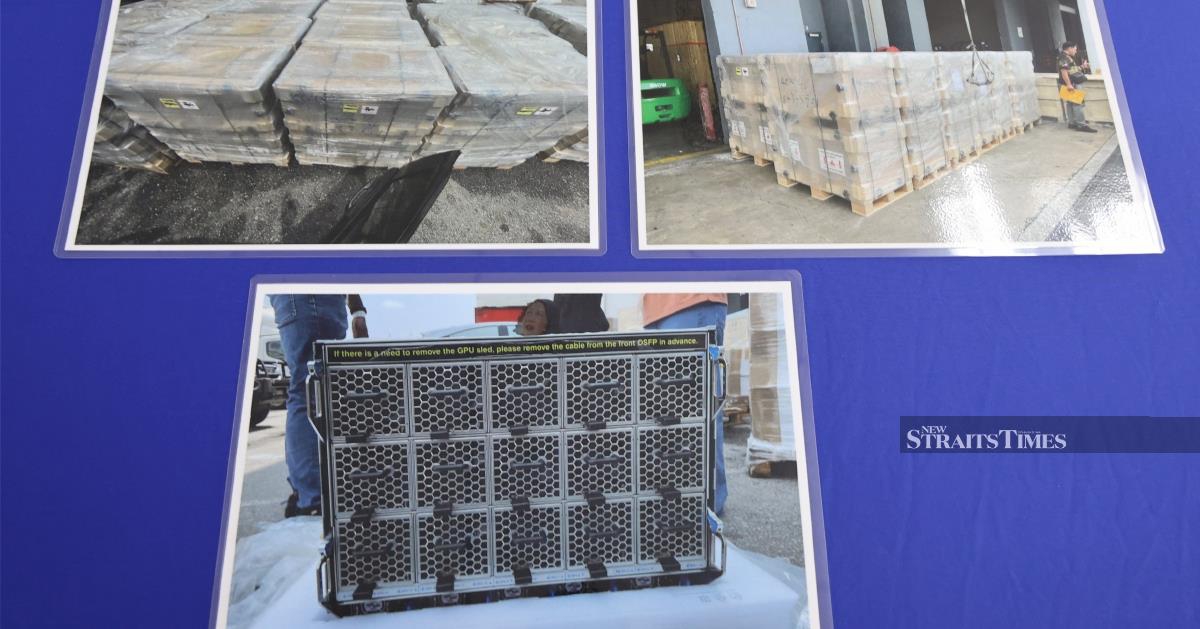
Singapore's police force announced on Wednesday the seizure of a luxury residential property valued at more than US$40 million, marking a significant development in an ongoing fraud investigation centred on the alleged illegal transfer of advanced artificial intelligence chips in contravention of United States export restrictions.
The acquisition of the property represents a notable enforcement action in Singapore's approach to financial crime and breaches of international trade regulations. The seizure underscores growing concerns across the region about the movement of restricted technology, particularly semiconductor products destined for uses or destinations prohibited under American sanctions and export control regimes. These regulations form a critical component of broader US strategy to maintain technological advantage and restrict access to cutting-edge computing resources to entities deemed security risks.
The investigation touches upon one of the most sensitive areas of modern international commerce: the global supply chain for advanced semiconductors. Artificial intelligence chips represent among the most restricted and carefully monitored technology products in the world today, with countries including the United States implementing stringent licensing requirements and destination controls to prevent their unauthorised distribution. The alleged scheme that triggered the Singapore investigation appears to involve circumventing these carefully constructed regulatory frameworks.
For Southeast Asia, the seizure carries particular significance given the region's position as a major hub for technology trade, financial services, and goods transit. Singapore, in particular, functions as a critical node in global supply chains and financial networks, making it an attractive conduit for illicit commerce. The city-state's reputation for strict enforcement of international financial crimes and regulatory compliance has been reinforced by this action, demonstrating its commitment to cooperating with international partners on export control matters.
The investigation illuminates the broader challenge facing authorities across the region in combating sophisticated schemes designed to circumvent US export controls on semiconductors. The demand for advanced AI chips remains extraordinarily high, and the restrictions imposed by Washington have created significant economic incentives for individuals and entities to find ways around these limitations. This dynamic has spawned increasingly complex smuggling arrangements, often involving shell companies, intermediaries in third countries, and sophisticated financial engineering to obscure the ultimate destinations and end-users of restricted technology.
The specific nature of the AI chips allegedly involved in the scheme remains under investigation. However, high-performance semiconductor products used for artificial intelligence applications fall into the most restricted categories under US regulations. The United States Commerce Department's Bureau of Industry and Security has implemented increasingly stringent controls on these products, particularly in response to concerns about their acquisition by entities associated with the Chinese government, military applications, and other uses deemed contrary to American national security interests.
Singapore's action reflects the island nation's position as a sophisticated financial centre that takes its responsibilities under international export control regimes seriously. The Singapore police's willingness to seize substantial assets and pursue fraud investigations of this magnitude demonstrates a commitment to preventing its territory from becoming a conduit for sanctions evasion or violations of international trade rules. Such enforcement carries diplomatic weight, signalling to the United States and other allies that Singapore actively enforces compliance with their regulatory frameworks.
The property seizure also highlights the potential consequences for individuals and entities involved in schemes to circumvent export controls. Large-scale legitimate business activities naturally generate substantial wealth, which becomes vulnerable to seizure when the underlying transactions involve illegal activity. Investigators increasingly target high-value assets like luxury real estate as a means of disrupting illicit networks and recovering proceeds from illegal schemes. The US$40 million bungalow exemplifies the kind of conspicuous wealth accumulation that often accompanies large-scale smuggling operations.
For Malaysian observers and policymakers, the Singapore investigation serves as a cautionary reminder about the risks and complications that arise from becoming involved in schemes that breach international export controls. Malaysia, too, functions as a significant regional commerce hub with substantial financial services operations. The incident underscores the importance of robust compliance frameworks and the potential consequences when businesses or individuals fail to adequately screen transactions for export control violations.
The investigation also reflects broader geopolitical tensions surrounding technology competition and access to advanced semiconductors. The United States has positioned itself as determined to prevent the global diffusion of AI chip technology to adversaries, and has enlisted partner nations including Singapore in enforcing these restrictions. For countries in Southeast Asia seeking to maintain productive relationships with both the United States and China, such investigations present delicate balancing acts between cooperating on security matters and avoiding the appearance of discriminatory enforcement.
Moving forward, the seizure is likely to attract heightened attention from financial institutions, logistics companies, and trading firms operating across Singapore and the broader region. Compliance teams will scrutinise transactions involving semiconductor shipments and related financial flows with greater rigour, knowing that authorities are actively investigating potential violations. This increased compliance focus will likely increase friction in legitimate supply chains while making it more difficult—though certainly not impossible—for bad actors to execute illicit schemes.
The investigation continues, and authorities have not yet disclosed the identities of those being targeted or the full scope of the alleged smuggling operation. Nevertheless, the seizure of the luxury property signals a major enforcement push against schemes designed to circumvent US export controls on advanced technology. For the region's business and financial community, the message is clear: involvement in restricted technology transfers carries substantial legal and financial risks, regardless of how carefully such schemes might be structured.

