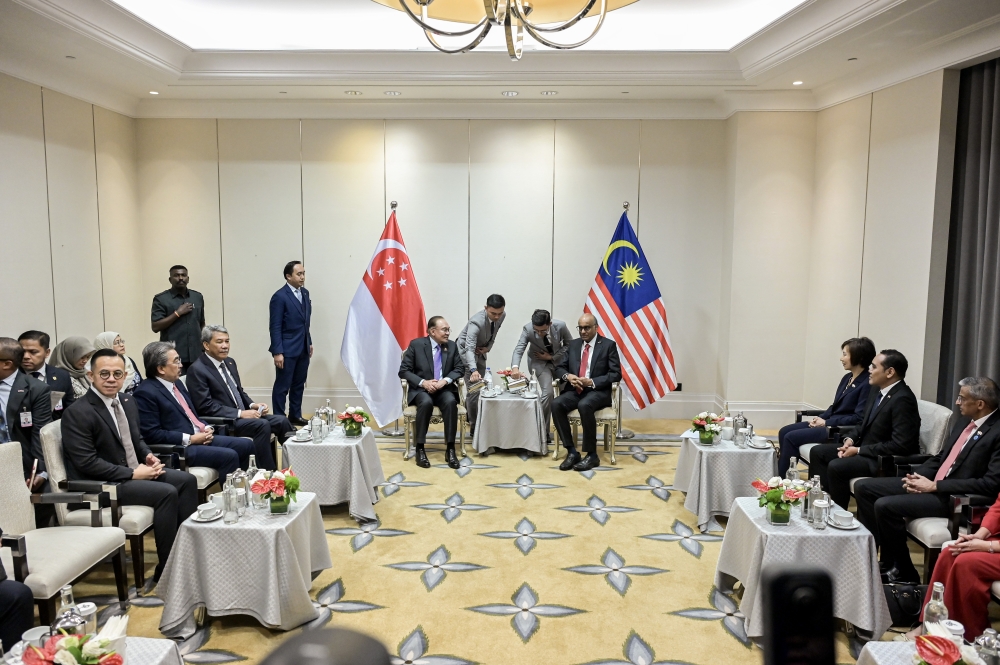
Prime Minister Datuk Seri Anwar Ibrahim received Singapore President Thalatha Balakrishnan in a bilateral meeting on Monday during her official state visit to Malaysia, underscoring the importance both governments place on maintaining robust diplomatic relations. The 40-minute engagement, held in Kuala Lumpur, provided an opportunity for the two leaders to address matters of mutual interest and chart the course of bilateral cooperation in the coming months.
Thalatha Balakrishnan's visit to Malaysia represents a significant diplomatic overture from Singapore, one of the region's most developed economies and a crucial trading partner for Malaysia. The state visit format itself carries symbolic weight, indicating a formal recognition of the importance both nations attach to their relationship. For Malaysia, receiving a head of state from a neighbouring country affirms its standing within ASEAN and its commitment to maintaining stable, productive relations across the region.
The bilateral meeting between Anwar and Balakrishnan touched upon the full spectrum of relations between Kuala Lumpur and Singapore, two countries whose economies are deeply intertwined through trade, investment, and regional cooperation frameworks. Both nations share maritime borders and overlapping economic interests, making the quality of their diplomatic engagement a barometer for wider regional stability. The relatively lengthy duration of their discussion suggested substantive engagement beyond ceremonial pleasantries, though specific details of their conversation were not immediately disclosed.
Malaysia and Singapore have historically maintained cordial relations despite periodic tensions over maritime disputes and water supplies. The meeting comes at a time when both countries are navigating complex regional dynamics, including evolving trade patterns in Southeast Asia and shifting geopolitical alignments. For Malaysian observers, the tone and substance of such high-level bilateral discussions often signal how effectively the government manages its most critical regional relationships.
The state visit format typically involves a broader programme of engagements beyond the prime ministerial meeting, potentially including discussions with other government officials, business delegations, and cultural exchanges. Such visits serve to strengthen people-to-people connections and demonstrate to domestic audiences the government's commitment to international engagement. For Singapore, state visits to neighbouring countries form part of its diplomatic strategy to reinforce its standing as a key regional player despite its small geographic size.
From Malaysia's perspective, the meeting reflects Anwar's administration's broader approach to Southeast Asian diplomacy, which has emphasised engagement across the region and within ASEAN frameworks. The Prime Minister has consistently advocated for deeper regional cooperation on shared challenges ranging from economic development to security concerns. Receiving Singapore's head of state provides a platform to reinforce these themes and potentially advance specific bilateral agendas.
The timing of Balakrishnan's visit holds relevance within the broader context of Malaysia's regional positioning. As ASEAN member states navigate evolving relationships with major powers and contend with transnational challenges, the quality of relations between member nations becomes increasingly important. A productive meeting between Malaysia's Prime Minister and Singapore's President sends reassuring signals about intra-ASEAN stability and cooperation.
Both nations have extensive experience in managing bilateral relations through multiple institutional mechanisms, including the Malaysia-Singapore Joint Commission for Bilateral Cooperation, which provides structured frameworks for dialogue at various levels. The state visit and the resulting high-level meeting feed into these established channels, allowing both governments to maintain momentum on ongoing issues while addressing emerging priorities. Trade relations, investment frameworks, and labour mobility are likely among the enduring themes in such discussions.
For the Malaysian business community and investors, state visits by foreign heads of state often signal stability and openness to continued economic engagement. Singapore's position as a financial hub and centre for regional business activities makes the health of bilateral relations particularly relevant to Malaysian enterprises with cross-border operations or aspirations. The formal nature of the visit and the substantive engagement during the bilateral meeting provide reassurance about the government's commitment to maintaining a predictable, business-friendly environment in its relationship with Singapore.
Looking forward, the success of such bilateral engagements often depends on follow-up actions at technical and ministerial levels. State visits typically generate momentum that officials are tasked with translating into concrete outcomes, whether through new agreements, enhanced coordination mechanisms, or accelerated progress on pending issues. The Malaysian government's handling of post-visit implementation will be important in determining whether this state visit yields tangible benefits for the relationship.
The meeting between Anwar and Balakrishnan also reflects broader regional trends within ASEAN, where state visits and high-level bilateral meetings have become increasingly frequent as member nations emphasise the importance of strong intra-regional relationships. In this context, Malaysia's engagement with Singapore carries significance beyond the bilateral sphere, potentially influencing how other ASEAN member states approach their own bilateral relations and collective regional cooperation initiatives.

