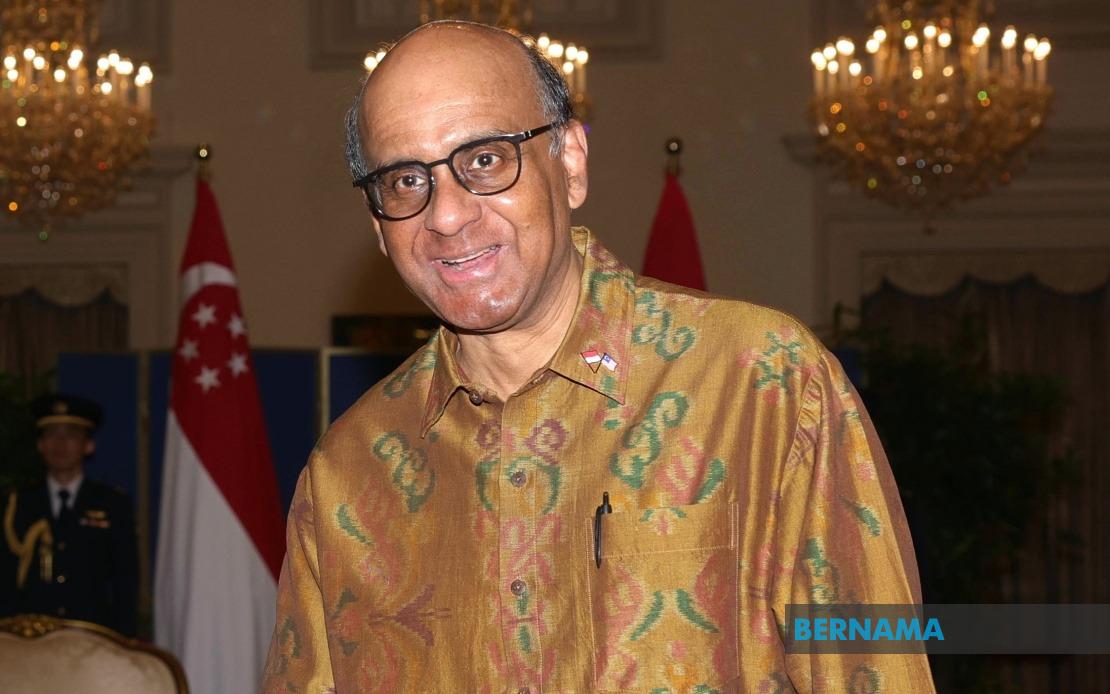
Singapore's President Tharman Shanmugaratnam will travel to Malaysia for a three-day state visit commencing July 13, arriving at the formal invitation of His Majesty Sultan Ibrahim, King of Malaysia. The diplomatic engagement, concluding on July 15, represents a significant moment in bilateral relations and comes as a reciprocal gesture following the Malaysian monarch's own visit to the island republic in May 2024.
This journey marks Tharman's inaugural state visit to Malaysia since he assumed the presidency of Singapore on September 14, 2023. His travel will be accompanied by his spouse, Jane Ittogi Shanmugaratnam, alongside a delegation comprising several cabinet ministers and high-ranking government officials. The composition of the delegation signals the importance both nations place on strengthening their multilayered relationship across governance, trade, and security dimensions.
According to Malaysia's Foreign Ministry, the visit exemplifies the robust and historically resilient partnership between the two neighbouring nations. Officials characterised the engagement as reflective of expanding collaborative efforts in areas where both countries share strategic interests and complementary capabilities. The ministry's statement emphasised that such high-level exchanges reinforce institutional ties and create platforms for leadership dialogue on regional and bilateral matters.
During his time in Malaysia, Tharman will experience a full ceremonial programme befitting a state visit. He is scheduled to receive a formal State Welcoming Ceremony, followed by a private audience with His Majesty at Istana Negara. The itinerary culminates in a State Banquet, providing an opportunity for both delegations to engage in substantive discussions within a ceremonial context. Additionally, Prime Minister Datuk Seri Anwar Ibrahim has arranged a courtesy visit, enabling dialogue between Singapore's head of state and Malaysia's chief executive on matters of mutual concern.
The economic dimensions underpinning this diplomatic visit warrant particular attention for Malaysian stakeholders. Singapore functions as Malaysia's second-largest trading partner globally, whilst simultaneously serving as Malaysia's most significant commercial partner among the ten member states of the Association of Southeast Asian Nations. This dual significance underscores the depth of their integrated regional economy and the critical role bilateral trade plays within broader ASEAN commerce.
Bilateral commercial exchange between the two nations attained RM402.35 billion, equivalent to approximately US$93.97 billion, throughout 2025. This figure represented a modest expansion of 1.5 per cent compared with the preceding year's figures, suggesting steady if incremental growth in cross-border transactions. More notably, preliminary data from the initial five months of 2026 indicates significantly accelerating momentum, with bilateral trade surging 14.5 per cent to reach RM189.90 billion, or roughly US$47.87 billion.
The trajectory of this recent growth carries strategic implications for both economies and the wider region. The surge in first-quarter 2026 figures, substantially outpacing 2025's overall annual growth rate, suggests renewed commercial dynamism and potentially reflects improved business sentiment regarding economic prospects. For Malaysia, Singapore's role as a conduit for regional and international investment, combined with its position as a financial and technology hub, makes the health of bilateral trade relations particularly consequential for economic diversification and manufacturing competitiveness.
From a regional perspective, strong Singapore-Malaysia ties contribute to ASEAN cohesion and stability. The two nations, having resolved historical territorial disputes and developed sophisticated mechanisms for cross-border cooperation, serve as anchors of predictability within Southeast Asia. Their ability to maintain robust diplomatic channels and expand economic integration provides reassurance to other regional actors and demonstrates the viability of peaceful commercial coexistence among neighbouring states with distinct political systems and economic models.
The timing of this state visit also carries contextual significance within broader geopolitical currents. As major powers enhance their strategic engagement with Southeast Asia and regional nations navigate competing great-power interests, the strengthening of intra-ASEAN relationships assumes heightened importance. Singapore-Malaysia cooperation in maritime security, financial regulation, pandemic preparedness, and digital infrastructure development contributes to regional resilience and autonomous capacity-building.
For Malaysian observers, the visit underscores the ongoing centrality of Singapore within Malaysia's foreign policy calculations despite occasional disagreements on specific bilateral matters. The consistent elevation of diplomatic exchanges at the highest levels signals commitment to preserving this critical partnership even as both nations pursue distinct national interests. The substantial commercial flows highlighted by 2026 data suggest that underlying business communities in both countries recognise the mutual benefits of deepened integration.
Looking forward, observers will watch for announcements emerging from high-level discussions during the visit, particularly regarding infrastructure cooperation, labour mobility, water agreements, and technology sector collaboration. Any joint statements or initiatives announced during the state banquet or bilateral meetings could set the tone for Malaysia-Singapore relations throughout the remainder of 2026 and signal priorities for both administrations in their respective governance agendas.

