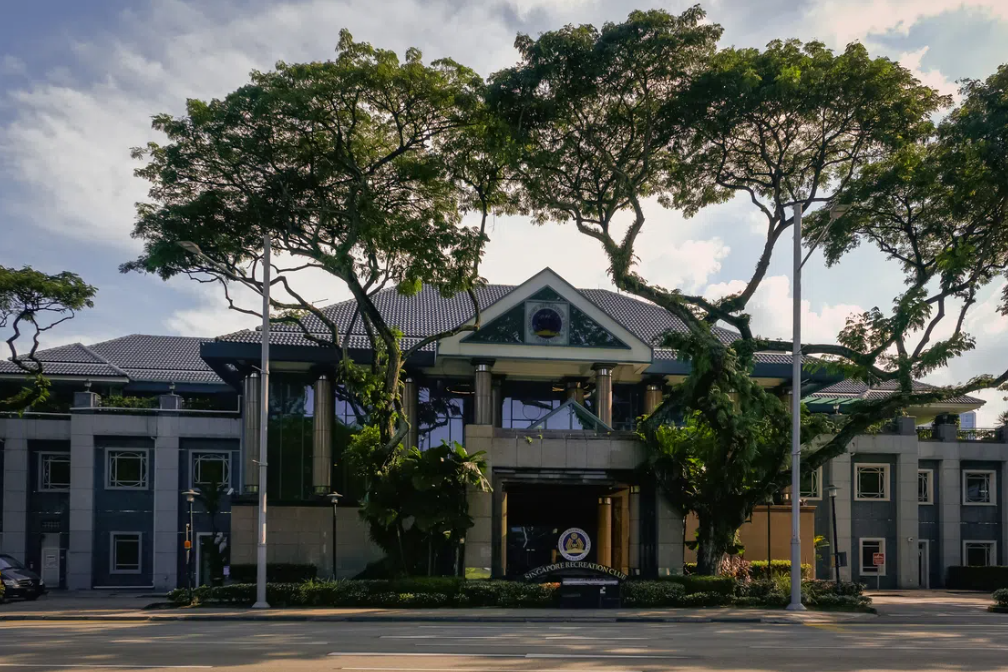
The Singapore Recreation Club's ambitious $16.6 million transformation plan faces a significant legal hurdle as a High Court judge has cleared the way for a full trial examining the legitimacy of a contested membership vote. Senior Judge Chan Seng Onn issued his decision in written form on August 26, determining that the lawsuit filed by two billiards section members against the club and its management committee presents genuine questions requiring judicial resolution. The case turns on fundamental issues of voting rights and constitutional procedure that extend far beyond the specifics of this one club, holding lessons for how social organisations in Singapore and the region conduct major membership decisions.
At the heart of the dispute lies a procedural question that reveals the complex tensions between administrative efficiency and democratic fairness. Two members, Sean Kerwin Mathews and Mu Yee Shyong, are challenging the passage of a resolution to relocate the billiards room from level 2 to basement 2 and establish a co-working space in its place. They contend that the simple majority vote recorded in October 2025 violated the club's constitution, which they argue requires that such significant resolutions receive support from the majority of members physically present at the extraordinary general meeting. With 559 members attending, this would have necessitated at least 280 votes in favour. The fact that only 151 members voted for the resolution therefore falls far short of this threshold, according to their interpretation.
The voting mechanism employed at the October 18 meeting has emerged as a crucial point of contention. Club officials distributed two voting slips, creating a branching structure that members found confusing and potentially restrictive. The first slip asked whether to proceed with the original relocation plan at a cost of $4.9 million, with options to vote yes or no. However, those ticking yes were informed that the second voting slip would not apply to them. The second slip then presented a binary choice between two alternative approaches: converting the billiards room into a standalone co-working space, or integrating it within a broader co-working facility. This structure meant members voting yes on the first slip effectively had no voice in selecting between the two alternatives, while those voting no on the first slip had to choose between just two options without the ability to reject both proposals entirely.
The voting tallies underscore the contentious nature of the outcome. Of 514 votes cast, 151 favoured the conversion proposal and 125 opposed it, but the results also included 183 spoilt votes and 55 blank votes. The management committee subsequently declared the second resolution passed with 54.7 per cent of valid votes. However, Mathews and Mu argue that the 55 blank votes and 125 negative votes should be combined as opposition to the measure, creating 180 votes against and thus preventing passage by simple majority. The characterisation of blank votes becomes legally significant: were they abstentions with no bearing on the resolution, or should they be counted as votes against a proposal in a context where members had theoretically been given no valid mechanism to reject both alternatives?
The judge's reasoning in allowing the trial reveals sophisticated appreciation of the voting architecture's problematic nature. Judge Chan identified what he termed a "peculiar case" where members received contradictory instructions on how to reject the proposals and where their fundamental right to vote against all options was effectively curtailed. The management committee had structured the voting system such that members could not simultaneously reject both alternative resolutions without invalidating their ballots. In such circumstances, the judge reasoned, blank and spoilt votes might reasonably be interpreted as expressions of dissatisfaction rather than mere abstentions. This interpretation opens a distinct legal avenue that transcends the traditional understanding of what constitutes a valid vote.
When the earlier application to strike out the claim was heard in May, an assistant registrar had determined that the lawsuit lacked sufficient merit to proceed. However, Judge Chan overturned this dismissal, finding that the case raised triable issues requiring full consideration by the court. He was particularly troubled by the constraints placed on member voting and the absence of a genuine option to reject all proposals. The management committee's lawyers, represented by Walter Alexander, had argued that invalidating the resolution would serve no legitimate purpose and potentially leave the club in an unworkable stalemate. This contention proved unpersuasive to the judge, who noted that a fresh vote conducted fairly would adequately resolve any deadlock.
The financial context underlying this dispute adds another dimension to its significance. The Singapore Recreation Club, which boasts approximately 7,000 members, had initially secured approval in March 2024 for the transformation project with a provisional budget of $16.6 million. The original budget included $1.5 million as a contingency for land betterment charges, a tax calculated on the increase in land value resulting from development. When the actual charges mounted to $4.9 million—more than triple the contingency—the management committee concluded that the original relocation plan had become financially impractical. This reassessment prompted the October 2025 extraordinary general meeting to reconsider the proposal through a series of alternative voting options.
For Malaysian readers, this case illuminates broader governance challenges facing social clubs, professional associations, and cooperative societies throughout Southeast Asia. The tension between stewardship and accountability, between administrative prerogatives and member rights, appears in various forms across the region. Many Malaysian clubs, associations, and community organisations operate under constitutions that similarly vest authority in management committees to conduct internal proceedings and interpret rules. The Singapore case provides valuable precedent on how courts scrutinise voting procedures, particularly when those procedures appear to constrain the fundamental democratic right of members to express dissent comprehensively.
The judge's findings on the validity of the voting process carry particular weight given their applicability to future cases. Judge Chan's willingness to examine the structural constraints on member choice suggests that courts will increasingly look beyond simple counts of votes cast to assess whether the voting framework itself was fundamentally fair. This approach has implications for how Malaysian organisations design their decision-making processes, particularly when seeking approval for major expenditures or changes affecting substantial portions of their membership. The ruling implicitly endorses the principle that members should retain meaningful options to reject proposals, and that voting rules must function symmetrically for those supporting and opposing measures.
The trial, when it proceeds, will require the court to grapple with several technically complex constitutional interpretation questions. The precise language of the Singapore Recreation Club's bylaws regarding majority requirements, the historical practice of how the club had previously conducted similar votes, and the reasonable expectations of members regarding how voting procedures would operate all factor into the analysis. Furthermore, the court must decide whether the unusual voting structure constituted a waiver of the strict constitutional requirements for simple majority voting, or whether it represented a procedural departure that cannot override constitutional mandates, regardless of administrative convenience.
The implications for Singapore's social club sector are substantial. Hundreds of recreational clubs across the island hold similar governance structures and periodically face major capital decisions requiring membership approval. The outcome of this trial will establish important precedent on what constitutes a valid vote for significant matters, how to interpret blank and spoilt ballots in the context of constrained voting options, and whether management committees can legitimately structure voting mechanisms that limit the expression of member preferences. Clubs seeking to avoid similar litigation will need to revisit their procedures for conducting extraordinary general meetings, ensuring that voting mechanisms provide genuine optionality and clarity regarding what each choice signifies.
From a broader governance perspective, the case underscores the delicate balance required in member-driven organisations. While management committees require sufficient operational flexibility to function effectively, members retain fundamental rights to meaningful participation in decisions affecting their organisations and their investments. The legal system's willingness to scrutinise voting procedures, rather than accepting them at face value, provides important protection against governance arrangements that technically comply with procedural requirements while effectively diminishing substantive member agency. As social organisations throughout Southeast Asia become increasingly sophisticated in their operations and capital-intensive in their projects, the precedents established in cases like this will shape how internal governance evolves across the region.

