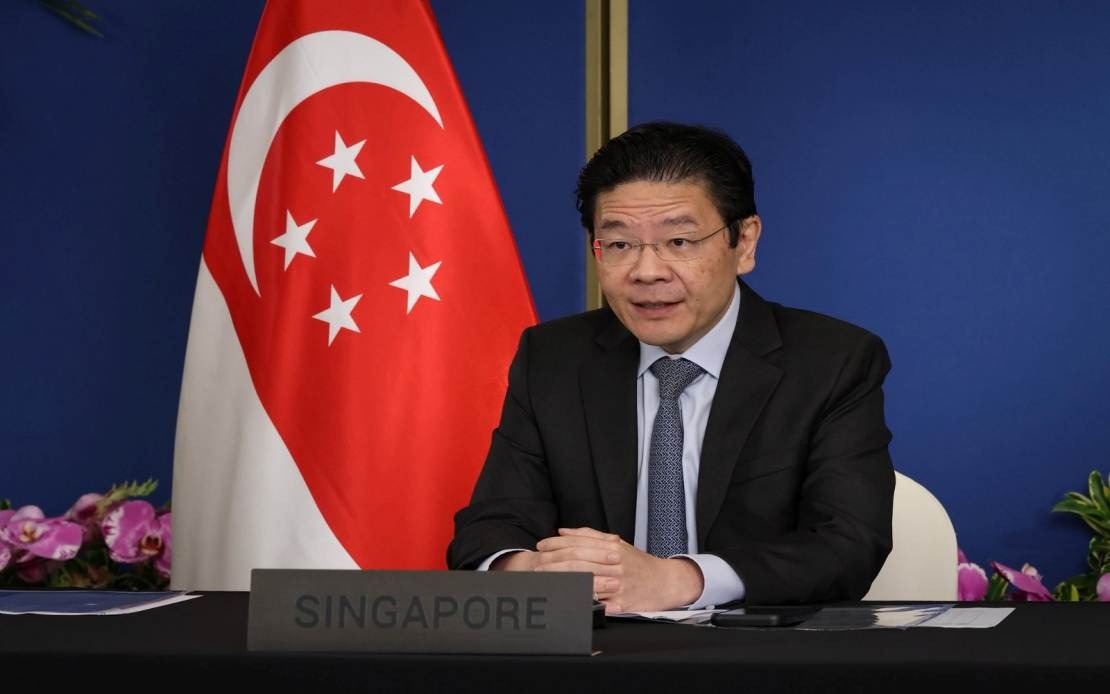
Singapore's government entered a new chapter of leadership transition on Wednesday when Prime Minister Lawrence Wong announced sweeping cabinet changes and political appointments designed to blend institutional experience with emerging talent. The restructuring, which takes effect on July 27 with limited exceptions, reflects a deliberate strategy to position the city-state for both immediate stability and long-term continuity as it navigates an increasingly complex geopolitical and economic landscape.
K. Shanmugam's elevation to Senior Minister represents perhaps the most symbolic shift in the new arrangement. Retaining his dual portfolios as Coordinating Minister for National Security and Minister for Home Affairs, Shanmugam joins the already-promoted Lee Hsien Loong as one of Wong's most senior advisors. This pairing effectively creates a two-tier leadership model within the cabinet, with these experienced figures positioned to mentor the incoming cohort of younger ministers while maintaining oversight of Singapore's most sensitive security and internal affairs portfolios. Wong explicitly framed this approach as essential to Singapore's governance philosophy, emphasizing that veteran statesmen would provide counsel that helps guide the next generation of policymakers through complex challenges.
A particularly notable structural innovation emerges with the reorganisation of Singapore's trade apparatus. The Ministry of Trade and Industry will transform into the Ministry of Energy, Trade, and Industry from October 1, fundamentally reshaping how the government approaches economic policy integration. Deputy Prime Minister Gan Kim Yong will continue stewarding Singapore's overarching trade policy and broader economic strategy, while Tan See Leng assumes expanded responsibilities for energy and industrial development. This bifurcated leadership model represents an implicit acknowledgment that Singapore's economic future increasingly hinges on energy security and industrial transformation—concerns that have grown more acute following regional supply chain disruptions and the global energy transition.
Tan See Leng's transition carries particular significance for Southeast Asian observers. Having previously managed energy and science and technology portfolios in addition to overseeing manpower issues, Tan will now concentrate exclusively on energy and industry matters. His departure from the Ministry of Manpower signals how thoroughly Wong intends to reshape responsibility assignments, creating space for newer ministerial talent to assume management of Singapore's workforce and labour relations—traditionally a crucial portfolio in a nation where human capital remains the primary competitive advantage.
The elevation of Jeffrey Siow and David Neo to full ministerial rank consolidates recent progress in leadership renewal. Siow remains in charge of transport policy, an increasingly critical domain as Singapore pursues urban sustainability goals and regional connectivity initiatives. Neo continues overseeing culture, community, and youth affairs—a portfolio whose importance has grown as nations throughout Southeast Asia grapple with social cohesion and intergenerational engagement. Their confirmations as full ministers rather than junior officers signal confidence in their administrative capabilities and vision.
Sim Ann's appointment as Second Minister of Foreign Affairs and Home Affairs deserves particular attention from regional analysts. By creating this second-tier foreign affairs position, Wong establishes a dedicated capacity for managing diplomatic engagements that complement the lead minister's work. For Malaysia and other neighbouring states, this structural addition potentially indicates Singapore's intent to deepen and systematise bilateral relationships, particularly on economic, security, and people-to-people dimensions where complexity continues expanding.
The appointment of Ng Chee Meng, the National Trades Union Congress Secretary-General, as Minister in the Prime Minister's Office constitutes a striking cross-institutional transfer. This move essentially embeds labour movement perspectives directly into the highest executive echelon, suggesting that Wong's government views union input as central to navigating Singapore's economic transformations and workforce transitions. For Malaysian observers particularly interested in industrial relations and tripartite frameworks, Ng's appointment illustrates how Singapore integrates organised labour into formal governance structures.
Younger appointees entering the political officeholder ranks represent the second strategic element of Wong's reshuffle. Jasmin Lau's dual appointment as Senior Minister of State and Acting Minister of Manpower exemplifies this acceleration of responsibility assignment. Similarly, Goh Pei Ming's promotion to Senior Minister of State across social and family development and home affairs portfolios, combined with Alvin Tan's expanded foreign affairs role, creates multiple entry points for the newer generation to demonstrate capability across diverse policy domains.
Foo Cexiang and Shawn Loh's additions to the ministerial cadre broaden the base of officials involved in economic and social administration. Foo's simultaneous responsibilities for manpower and trade and industry matters position this appointee at the nexus of Singapore's human capital development and industrial competitiveness—a critical intersection as nations throughout Southeast Asia compete for talent and advanced manufacturing capacity. Loh's cross-portfolio assignment spanning education and health reflects the increasingly integrated nature of human development policy in contemporary governance.
Wong's articulation of the cabinet's underlying philosophy reveals how Singapore's leadership intends to manage governance during a period of generational transition. By explicitly maintaining experienced figures in security-sensitive roles while distributing broader administrative responsibilities among capable younger officials, the government attempts to mitigate the risks historically associated with leadership transitions—namely the loss of institutional knowledge and diplomatic relationships. This parallel track approach contrasts with some other systems that attempt more radical leadership changes and suggests Singapore views gradual, overlapping transitions as preferable to abrupt shifts.
The implications for Singapore's regional relationships merit consideration. A cabinet emphasizing economic restructuring through the METI reorganisation, combined with sophisticated attention to diplomatic infrastructure through expanded foreign affairs appointments, suggests Wong's administration prioritises maintaining Southeast Asian engagement while pursuing domestic economic transformation. For Malaysia specifically, Sim Ann's second foreign affairs appointment and the structural enhancements to Singapore's diplomatic capacity could signal more intensive relationship management across bilateral dimensions—trade, labour mobility, environmental cooperation, and security coordination.
The October 1 effective date for the METI reorganisation rather than the July 27 general implementation deserves note. This staggered timeline permits existing ministry structures to continue functioning during the leadership transition period, reducing administrative disruption while allowing the new minister pairing adequate time to develop coordinated strategies. This deliberate staging suggests Wong's government views operational continuity as prerequisite to ambitious policy innovation.
Overall, Singapore's cabinet reshuffle represents a carefully calibrated effort to balance veteran expertise with ascending talent. Rather than pursuing wholesale generational replacement, Wong has constructed a layered leadership architecture where senior figures maintain responsibility for sensitive national security matters while emerging officials gain substantive experience across multiple policy domains. For Malaysia and the broader Southeast Asian region, this measured approach to leadership succession offers both reassurance regarding Singapore's stability and potential signals that the Wong administration intends intensive engagement with regional partners during this transition period.

