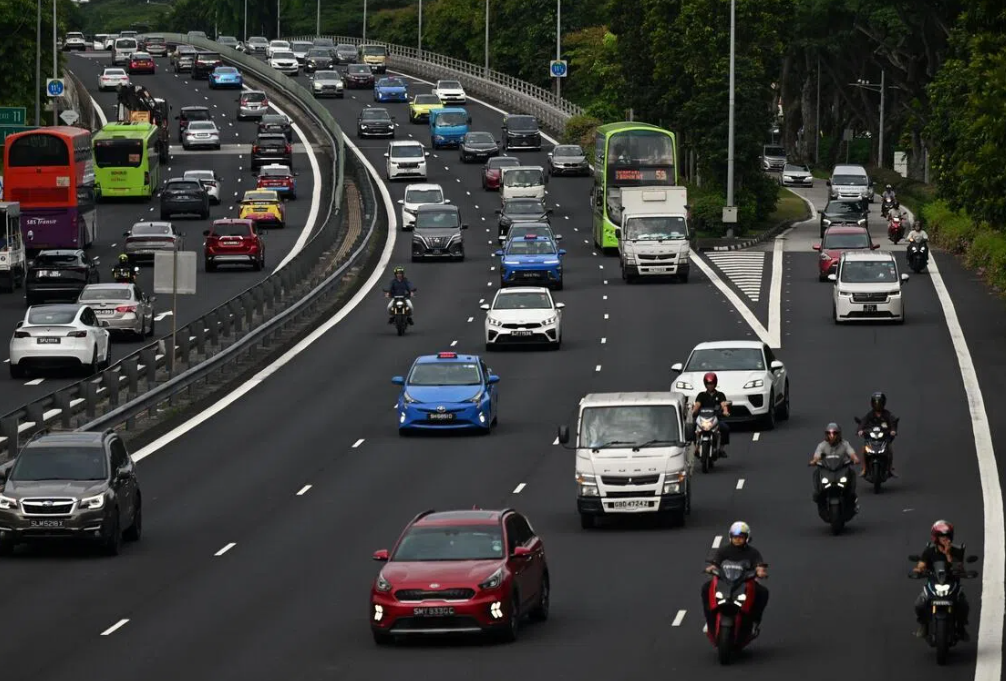
Singapore's largest taxi operator and three major ride-hailing platforms have agreed to maintain temporary surcharges on passenger fares through the end of September, responding to persistent pressure from private-hire drivers struggling with escalating operational expenses. ComfortDelGro, Grab, Gojek and Tada announced the extension this week, with the National Private Hire Vehicles Association confirming the decision after ongoing consultations between driver representatives and platform management.
The extension reflects deepening concerns about the sustainability of driver incomes as fuel prices remain substantially above levels seen earlier in the year. Since March, when these surcharges were first introduced, the cost of operating a vehicle has climbed significantly, prompting drivers and their representatives to advocate for continued financial relief. The additional fees represent one of the few mechanisms available to offset rising expenses without fundamentally restructuring platform economics or fare structures.
ComfortDelGro's structure illustrates the tiered approach adopted across the industry. For trips booked through its mobile application, the company will add 50 cents to fares below $15, while charging 80 cents extra for higher-value journeys. The surcharge applies uniformly across standard taxi services, cross-border rides, premium limousine offerings and hourly rental arrangements. Additionally, the operator maintains a one-cent increase per 400 metres travelled, meaning passengers in a Toyota Prius will now pay 27 cents for each 400-metre segment on shorter journeys.
Ride-hailing competitors have implemented comparable fee structures with slight variations reflecting their respective business models. Grab and Gojek introduced a 90-cent driver fee in April, while Tada charges $1.20 for trips exceeding $18 in value. These fees flow directly to drivers without deduction for platform commissions, ensuring that the full amount reaches the people bearing the costs of fuel, vehicle maintenance and vehicle depreciation. This direct pass-through arrangement distinguishes these supplementary charges from standard fare components that are typically shared between platforms and drivers.
The price environment justifies the extension from both drivers' and platform operators' perspectives. Petrol prices have climbed dramatically since the March baseline, when 95-octane fuel retailed between $2.91 and $2.92 per litre across Singapore's major stations. By late July, the same fuel grade cost $3.36 to $3.37 per litre at major retailers including Caltex, Shell, Esso, SPC and Sinopec. This represents an increase of approximately 15 to 16 percent over a four-month period, a substantial jump that compounds across thousands of daily trips undertaken by professional drivers. Smaller independent petrol station networks report slightly lower prices, ranging from $2.54 to $2.62 per litre, but these represent minority options in most areas.
Geopolitical developments underscore the reasons for sustained price elevation. The February 28 military operations involving the United States and Israel targeting Iranian positions created shipping disruptions affecting the Strait of Hormuz, a critical chokepoint through which approximately one-third of global maritime oil traffic flows. Although the immediate crisis has not escalated into a prolonged blockade, market participants remain cautious about future supply disruptions, supporting higher fuel prices globally. This means that unlike a temporary spike that might resolve within weeks, the current pricing environment reflects structural uncertainties that could persist for months.
The National Private Hire Vehicles Association, which maintains formal affiliation with Singapore's national labour movement through NTUC, has positioned itself as an effective intermediary in these negotiations. Rather than pursuing confrontational approaches, the association has pursued what it describes as "continued engagement" with platform operators, emphasizing practical problem-solving over ideological positions. This collaborative framework has proven successful in securing multiple extensions of relief measures, suggesting that drivers' representatives possess meaningful influence over platform decision-making, at least on issues affecting driver profitability.
For Malaysian readers, this situation offers instructive parallels and contrasts with the local ride-hailing landscape. Singapore's formal mechanisms for collective driver representation through NPHVA stand in contrast to Malaysia's more fragmented driver advocacy environment, where coordination often occurs through informal channels and social media. The success of Singapore's tripartite approach involving platforms, drivers and labour representatives demonstrates the value of institutionalized negotiation structures. Malaysia's ride-hailing sector might benefit from similar formalized frameworks, particularly as fuel price volatility and cost-of-living pressures increasingly affect driver welfare.
The September 30 deadline suggests that platforms and drivers' representatives are treating this as a genuine transition point rather than an indefinite arrangement. This implies that either fuel prices are expected to moderate substantially, or alternative structural solutions to driver income sustainability will be negotiated before the surcharge expires. The extension's duration aligns roughly with typical seasonal economic cycles and upcoming fiscal planning periods, suggesting that stakeholders are using this interim period to develop longer-term solutions. Whether this involves fundamental changes to platform commission structures, introduction of minimum earnings guarantees or alternative fuel vehicle incentives remains unclear from current public statements.
The economic implications extend beyond individual driver welfare to broader urban mobility dynamics. Sustained surcharges could incentivize price-sensitive passengers to reduce ride frequency or shift toward public transport, potentially affecting platform revenues and driver incomes despite the surcharge mechanism. Conversely, if fare elasticity is low, platforms may benefit from higher fares without corresponding demand destruction. Understanding these dynamics requires monitoring passenger behaviour in coming months, particularly as the September deadline approaches and market participants assess whether surcharges will be renewed, modified or eliminated.
Looking forward, this situation highlights the growing tension between platform economics and labour cost pressures across Southeast Asia's emerging gig economy. As fuel prices remain volatile and regulatory scrutiny of driver compensation intensifies, platforms face difficult choices between maintaining driver supply through higher earnings and maintaining customer acquisition through competitive pricing. Singapore's current solution—temporary surcharges with ongoing stakeholder dialogue—represents a pragmatic middle path, but its sustainability depends on whether the underlying cost pressures stabilize or accelerate during the coming months.

