Singapore's prominent shipping magnate Teo Siong Seng and several other container industry executives have been named as defendants in two separate civil lawsuits filed in the United States District Court for the Northern District of California, marking a significant escalation in the legal consequences stemming from an alleged global price-fixing cartel in the shipping container sector.
These private civil actions, initiated by two American companies on June 2 and 9, represent a distinct legal avenue from the criminal prosecution undertaken by the US Department of Justice, essentially opening a second front of litigation against the alleged conspirators. Manufacturing firm C.A. Spalding Company and transportation operator Daybreak Express filed these class-action suits seeking to recover millions of dollars in losses they contend were caused by the container cartel's anti-competitive conduct over multiple years.
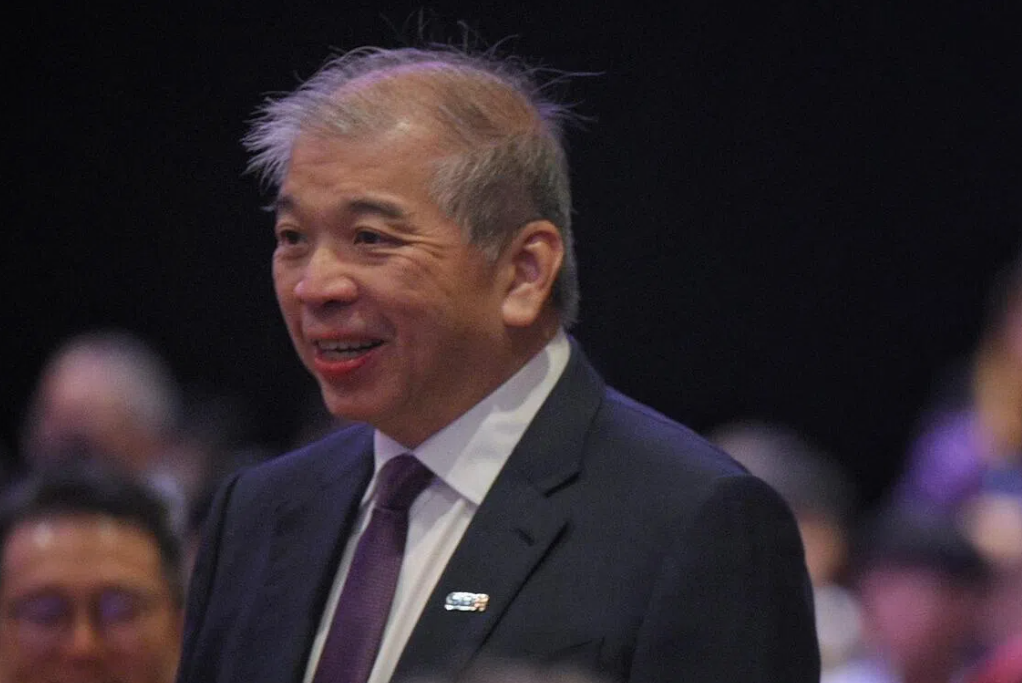
The foundation for these civil claims rests on a criminal indictment filed in January and unsealed in May, which identified five primary entities accused of orchestrating the scheme: China International Marine Containers (CIMC), Shanghai Universal Logistics Equipment, CXIC Group Containers, Singamas Container Holdings, and two unnamed manufacturers. Collectively, these firms were said to control approximately 95 per cent of global production of standard dry shipping containers, granting them extraordinary market influence. Teo, a Singaporean national, serves as chief executive of Singamas, positioning him at the centre of this investigation.
According to court documents, the alleged conspiracy operated through a coordinated arrangement where participating manufacturers systematically restricted container production. This included deliberate limitations on the number of shifts and operating hours for each production facility, effectively capping output to maintain artificially elevated prices. The sophistication of the scheme is underscored by the installation of 87 video surveillance cameras across 49 production lines at the firms' factories, ostensibly to monitor compliance with the agreed production restrictions and prevent any member from gaining competitive advantage through unauthorized output increases.
The economic impact of these alleged manipulations proved substantial and visible in market data. Between 2019 and 2021, the price of a standard 20-foot shipping container more than doubled, surging from approximately US$1,600 to US$3,500. This dramatic price escalation coincided precisely with the period when the cartel members allegedly implemented their restrictive practices, suggesting a direct causal relationship between the conspiracy and market pricing dynamics.
The financial windfall generated by these artificially inflated prices benefited the alleged conspirators enormously. CIMC's container manufacturing division, for instance, saw profitability skyrocket from roughly 137 million yuan in 2019 to 1.99 billion yuan in 2020, reaching 11.3 billion yuan by 2021. Similarly, Singamas Container Holdings experienced a dramatic turnaround, moving from a substantial loss of approximately US$110 million in 2019 to a profit of about US$186.8 million by 2021, demonstrating the extraordinary financial gain derived from the alleged scheme.
A particularly concerning aspect of the American litigation for the named defendants is the potential application of treble damages—a legal remedy permitting courts to impose penalties equivalent to three times the actual documented losses suffered by the plaintiffs. Should the defendants be found liable, this provision could result in financial penalties substantially exceeding the original damages claimed, creating significant exposure for both the corporate entities and individual executives involved.
Court records indicate that summonses were issued on June 8 and 11, formally notifying the defendants of the lawsuits and establishing a 21-day window for them to file responses. Failure to respond within this prescribed timeframe could result in default judgments being entered against them, effectively determining liability without the opportunity for courtroom defence. The named individuals include several Chinese nationals holding senior positions within the cartel entities: Mai Boliang, former president and chief executive of CIMC who became chairman in August 2020; Huang Tianhua, CIMC's vice-president; Wan Yongbo, general manager of CIMC's Operation Management Centre; Li Qianmin, general manager of Shanghai Universal Logistics Equipment; and Zhang Yuqiang, chief executive of CXIC Group Containers.
Teo appears alongside Vick Ma, Singamas' marketing director and a Chinese national, who is currently engaged in extradition proceedings to the United States following arrest in France in April. When contacted regarding the civil lawsuits, Teo declined to provide comment, maintaining a measured public posture despite the gravity of the accusations.
The implications for Teo have extended considerably beyond the legal realm, affecting his prominent positions within Singapore's business and institutional landscape. Since being named in the criminal indictment, the 71-year-old has voluntarily stepped back from numerous significant roles. These include his position as executive chairman of Pacific International Lines, his chairmanship of the Singapore Business Federation, his membership on the board of Enterprise Singapore, his involvement with the Singapore Economic Resilience Taskforce, and his role as pro-chancellor of the National University of Singapore. In a measured statement released on May 28, Teo indicated that he has proactively sought these leaves of absence to allow himself adequate time to address the serious legal matters while protecting the interests of the organizations he serves.
Notably, Teo's tenure as SBF chairman proved remarkably brief. He was elected to the position on May 20, 2025, succeeding Lim Ming Yan, who stepped down early to assume the chairmanship of Changi Airport Group. Teo's decision not to seek re-election when his term concludes on June 24 represents a significant departure from his previous extensive involvement with the organization, where he had previously served as chairman from 2014 to 2020, completing three consecutive two-year terms. This withdrawal signals an acknowledgment of the weight and urgency of the legal challenges now confronting him, requiring his undivided attention and focus during what may prove to be a prolonged and consequential legal process.