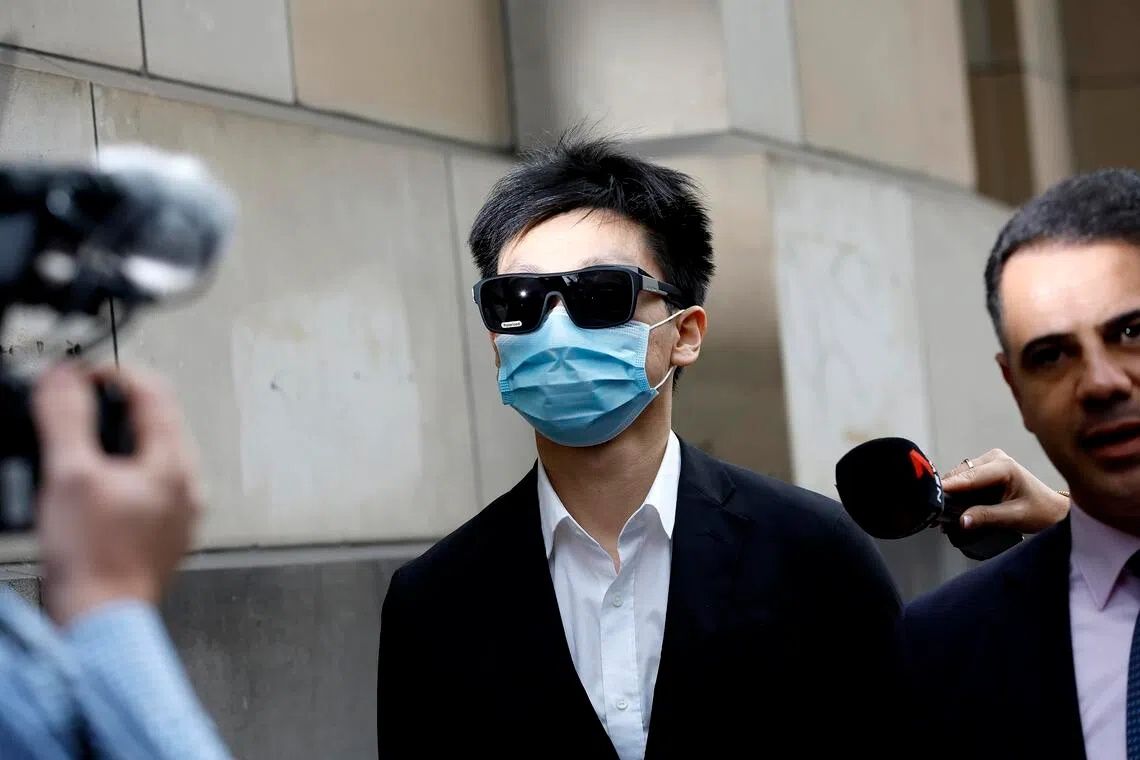
A 28-year-old trainee doctor from Singapore has entered a guilty plea to charges of systematically recording hundreds of hospital colleagues without consent across three major medical facilities in Melbourne. Ryan Cho's admission in Melbourne Magistrates Court on Thursday marks a significant moment in what has emerged as one of Australia's most disturbing workplace violation cases, with authorities discovering more than 10,000 intimate video and image files during their investigation.
Chо faced 13 consolidated charges encompassing stalking, installing hidden optical recording devices and producing intimate images without permission. The charges relate to activities conducted at the Austin Hospital, Royal Melbourne Hospital and the Peter MacCallum Cancer Centre, where Cho worked between 2021 and 2025 while completing his medical training through Monash University. The case has drawn considerable attention both in Australia and among the wider medical and Southeast Asian communities, given Cho's background as an international medical graduate and the scale of his alleged misconduct.
Police investigations uncovered approximately 4,500 video files alongside thousands of photographs across various electronic devices seized from Cho's residence, including a laptop, hard drive and mobile phone. The total number of identifiable victims exceeded 500, many of them hospital staff who used shared facilities without any awareness they were being recorded. The discovery itself occurred when Austin Hospital staff located a concealed mobile device in a mesh bag positioned inside a staff toilet facility, prompting immediate police involvement and a wider forensic examination of Cho's digital footprint.
Magistrate Michelle Mykytowycz acknowledged the presence of numerous victims in the courtroom and those participating via video link during the brief hearing. In a statement to the court, she confirmed that the evidence presented sufficient grounds for a jury conviction, before asking Cho to formally enter his plea. His response of "guilty" to all 13 counts brought to conclusion the initial phase of a case that has already prompted broader institutional and legal responses from affected organisations.
Chо's bail arrangements, originally established in 2025 and guaranteed by his parents through a A$50,000 surety, have been extended until a three-day pre-sentence hearing scheduled for November 23 at Melbourne's County Court. During this hearing, victims are expected to provide impact statements detailing the psychological and professional consequences of Cho's actions. The extension of bail conditions reflects the court's assessment that Cho poses no flight risk, though he has already surrendered his passport and remains subject to strict reporting requirements.
The bail conditions imposed represent extraordinary restrictions on Cho's daily life and future capacity to work in medicine. He must report to police three times weekly, maintain no contact whatsoever with witnesses or potential witnesses, and refrain from attending any hospital facility without prior police clearance except in genuine medical emergencies. Additionally, Cho has been prohibited from accessing any photographic or video recording equipment outside his home, a restriction designed to prevent further violations. His parents have committed to remaining in Melbourne throughout proceedings to ensure his compliance with these conditions, a significant sacrifice that underscores the family dimensions of this case.
Chо's legal representation raised important questions about his psychological state during earlier bail hearings. His barrister, Julian McMahon, characterised him as a "complicated young professional man" with what would almost certainly constitute "complex psychological issues" requiring appropriate treatment. Notably, Cho carried no prior criminal record before this investigation, and his life trajectory from Singapore to Australia as an international medical student appeared unremarkable until the discoveries at Austin Hospital. His Australian medical registration was suspended in 2025 following the investigation, effectively terminating his career aspirations in the medical profession.
The institutional response to Cho's behaviour has extended far beyond criminal proceedings. Approximately 100 victims, predominantly women, have lodged formal complaints with the Australian Human Rights Commission alleging sexual harassment and workplace discrimination against all three affected hospitals. These civil actions suggest that victims and their legal representatives believe institutional failures enabled Cho's behaviour to continue undetected for an extended period. Tony Carbone, managing partner at Carbone Lawyers representing many complainants, has indicated that the number of victims pursuing human rights claims is expected to increase as awareness of the case spreads through hospital communities.
The case raises serious questions about workplace security protocols at major Australian medical institutions. The fact that hidden recording devices could be installed and operated undetected in staff facilities across multiple facilities over several years suggests potential gaps in surveillance detection, staff training and facility security measures. Hospital management at all three institutions now faces scrutiny regarding what preventive measures existed and whether additional safeguards should have been implemented following the discovery of the first device.
For Malaysian and Southeast Asian observers, the case carries particular significance given Cho's status as an international medical graduate. His journey from Singapore to Australia represents the kind of career mobility increasingly common among medical professionals across the region, yet this case demonstrates the potential for serious misconduct by such individuals to occur far from home. The severity of his actions and the scale of victimisation has prompted reflection within medical education circles across Southeast Asia regarding screening, training and accountability mechanisms for graduates seeking positions abroad.
Chо's sentencing hearing in November will determine whether custody, conditional release, or other sanctions will apply following his guilty pleas. Sentencing decisions in Australian courts for such offences typically consider victim impact, the offender's psychological state, rehabilitation prospects and community protection priorities. Given the unprecedented number of victims and the systematic nature of the offending, legal observers anticipate a substantial custodial sentence will likely be imposed, potentially serving as a deterrent for similar behaviour among medical professionals internationally.

