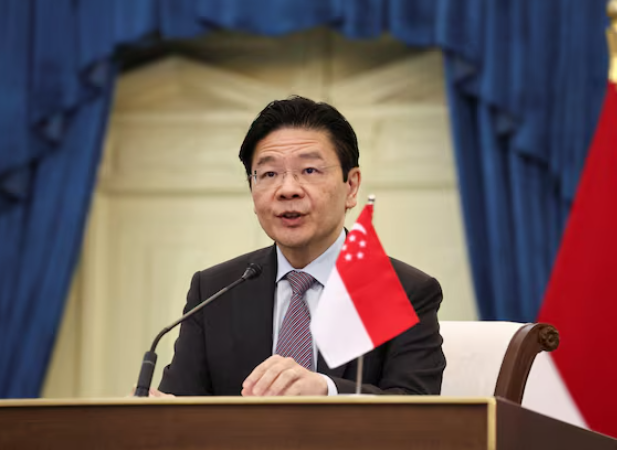
Prime Minister Lawrence Wong's Cabinet reshuffle on 22 July has drawn attention not merely for elevating younger politicians, but for revealing Singapore's strategic priorities at a time of profound global uncertainty. The reshuffling reflects a deliberate concentration of ministerial resources in areas where geopolitical tensions, technological disruption, and energy transition pose the greatest risks to the city-state's prosperity and stability. By examining where the government has deployed its most experienced hands and created new administrative structures, observers gain insight into what Singapore's leadership considers the defining challenges of the coming years.
Energy security stands foremost among these concerns. The renaming of the Ministry of Trade and Industry to the Ministry of Energy, Trade and Industry (METI) from 1 October signals a fundamental recalibration of governmental priorities. This is not mere nomenclature; the elevation of energy to co-equal status with trade reflects the urgency with which Singapore regards its transition to a low-carbon economy while maintaining secure supply chains. Manpower Minister Tan See Leng has stepped down from his current portfolio to concentrate exclusively on his new role as Minister for Trade and Industry (Energy and Industry), an appointment that underscores the technical and strategic complexity of the energy brief.
The timing of this restructuring is significant for the region. Escalating US-Iran tensions have already driven oil prices to volatile levels, creating immediate headwinds for energy-dependent economies throughout Southeast Asia. Singapore, lacking natural energy reserves and dependent on imports, faces acute vulnerability to supply shocks. Yet the government's focus extends beyond managing the current crisis—it encompasses the longer architectural question of how Singapore will achieve net-zero emissions while maintaining reliable electricity supplies. The nation is actively pursuing imports of low-carbon electricity from regional partners, a strategy that diversifies energy sources but introduces new dependencies that could themselves become fragile points in future disruptions.
Nuclear power represents another frontier in this energy conversation. Singapore is currently assessing the viability of deploying nuclear energy and will undergo an evaluation by the International Atomic Energy Agency in 2027 to determine readiness for such a decision. This complex technical and political assessment will require sustained ministerial attention and expertise—another reason the restructured ministry now commands enhanced resources and seniority. The concentration of energy policy under expanded ministerial portfolios allows for more integrated long-term planning.
Trade policy, too, received reinforced attention through the reshuffle. The METI restructuring creates a tripartite leadership arrangement in which Deputy Prime Minister Gan Kim Yong assumes responsibility for the trade portfolio specifically, while Grace Fu—currently heading the Ministry of Sustainability and the Environment—retains responsibility for trade relations. This specialised division of labour suggests that navigating increasingly complex trade relationships, amid global supply chain fragmentation and protectionist pressures, remains central to Singapore's strategic agenda. For Malaysia and other ASEAN partners, Singapore's emphasis on trade continuity and multilateral engagement signals commitment to regional commerce even as broader geopolitical currents shift.
The reshuffle's second major theme concerns technological disruption and employment. The appointment of Jasmin Lau as Acting Manpower Minister, combined with her elevation to Senior Minister of State for Digital Development and Information, reflects government anxiety about artificial intelligence's impact on the workforce. Lau's previous portfolio overseeing GovTech provides her with practical experience in digital transformation—experience she is now expected to apply to worker retraining and skills development. Her appointment signals that Singapore intends to treat AI-driven employment displacement not as an inevitable outcome to manage reactively, but as a challenge requiring proactive institutional response.
Equally significant is the return to Cabinet of Ng Chee Meng, secretary-general of the National Trades Union Congress (NTUC), who takes on a role in the Prime Minister's Office. This appointment carries deep symbolic weight. Historically, the NTUC leader has held Cabinet rank since the 1980s, but the specific timing and positioning of Ng's return—following his July parliamentary motion calling for policies ensuring "no jobless growth" amid AI disruption—suggests the government is attempting to integrate labour movement concerns directly into highest-level decision-making. In May, Ng's motion prompted seven hours of parliamentary debate supported unanimously by 24 MPs and nominated members. His return to Cabinet represents an acknowledgment that managing worker anxiety and union concerns about technological displacement requires voice and influence at the apex of government.
For Malaysian observers, this structural emphasis on workforce resilience carries particular relevance. As artificial intelligence deployment accelerates across Southeast Asia, Singapore's signal that managing employment impacts is a Cabinet-level priority may influence how other regional governments approach the challenge. The move also demonstrates how Singapore's political system integrates organised labour perspectives into state strategy—an approach that contrasts with some other regional models.
Beyond specific portfolio changes, the reshuffle reflects a broader leadership philosophy under PM Wong: expanding ministerial capacity in areas of greatest uncertainty while pushing junior and mid-career politicians to assume greater responsibilities. Senior Minister of State Sim Ann has been elevated to Second Minister for both Foreign Affairs and Home Affairs, while Goh Pei Ming assumes similar elevation in Home Affairs and Social and Family Development. First-term MPs Foo Cexiang and Shawn Loh, having spent just over a year on the backbench, now enter ministerial roles—suggesting a deliberate strategy to accelerate development of the next generation of leaders.
This generational advancement, combined with concentrated resource deployment in energy and digital disruption, suggests a government calibrating itself for sustained uncertainty rather than near-term crisis resolution. Singapore's leadership appears to be working from the premise that traditional economic advantages—efficient administration, transparent institutions, strategic location—must be supplemented by proactive mastery of energy transition and technological change. The Cabinet reshuffle operationalises this strategic vision, positioning the government's most experienced operators where the stakes of misjudgement are highest, while simultaneously cultivating younger talent for leadership in a transformed world.

