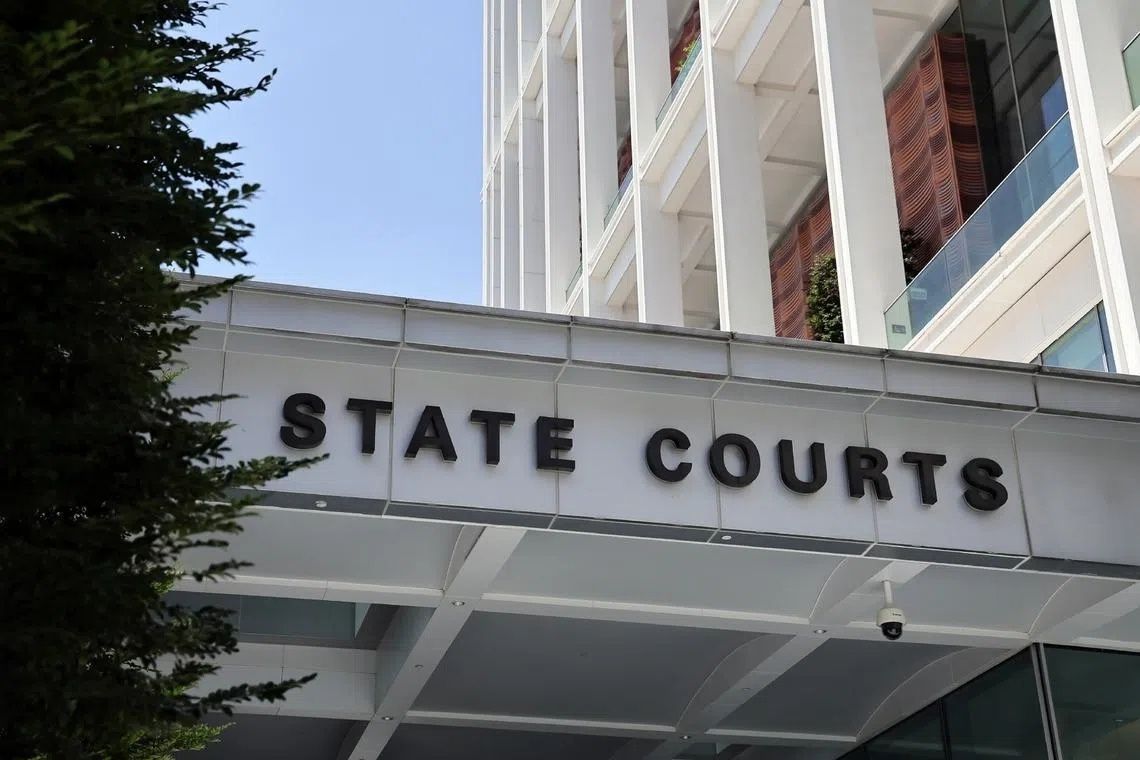
Singapore's traffic authorities delivered a stark reminder of the dangers posed by impaired driving when they brought 41 motorists before the courts on a single day, all facing drink-driving charges. Among this cohort were three men whose cases proved particularly alarming: they had apparently succumbed to drowsiness while intoxicated, leaving their vehicles abandoned in hazardous locations. The incident underscores a persistent enforcement challenge across Southeast Asia, where alcohol-impaired driving continues to claim lives and endanger public safety despite sustained policing efforts.
The three men whose cases drew particular attention to the sleep-driving phenomenon each presented a concerning scenario. Tho Yu Wei Ronald, aged 34, abandoned his vehicle at the entrance of a multi-storey carpark at Block 176 Hougang Street 13 late on the evening of April 30, with breath alcohol readings of at least 51 micrograms per 100 millilitres—exceeding the legal threshold of 35 micrograms. Similarly, Zhong Pengzhi, 38 years old, left his car obstructing the second lane of Clementi Avenue 5 in the early hours of May 9 with a recorded breath alcohol content of 48 micrograms per 100 millilitres. The third case involved Dharuman Killivalavan, a 29-year-old Indian national, who was operating a lorry along Loyang Avenue when he positioned the vehicle dangerously along the extreme right lane on June 15; his breath alcohol measurement reached 87 micrograms per 100 millilitres, nearly two and a half times the permissible level.
When these men appeared before the district court on June 25, each faced charges not merely for drink driving but also for the secondary offence of leaving a vehicle in a position causing undue inconvenience to others. This dual charging approach reflects authorities' efforts to address both the primary danger of impaired operation and the secondary risks created when incapacitated drivers abandon their vehicles in active traffic zones. The outcomes reflected the severity of their transgressions. Dharuman, who pleaded guilty to the charges, received a fine of $7,100 alongside a 36-month driving disqualification—a substantial penalty reflecting the particularly high alcohol concentration he had recorded while operating a commercial vehicle.
Among the broader cohort of 41 drivers charged on that single day, the ages ranged from 25 to 68 years, suggesting that impaired driving transcends generational boundaries. Two of these individuals carried the added stigma and legal disadvantage of prior convictions for identical offences. Cheng Woon Siong, a 44-year-old repeat offender with a conviction from December 2019, was stopped during routine police checks with a breath alcohol reading of 52 micrograms per 100 millilitres. Upon his June 25 court appearance, he received a custodial sentence of one month's imprisonment together with a $5,500 fine and faced a significantly lengthier five-year driving ban that would commence only upon his release from detention. The second recidivist, Koh Choon Lye, aged 48, had been previously convicted in 2018 and was apprehended along Tyrwhitt Road on April 16 with a recorded alcohol level of 51 micrograms per 100 millilitres.
The scale of Singapore's drink-driving challenge becomes apparent when examining the nation's annual enforcement statistics. During 2025, traffic police arrested 1,716 individuals suspected of drink driving, a figure that encompasses both those formally prosecuted and those caught during routine enforcement operations. Yet these numbers, substantial as they are, represent merely the enforcement end of the spectrum. The broader societal impact emerges through accident data: that same year witnessed 12 fatal crashes directly attributable to drink-driving circumstances. Each fatality represents not only an individual tragedy but also the destruction of families and communities, making enforcement actions appear proportionate responses to a genuinely life-threatening public health issue.
Singapore's approach to this persistent problem combines aggressive law enforcement with consistent public messaging about the catastrophic risks of combining alcohol consumption with vehicle operation. The Traffic Police have repeatedly emphasised that driving while intoxicated constitutes an extremely dangerous and fundamentally irresponsible act, one that compromises not only the driver's safety but that of all other road users. This messaging extends beyond simple abstention directives; authorities actively promote behavioural alternatives for those who intend to consume alcohol. Taxis and private-hire vehicles represent readily accessible alternatives to personal vehicle operation, options that have become increasingly convenient and affordable across Singapore's dense urban landscape.
The phenomenon of drivers falling asleep at the wheel while intoxicated presents a distinctive hazard that distinguishes it from other impaired driving incidents. Such cases suggest that the initial impairment from alcohol has progressed to a point where the driver has lost conscious control of the vehicle entirely, creating not merely a slowly-reacting danger but an essentially unmanned heavy machinery situation. When such a vehicle comes to rest in an active traffic lane or at the entrance to a multi-storey carpark, it transforms into a sudden obstacle that other motorists must navigate without warning, elevating the risk of secondary collisions. The combination of drink driving and incapacitation thus represents a compound hazard requiring compound legal responses.
For Malaysian readers and observers across Southeast Asia, Singapore's enforcement intensity and sentencing patterns offer instructive benchmarks. Singapore's legal framework imposes substantial penalties even for first-time offenders, with fines routinely exceeding $5,000 and driving disqualifications measured in years rather than months. The additional punishment applied to repeat offenders, including custodial sentences, reflects a escalating deterrence philosophy designed to discourage reoffence. These approaches contrast with enforcement patterns in various other regional jurisdictions, where penalties may be comparatively lighter or enforcement sporadically pursued. The relative consistency of Singapore's approach, evident in the processing of 41 cases within a single day, suggests institutional commitment to systematic rather than episodic enforcement.
The challenge of drink-driving enforcement operates alongside broader questions about alcohol regulation and transport infrastructure across Southeast Asia. Dense urban centres like Singapore's have the advantage of readily available alternatives to personal vehicle operation, yet even this advantage has not entirely eliminated the problem. In less densely developed areas across the region, where public transportation options remain limited and personal vehicle reliance is higher, the enforcement challenge multiplies. The regional context matters considerably: rapid urbanisation, increasing vehicle ownership, expanding hospitality and entertainment sectors, and cultural patterns around alcohol consumption all intersect to create distinct impaired-driving landscapes in different jurisdictions. Singapore's data and enforcement patterns provide valuable reference points for regional policymakers contemplating their own responses to this persistent safety challenge.

