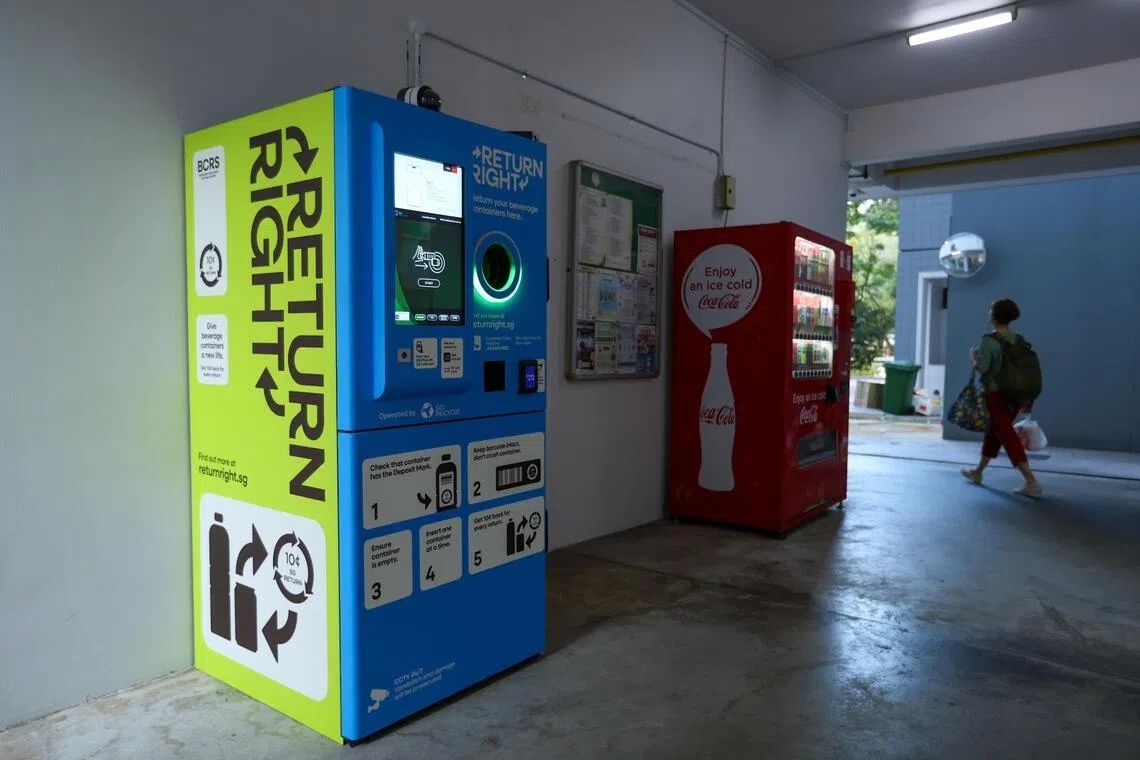
Singapore's environmental authorities have moved swiftly to defend the integrity of their flagship recycling initiative, dismissing allegations of misappropriation and corrupt practices that emerged from parliamentary discussions about the Beverage Container Return Scheme. The National Environment Agency released a statement on August 15 to counter what it characterised as unfounded accusations, emphasising that online criticism stemmed from a fundamental misunderstanding of how transaction data should be interpreted.
The controversy originated when Senior Minister of State for Sustainability and the Environment Janil Puthucheary informed Parliament on August 5 that approximately one million refund transactions had been successfully processed between April and July. Over the same period, 5.5 million used beverage containers had been deposited into reverse vending machines across Singapore. Some online commentators seized upon these figures, questioning why refunds appeared to cover only one-fifth of the containers actually returned, implying that millions of dollars worth of deposits might have been mishandled or pocketed by scheme administrators.
The NEA's clarification addresses a critical point that was lost in initial discussions: consumers regularly return multiple containers in a single transaction. This explains the apparent discrepancy between transaction numbers and container volumes. When properly understood, the statistics reveal that consumers averaged 5.5 containers per visit to the machines, a reasonable figure that aligns with typical household beverage consumption patterns and the convenience of batch returns. The agency calculated that approximately S$550,000 in total refunds had been distributed to consumers across the four-month launch period, a figure consistent with the deposit value of the containers returned.
The Beverage Container Return Scheme, which commenced on April 1, represents a significant policy intervention designed to boost recycling rates and reduce litter in Singapore's urban environment. Under the system, consumers pay a mandatory 10-cent deposit on each canned or bottled beverage they purchase, recoverable when they return the used containers to designated reverse vending machines. This deposit mechanism, common in many developed economies, creates financial incentives for proper waste disposal and has proven effective in jurisdictions ranging from Australia to Nordic countries in dramatically improving container recovery rates and reducing environmental contamination.
The timing of these accusations carries particular significance within Singapore's political and governance context. The nation has invested considerably in positioning itself as a regional environmental leader, with ambitious sustainability targets and sophisticated waste management infrastructure. Public confidence in the governance and transparency of major policy initiatives remains essential to their successful implementation. When accusations of financial misconduct surface—even if based on misinterpretation—they have potential to erode public trust in environmental programmes and discourage broader participation in recycling efforts that depend on voluntary consumer engagement.
Neither this dispute nor the clarifications issued by the NEA emerge in a vacuum. The scheme has encountered operational challenges since its rollout. Users reported experiencing technical difficulties with machines failing to register returns, leading to situations where consumers were unable to collect their deposits despite properly inserting containers. Some individuals resorted to submitting email complaints to scheme operators in order to recover funds, suggesting that the automated systems, while generally functional, contain friction points that disadvantage ordinary users. Additionally, certain machines reportedly rejected valid containers, creating frustration and potentially discouraging repeat participation.
In his parliamentary statement, Janil acknowledged these isolated incidents while emphasising that the vast majority of transactions proceeded without complications. He indicated that the scheme operator had demonstrated responsiveness in addressing technical issues as they arose, working collaboratively with machine operators to diagnose and resolve problems promptly. This acknowledgment of imperfect initial implementation reflects the reality that launching complex automated systems at scale invariably produces teething problems requiring iterative refinement.
The governance framework surrounding the scheme includes built-in accountability mechanisms designed to prevent precisely the kind of financial malfeasance that online commentators suspected. The scheme operator remains obligated to submit annual financial reports to the National Environment Agency, providing detailed accounting of all deposits collected and refunds distributed. This requirement creates a formal audit trail and establishes transparent oversight, reducing opportunities for undetected financial irregularities. For Malaysian observers, such mechanisms represent best practices in managing public-facing environmental programmes, offering instructive models for recycling initiatives being developed across Southeast Asia.
The episode illuminates broader challenges in communicating complex policy statistics to the public in an era of rapid information dissemination through social media. Parliamentary statements, while accurate, may lack sufficient contextual detail to prevent misinterpretation when extracted and circulated online. The apparent contradiction between one million transactions and 5.5 million containers, while logically reconcilable to anyone familiar with how return systems function, proved confusing to observers lacking that background knowledge. This suggests that government communicators benefit from proactively embedding explanatory context within initial announcements, rather than assuming audiences will independently arrive at correct interpretations.
For Malaysia and other Southeast Asian nations developing their own circular economy initiatives, Singapore's experience offers cautionary lessons about public engagement and transparent communication. As regional governments increasingly implement deposit-return schemes and container recovery programmes—critical components of achieving sustainable waste management targets—they must balance operational efficiency with clear public communication. Building public confidence requires not merely accurate implementation but also readily accessible explanations of how systems function, what metrics indicate success, and how oversight mechanisms protect against potential abuses.
Looking forward, the resolution of these allegations may prove beneficial to scheme credibility if handled transparently. The NEA's direct engagement with criticism, rather than dismissal, demonstrates responsiveness to public concerns. Continued public reporting of transaction volumes, refund amounts, and operational metrics will help establish a track record of accountability. As the scheme matures beyond its initial pilot phase, demonstrating both environmental effectiveness and financial integrity will determine whether it becomes a durable feature of Singapore's waste management system and a model for adoption elsewhere in the region.

