A troubling pattern has emerged on Singapore's roads: in mid-June alone, three separate men faced court charges for operating vehicles while impaired by drugs, with investigators discovering their impairment only after collisions occurred. Two of the cases involved methamphetamine, a potent stimulant known locally as Ice, while the third centred on etomidate, an anaesthetic increasingly appearing in illicit vaporiser products marketed as Kpods. This convergence of cases within a fortnight signals a deepening challenge that extends well beyond the city-state's borders, carrying implications for road safety across Southeast Asia where similar substances circulate.
Dr Jonathan Tang, a clinical toxicologist at the Emergency Medicine Department of the National University Hospital, has begun observing a worrying clinical pattern. He has treated multiple trauma patients whose road accidents coincided with evidence of etomidate consumption through vaporised inhalation. His assessment underscores a critical medical reality: etomidate impairs driving capacity in ways functionally analogous to alcohol intoxication, compromising motorists' judgement and reflexes while simultaneously endangering everyone sharing the road. The substance degrades fundamental driving competencies that depend on neurological processing speed and situational awareness.
The statistics paint a starkly concerning picture. Between 2023 and 2025, Singapore recorded 38 traffic accidents directly linked to drug and etomidate use, according to information disclosed by Coordinating Minister for National Security K. Shanmugam in Parliament. Of these, nearly half—19 accidents—proved fatal. The breakdown reveals a troubling concentration: 10 fatal incidents involved traditional drugs, while nine were associated with etomidate use. More alarmingly, the prevalence of such incidents has accelerated dramatically in 2025, with 29 of the 38 total accidents occurring within that single year. Among 2025's cases, etomidate featured in 18 incidents, whilst seven involved combinations of both drug types.
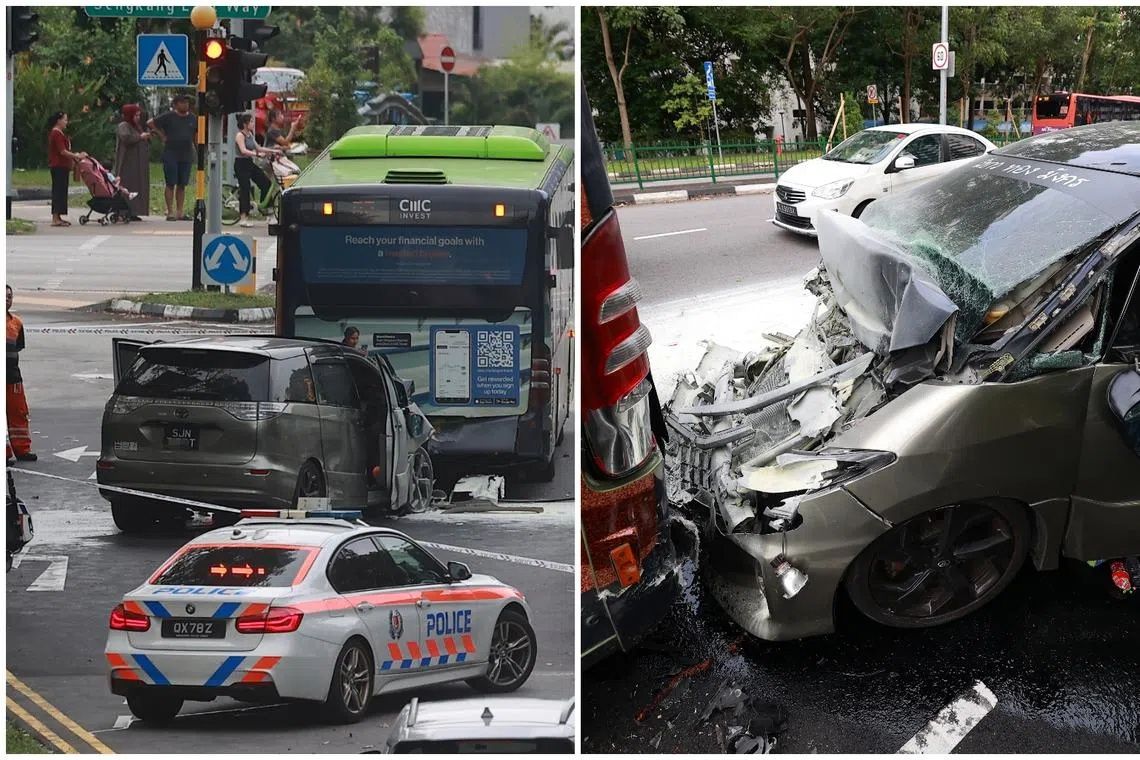
A particularly devastating case illustrates the human cost of this phenomenon. On May 13, 2025, a vehicle collided with a bus in Punggol with tragic consequences. The driver, found to have etomidate in his bloodstream, was transporting a 28-year-old female passenger who died from injuries sustained in the crash. Police later discovered 42 vaporiser units and more than 1,200 pods inside the vehicle, with certain pods containing etomidate. The female passenger also tested positive for the substance, raising questions about how such products circulate and their accessibility to unsuspecting users.
Dr Tang's clinical expertise identifies the precise mechanisms through which etomidate undermines driving safety. The substance precipitates delayed reaction times, impairs hazard perception, and compromises vehicle control—consequences that ripple outward to endanger not merely the impaired driver but also passengers, pedestrians, and fellow motorists. Beyond these direct physiological effects, emerging evidence suggests etomidate use triggers psychiatric complications including mood depression, heightened aggression, increased impulsivity, and suicidal ideation. These psychological manifestations create an additional layer of risk, potentially transforming even moment-to-moment decisions behind the wheel into life-or-death situations.
Parliamentary attention has recently focused on enforcement gaps and detection protocols. In February, Member of Parliament Valerie Lee (Pasir Ris-Changi GRC) questioned whether the Traffic Police conducted systematic screening for vaping or drug impairment as standard procedure following accidents. Minister Shanmugam confirmed that Traffic Police assess suspected impaired driving in accident investigations, with blood testing deployed when drug or etomidate use is suspected. Drivers testing positive face liability under driving-while-impaired legislation, yet the existence of such protocols has not prevented the sharp rise in substance-related incidents during 2025.
The broader road safety context renders these drug-related accidents particularly troubling. Singapore recorded 149 traffic fatalities in 2025, reaching a 10-year high and exceeding the 141 deaths recorded in 2016 by nearly six percent. Injury figures similarly deteriorated, climbing from 9,342 injured persons in 2024 to 9,955 in 2025. These aggregate figures encompass accidents of all causation, yet the rising proportion attributable to substance abuse suggests an emergent rather than endemic problem—one potentially amenable to intervention if addressed with sufficient urgency.
Three recent court cases exemplify the range of substances involved and the severity of consequences. Mohamed Firdouz Mohamed Akram, 36, faced multiple charges in June following a collision with a taxi in Kallang that injured both the taxi driver and a passenger. Police discovered Ice and various weapons in his abandoned vehicle. Puah Zhe Cong, 34, was charged with dangerous driving causing death and failing to stop after an accident, allegedly after consuming etomidate, resulting in one fatality and two additional injuries. Sivakandesh, 32, crashed his Mercedes-Benz into concrete bollards and a rubbish chute in Yishun after consuming methamphetamine, with his vehicle's registration plates subsequently removed.
Singapore's legislative framework prescribes substantial penalties intended to deter such behaviour. First-time offenders convicted of driving while under the influence of intoxicating substances face up to one year imprisonment, fines reaching S$10,000, or both. Repeat offenders encounter more severe consequences: imprisonment up to two years combined with fines up to S$20,000. Despite these sanctions, the acceleration of cases in 2025 suggests either that deterrent effects have proven insufficient or that substance availability and consumption patterns have shifted dramatically.
For Malaysian readers and broader Southeast Asian audiences, Singapore's emerging crisis carries cautionary significance. The circulation of etomidate-laced vaping products, marketed under names like Kpods, indicates a supply network operating across borders. Similar products have appeared in Malaysia, Thailand, and other regional jurisdictions. The clinical patterns Dr Tang describes—delayed reaction times, impaired hazard perception, psychiatric complications—will manifest identically in vehicles on Malaysian expressways as on Singapore's arterial roads. Road safety improvements undertaken in one jurisdiction depend partly on understanding emerging threats materialising in neighbouring territories.
The intersection of substance abuse, impaired driving, and road fatalities represents a governance challenge cutting across traditional silos. Public health authorities, law enforcement, transport regulators, and clinical institutions must coordinate responses addressing supply disruption, improved detection methodologies, and evidence-based prevention. Singapore's recent parliamentary attention signals recognition of these connections, yet the acceleration of incidents in 2025 demonstrates that awareness alone remains insufficient without corresponding resources and strategic coherence.

