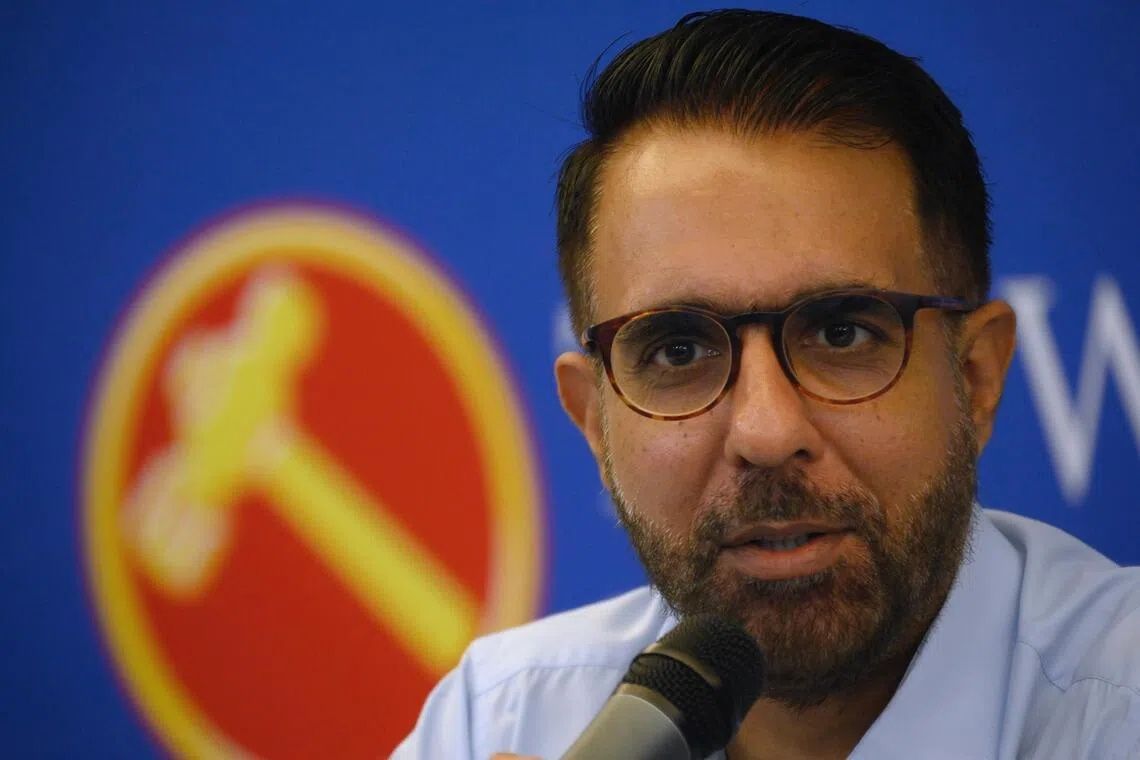
Singapore's opposition Workers' Party faces a potential leadership crisis as internal dissent intensifies, with cadres plotting to remove party secretary-general Pritam Singh at elections scheduled for June 28. The push for change represents the most serious challenge to his authority since he assumed the top post eight years ago, driven by frustration over his legal troubles and decisions that critics argue have weakened the party's standing in Parliament and public perception.
The catalyst for the uprising stems from a December 2025 High Court decision upholding Pritam's conviction for providing misleading information to a parliamentary committee. This legal setback crystallised existing grievances among party members and prompted around 25 cadres to formally request a special conference where Pritam would be required to justify his actions and potentially step down. The requesters represent a significant cross-section of the party's inner circle, including former members of the central executive committee and past election candidates, demonstrating that dissatisfaction extends beyond fringe elements.
The core complaint centres on Pritam's handling of former Sengkang GRC MP Raeesah Khan, who made false statements in Parliament in August 2021. Critics within the party contend that Pritam failed to push Khan to immediately retract her fabrication, only addressing it when she voluntarily confessed in November that year. The subsequent parliamentary inquiry and court proceedings found that Pritam had essentially guided Khan in maintaining the deception—a serious breach of integrity for a party that has built its brand on trustworthiness and ethical governance distinct from the ruling establishment.
Party insiders confirmed that recruitment of a challenger has accelerated in recent weeks, with overtures made to several senior MPs including Gerald Giam of Aljunied GRC, Hougang's Dennis Tan, and Sengkang MPs He Ting Ru and Jamus Lim. Notably, the latter two served on the disciplinary panel that found Pritam violated party constitution provisions. However, despite these approaches, no potential candidate has publicly committed to running, reflecting the risks involved in challenging an incumbent within a tightly-knit party structure. Members who have been openly critical face potential disciplinary measures, effectively muzzling dissent and forcing discussions into private channels.
The procedural architecture of the June 28 vote creates multiple pressure points. The special conference will come first, allowing the party to formally air grievances and vote on whether Pritam should step down or face a secret ballot on his fate. Only afterwards will the biennial ordinary cadres' conference convene to conduct elections for the full leadership slate, including the secretary-general position. This sequencing means Pritam could theoretically be voted out at the first meeting and subsequently run again at the second—a loophole that underscores the complexity of internal party dynamics. A simple majority is required to secure re-election, and with cadre numbers slightly exceeding 100, the mathematics suggest that organised opposition could genuinely threaten his position.
A critical variable is the stance of former party chief Low Thia Khiang, who led the Workers' Party from 2001 to 2018 and remains on the central executive committee. Rumours circulating within party ranks suggest Low has withdrawn support for Pritam, with speculation that he voted against him during recent central executive committee discussions on the disciplinary panel's findings. If Low actively backs a challenger, party insiders assess that combining his considerable influence with the roughly 30 confirmed dissident cadres could assemble sufficient votes to unseat Pritam. Low's track record of sway over party veterans—several of whom are among the current agitators—cannot be overstated, though sources indicated Low himself is unlikely to contest the position directly.
The parallels to 2016 are instructive. When Low faced his own leadership challenge from former Aljunied MP Chen Show Mao, that bid proved unsuccessful yet mobilised the same cohort of party veterans now calling for Pritam's resignation. The failure to dislodge Low suggests either that Pritam's position is stronger than appearances suggest or that the present constellation of circumstances is fundamentally different. Several cadres acknowledged to media that the situation remains fluid and may shift substantially between now and voting day, indicating that outcomes remain genuinely uncertain.
Beyond the conviction itself, multiple grievances have accumulated. Pritam's removal as Leader of the Opposition by Prime Minister Lawrence Wong in January 2026 stripped the Workers' Party of parliamentary prominence, yet the party declined the opportunity to nominate a replacement MP to reclaim the role, instead closing ranks behind Pritam. Some cadres privately questioned this strategic misstep, viewing it as self-inflicted damage to party influence and the broader opposition movement. Separately, the party's performance in the 2025 general election disappointed internally, with members expecting additional parliamentary seats given what they regarded as a strong candidate slate. That no ground was gained bred resentment, as did Pritam's decision to withdraw from Marine Parade-Braddell Heights GRC on Nomination Day, a move some interpreted as tactically questionable.
The integrity argument carries particular weight within the Workers' Party's ideological framework. One unnamed cadre articulated the core concern bluntly: voters support the Workers' Party specifically because they perceive it as fundamentally different from and more trustworthy than the ruling People's Action Party. A secretary-general convicted of lying to Parliament directly undermines that competitive advantage and exposes the party to renewed accusations of hypocrisy. This moral dimension elevates the dispute beyond ordinary internal politics into questions about the party's foundational identity and viability as a credible alternative government.
The formal letter of reprimand Pritam received in April 2026—two months before the June elections—intensified pressure while technically stopping short of disqualifying him from re-election. Party authorities explicitly stated no restrictions prevent him from seeking the secretary-general position again, a stance that some cadres view as inadequate given the severity of his conviction. This procedural permissiveness has effectively thrown the decision to the cadre body itself, positioning June 28 as a referendum on whether the party membership believes Pritam's leadership can survive the reputational damage inflicted by the courts.
The coming weeks will be critical, with the identity of any challenger potentially emerging only at the moment of voting. Several cadres suggested that the outcome of the special conference—whether Pritam is voted out, narrowly survives, or wins decisively—will substantially influence whether a challenger materialises at the ordinary conference. A strong showing for Pritam might discourage contenders, whereas a narrow victory or defeat would likely embolden opposition candidates to step forward for the top job. This sequential logic means the elections will function as a genuine test of party sentiment rather than a ceremonial reaffirmation of existing leadership.

