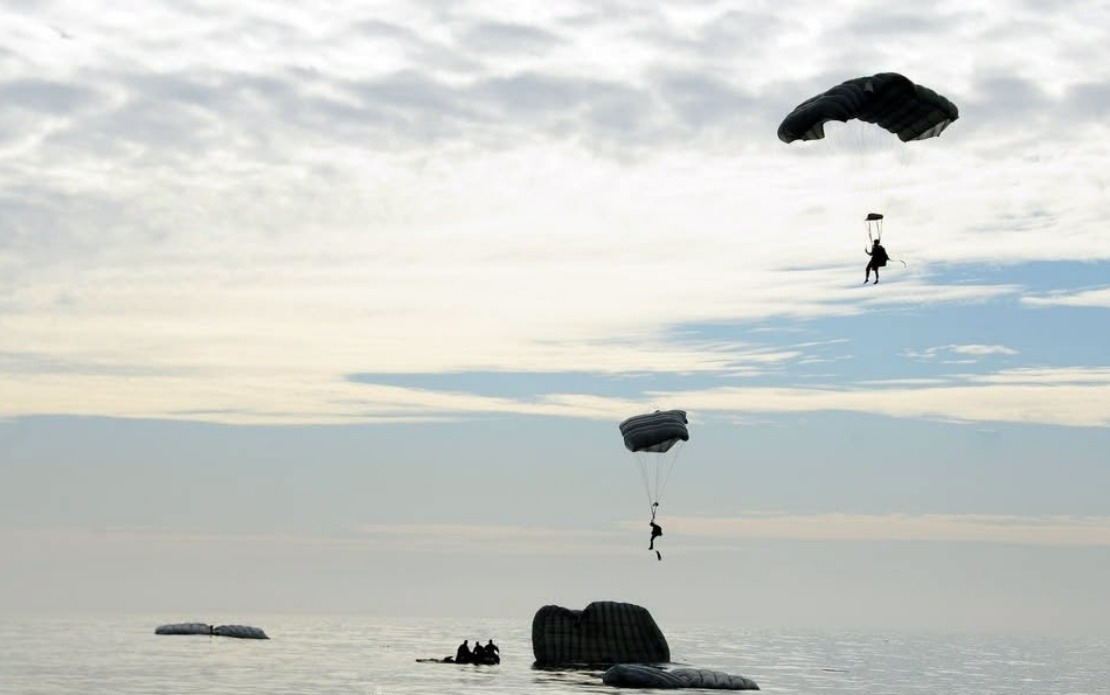
A training operation for Malaysia's elite Naval Special Warfare Forces ended with a dramatic rescue in the South China Sea when six PASKAL personnel found themselves adrift after unexpected weather conditions disrupted a free-fall parachuting exercise. The Royal Malaysian Navy confirmed yesterday that all six commandos were located and safely recovered by an RMN vessel after spending time in the water, prompting a broader discussion about the balance between rigorous military training and operational safety protocols.
The incident occurred during what was intended to be a routine airborne insertion exercise, where precision in landing zones is critical for the success of maritime special operations. However, the South China Sea's notoriously volatile weather patterns created sudden shifts in visibility that left the personnel unable to reach their assigned landing coordinates. Such conditions are not uncommon in the region, where monsoon seasons and localised squalls can materialize with little warning, presenting ongoing challenges for naval and aviation operations throughout Southeast Asia.
The recovery operation itself demonstrated the effectiveness of maritime search and rescue capabilities within the RMN fleet. The rapid location and retrieval of all six personnel reflects established protocols for monitoring airborne operations and maintaining vessel support stations during high-risk training activities. The swift response prevented what could have become a serious incident, underscoring the importance of redundant safety systems and coordination between aircraft and surface vessels during special forces exercises.
Rather than treating the incident as a failure, the RMN framed the episode as validation of PASKAL's intensive preparation methodology. The service issued a formal statement emphasizing that the personnel's ability to survive and endure the unexpected situation demonstrated the effectiveness of their continuous, realistic training regimen. This perspective reflects a philosophy common among elite military units worldwide: that genuine combat readiness requires exposure to genuine challenges, and that controlled training incidents often yield valuable operational insights.
The training philosophy underpinning PASKAL operations places significant emphasis on building mental and physical resilience beyond basic combat competencies. Personnel undergo extended exposure to extreme environmental conditions, survival scenarios, and high-stress decision-making situations designed to prepare them for the unpredictability of real operations. The motto "Sentiasa yang Terbaik" (Always the Best) encapsulates this commitment to maintaining standards that extend across technical proficiency, discipline, and psychological preparedness.
For Malaysia's defence establishment, incidents during training exercises carry particular significance given the strategic importance of maintaining naval superiority in contested waters. The South China Sea remains a region where multiple nations maintain overlapping territorial claims and conduct regular military operations. PASKAL's capabilities in maritime special operations, reconnaissance, and rapid response operations are essential components of Malaysia's maritime security posture and sovereignty protection in these waters.
The RMN's statement also reaffirmed the institution's commitment to what officials characterize as a balanced approach between operational readiness and personnel safety. This reflects an ongoing tension in military training programmes globally: the recognition that meaningful preparation for actual combat conditions requires accepting certain risks, while simultaneously implementing safeguards to prevent avoidable casualties. The presence of recovery vessels during the parachute exercise exemplifies this balanced methodology.
Weather-related disruptions to military operations represent a recurring challenge across maritime Southeast Asia. Training exercises regularly confront planners with decisions about proceeding with operations despite deteriorating conditions or postponing to ensure ideal circumstances. The decision to proceed with this particular exercise, followed by the successful recovery of all personnel, suggests that RMN commanders assessed the risks as manageable within their established safety protocols.
The incident also highlights the ongoing demands placed on PASKAL personnel, who must maintain readiness for complex operations across the region's maritime environment. Beyond traditional special forces capabilities in direct action and reconnaissance, modern naval commandos must be proficient in maritime interdiction, underwater demolition, counter-piracy operations, and rapid-response humanitarian assistance. The training regimen that produces such versatility necessarily involves exposure to challenging conditions and calculated risk.
From a regional perspective, the capabilities demonstrated by PASKAL and the RMN contribute to the broader maritime security architecture of Southeast Asia. Malaysia's special forces operations intersect with broader defence cooperation mechanisms within ASEAN and with individual partners. The proficiency and safety standards maintained by units like PASKAL reflect positively on Malaysia's ability to conduct joint operations and training exercises with international partners.
The successful resolution of this training incident provides reassurance to both military personnel and civilian stakeholders about the institutional commitment to managing risk during high-intensity operations. Families of military personnel, in particular, benefit from visible evidence that their relatives' training, while challenging, incorporates genuine safety considerations and emergency response capabilities. This balance between intensity and responsibility remains crucial for maintaining public confidence in defence institutions.
Looking forward, the RMN will likely conduct a thorough review of this exercise to identify any adjustments to training protocols, weather monitoring systems, or recovery procedures. Such continuous improvement processes are standard practice among professional militaries, transforming individual incidents into institutional learning opportunities. The goal remains consistent: ensuring that PASKAL personnel achieve the elite status their designation represents while maximizing the probability that all will return safely from training and actual operations.

