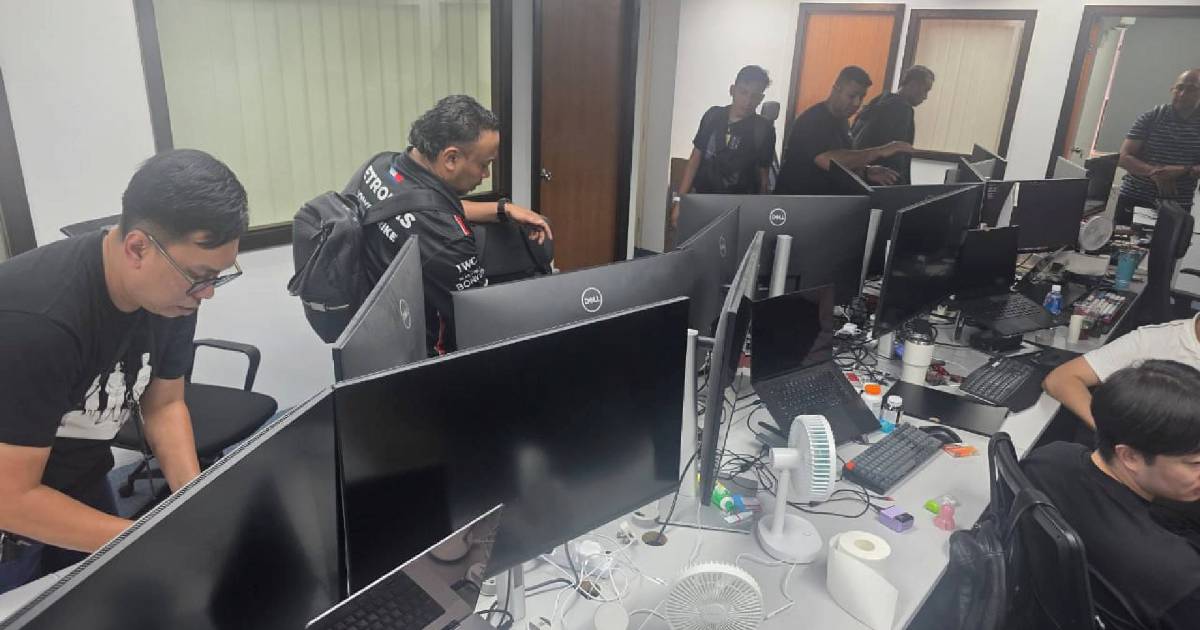
Police in Kuala Lumpur have dismantled a significant illegal sports betting operation following a raid on a call centre located within an office building in Taman Desa, Brickfields. The operation resulted in the arrest of 11 individuals, six of whom are South Korean nationals, signalling the international dimensions of organised gambling networks operating in Malaysia's capital.
The bust underscores a persistent problem facing law enforcement authorities across Southeast Asia: the proliferation of underground betting syndicates that exploit major sporting events to generate substantial illicit revenue streams. The World Cup, as one of the planet's most watched sporting spectacles, consistently attracts criminal enterprise seeking to capitalise on unprecedented global interest and wagering activity.
Office buildings in commercial districts like Brickfields have become increasingly attractive to syndicates operating call centres for illegal betting operations. These locations offer operational anonymity amid legitimate business activity, multiple entry and exit points, and proximity to transport networks that facilitate rapid evacuation should police conduct enforcement actions. The choice of Taman Desa reflects the syndicate's apparent sophistication in site selection, targeting an area with sufficient foot traffic to avoid suspicion.
The involvement of South Korean nationals points to transnational organised crime networks with established expertise in sports betting infrastructure. South Korea itself has experienced substantial underground gambling markets, and individuals from the country possess operational knowledge that transfers readily to regional hubs like Malaysia. The movement of skilled personnel across borders represents a challenge for law enforcement agencies attempting to dismantle these networks through conventional methods.
World Cup betting presents heightened enforcement challenges for Malaysian authorities. The tournament generates unprecedented wagering volumes, with matches occurring across multiple time zones and creating opportunities for around-the-clock betting operations. Call centres operating across borders can serve customers across several countries simultaneously, fragmenting legal jurisdiction and complicating investigations requiring international cooperation.
Police enforcement targeting betting syndicates remains a cornerstone of Malaysia's approach to organised crime prevention. The immediate disruption of such operations prevents capital accumulation that syndicates typically reinvest into expanding operations or related criminal activities including money laundering and loan-sharking. Each successful raid generates actionable intelligence about operational methods, supply networks, and personnel movements that feeds into broader counter-organised crime strategies.
The geographic positioning of Malaysia as a regional financial and commercial hub creates vulnerabilities to transnational gambling operations. The country's developed telecommunications infrastructure, reliable electricity supply, and sophisticated banking systems make it an attractive operational base for syndicates serving customers across Asia and beyond. Addressing this vulnerability requires sustained enforcement pressure combined with regulatory innovation.
Financial tracking represents an increasingly critical investigative tool for disrupting betting syndicates. Call centre operations generate identifiable transaction patterns as they collect wagers and distribute winnings. Collaboration between police and financial intelligence units can reveal transaction trails that expose not only the immediate betting operation but also the broader networks through which illicit proceeds flow and are subsequently laundered.
International cooperation between Malaysian authorities and law enforcement in South Korea and other regional countries strengthens the enforcement response to transnational organised crime. Information sharing regarding suspect identities, operational techniques, and funding sources enables authorities to dismantle networks operating across multiple jurisdictions simultaneously, making expansion and recovery more difficult for criminal enterprises.
The timing of enforcement actions around major sporting events reflects proactive policing strategies. Malaysian authorities appear to be escalating surveillance and raids during peak wagering periods when syndicates concentrate resources and personnel. This approach maximises the disruption effect of arrests and operational shutdowns by catching syndicates at peak operational capacity.
Beyond immediate law enforcement outcomes, successful operations against betting syndicates generate important public messaging about enforcement capability and criminal risk. Publicising arrests and detailing operational scale sends deterrent signals to individuals considering participation in illegal gambling enterprises. Media reporting of these enforcement actions reinforces the credibility of official commitments to combat organised crime.
The broader implications extend to money laundering concerns. Successful betting syndicates accumulate substantial cash proceeds requiring conversion into seemingly legitimate business income. Raiding operations before significant capital consolidation occurs prevents the integration of illicit funds into Malaysia's financial system, reducing downstream challenges for financial regulators and intelligence agencies.
Moving forward, sustained enforcement against betting syndicates requires continued resource allocation and inter-agency coordination. The international composition of arrested individuals demonstrates that addressing this challenge demands not only domestic police capability but also effective bilateral and multilateral cooperation frameworks that enable rapid information exchange and coordinated enforcement operations across borders.

