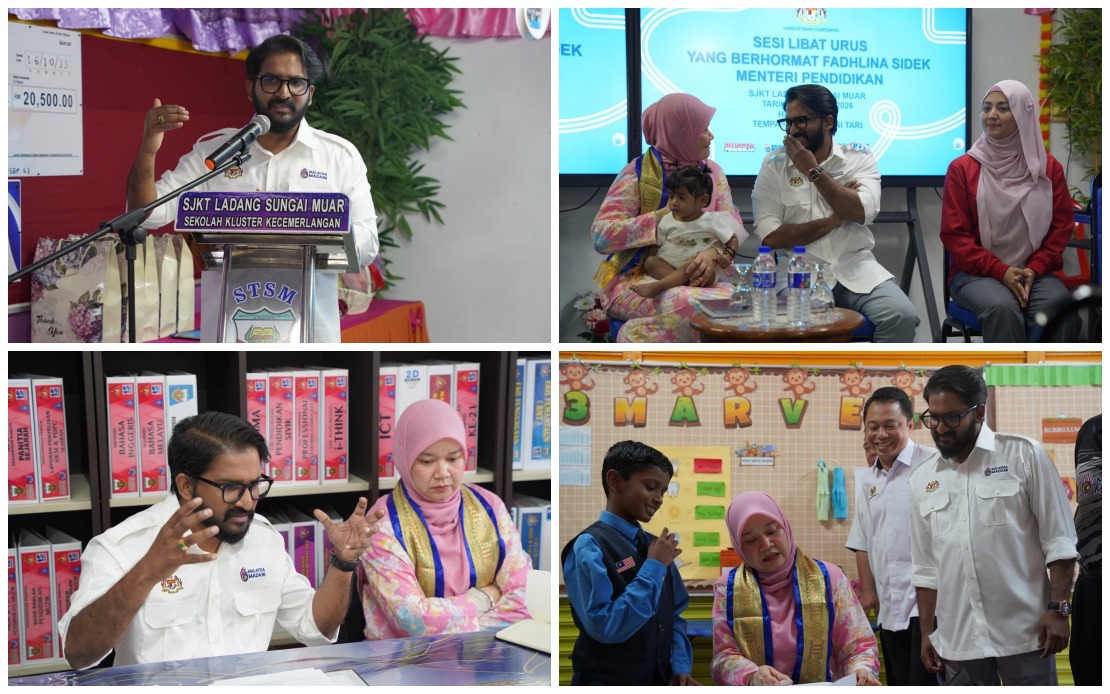
The proposed relocation of Sekolah Jenis Kebangsaan Tamil (SJKT) Ladang Sungai Muar in Segamat, Johor has progressed to a critical juncture, entering the land ownership and acquisition stage in collaboration with local land administration authorities. This development marks tangible progress on an initiative that has been pending for several years, with the Segamat Land and Mines Office now managing the procedural aspects of securing suitable property for the school's new campus.
Segamat Member of Parliament R. Yuneswaran announced the milestone following an engagement session held with school leadership and attended by Education Minister Fadhlina Sidek. The minister's participation underscores the federal government's commitment to addressing infrastructure challenges facing the vernacular education sector, particularly Tamil-medium schools which have historically faced resource constraints in several Johor constituencies. The minister's direct involvement suggests the relocation has gained traction within the Education Ministry's policy framework and budget priorities.
Yuneswaran's advocacy for the school's relocation stretches back to his election as Segamat MP in 2022, when he identified multiple operational difficulties affecting student welfare and educational delivery. The current facility faces critical limitations including compromised safety standards, geographic isolation from the broader Segamat community, and deficient infrastructure that impedes quality teaching and learning experiences. These concerns are not unique to this institution; many Tamil vernacular schools across peninsular Malaysia operate from aging or inadequately equipped premises, reflecting historical funding disparities and delayed modernisation efforts.
The safety dimension of this relocation initiative carries particular weight in Malaysian education policy discourse. Educational facilities serving vulnerable populations—including younger students in remote or poorly-maintained buildings—represent a governance priority under the current administration's MADANI framework, which emphasises inclusive development and equity in service delivery. The Segamat school's current location apparently presents hazards that warrant urgent remediation, whether through structural deficiencies, inadequate access routes, or proximity to industrial or traffic hazards.
Geographic isolation compounds these challenges. Schools positioned far from residential settlements experience lower enrolment, parental engagement difficulties, and transportation burdens for students and educators alike. Relocation to a more accessible site within Segamat would likely enhance community participation in school affairs, facilitate resource sharing with other educational institutions, and improve emergency response capabilities. For Tamil-medium education specifically, proximity to Tamil-speaking population concentrations strengthens cultural continuity while broadening the school's role as a community anchor.
The infrastructure deficiencies flagged by Yuneswaran extend beyond basic safety to encompass facilities supporting modern pedagogy. Adequate science laboratories, library spaces, sports amenities, and technology infrastructure increasingly define educational adequacy in Malaysian schools. Repositioning SJKT Ladang Sungai Muar would create opportunity to design and construct facilities aligned with contemporary standards, potentially including features that had been infeasible within the existing constrained site.
The current land acquisition phase represents a transition from political commitment to administrative execution. Engagement with the Segamat Land and Mines Office indicates that government bodies have begun the formal process of identifying suitable land parcels, assessing ownership structures, and navigating any acquisition complexities. In Johor contexts, such processes can involve state land management considerations, private property negotiations, or compensation arrangements requiring coordination between federal and state authorities.
Yuneswaran's framing of this initiative within MADANI Government priorities reflects the administration's declared emphasis on education as a foundation for inclusive national development. Investment in vernacular schools serves both educational equity and cultural preservation objectives, acknowledging that Malaysia's plural education system requires sustained resource allocation across Malay, Chinese, and Tamil streams. Political leaders increasingly articulate support for such initiatives within equity and social cohesion frameworks rather than purely accommodation of minority concerns.
The timeline for completing this relocation remains unspecified in available statements. Land acquisition procedures, particularly where multiple stakeholders participate, typically require several months to several years depending on property availability, valuations, and legal processes. Educational planning authorities must simultaneously develop architectural designs aligned with Ministry standards, arrange budgetary allocations, and coordinate with school leadership regarding transition arrangements. Community stakeholders will likely anticipate regular updates from Yuneswaran and the Education Ministry documenting progress.
For Segamat's Tamil-speaking population, this initiative represents recognition of long-standing grievances regarding educational infrastructure equity. The involvement of a sitting MP who has maintained consistent advocacy, coupled with ministerial engagement, suggests the issue has transcended grassroots complaint to occupy space within formal policy agendas. Success in this case could establish precedent for similar interventions at other underserved vernacular schools across Johor and neighbouring states.
The broader significance extends to how Malaysian governments integrate education infrastructure development with equity and community development frameworks. SJKT Ladang Sungai Muar's relocation, should it proceed successfully, would exemplify state commitment to ensuring that Tamil students access learning environments comparable to those available to other Malaysian children. Such investments, while individually modest in fiscal terms, carry symbolic weight in plural societies where educational equity serves as proxy for broader social inclusion.

