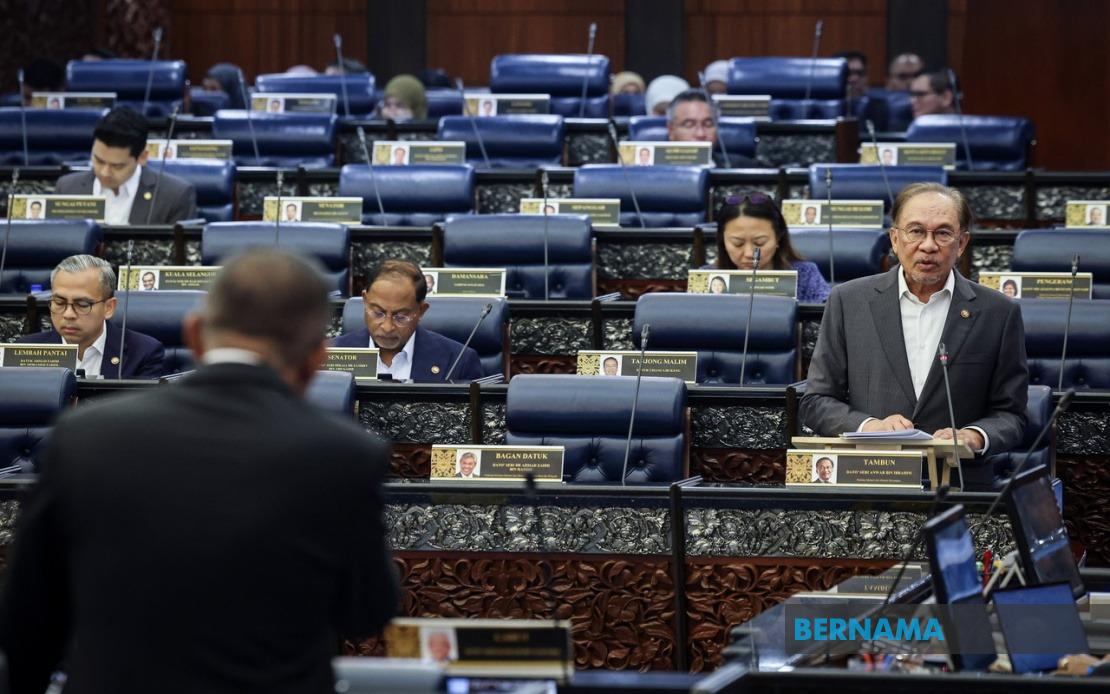
Prime Minister Datuk Seri Anwar Ibrahim unveiled on Monday that Syarikat Jaminan Pembiayaan Perniagaan (SJPP), the Finance Ministry's wholly owned guarantee company, has processed approvals totalling RM4.9 billion in financing for over 6,000 micro, small and medium enterprises during the opening six months of 2026. The announcement came during Minister's Question Time in the Dewan Rakyat as Anwar responded to concerns raised by Ipoh Timor MP Lee Chuan How regarding the government's commitment to supporting the business community during an uncertain global climate.
The SJPP financing wave represents a cornerstone of the MADANI administration's broader strategy to improve capital accessibility for small businesses while simultaneously reducing operational obstacles they face. By channelling funds through the guarantee mechanism rather than direct lending, the government aims to address a persistent structural barrier that constrains small enterprise growth across the nation. This approach enables commercial banks and other financial institutions to lend with greater confidence, knowing that guarantees absorb much of the credit risk associated with lending to less-established or asset-light businesses.
During his parliamentary response, Anwar emphasised that the current round of financing supports multiple objectives beyond simple capital provision. The programme targets sustainability concerns, acknowledging that many MSMEs struggle not merely to access initial funding but to maintain operational continuity through economic cycles. By improving working capital availability, the government intends to fortify business resilience and enable entrepreneurs to navigate the volatile macroeconomic environment facing Malaysia and the wider region.
The Finance Minister disclosed that his ministry has orchestrated a much larger funding architecture encompassing various loan products and financing guarantees exceeding RM15 billion collectively. This sprawling initiative reveals the scale of government commitment to MSME development, reflecting recognition that small businesses constitute Malaysia's economic backbone, generating significant employment while contributing meaningfully to innovation and local value chains. The comprehensive approach combines traditional lending mechanisms with guarantee schemes and specialised financing products tailored to different enterprise segments.
A particularly significant element within the broader framework involves dedicated allocation for Bumiputera entrepreneurship. Of the RM15 billion total support package, RM5 billion has been reserved specifically for Bumiputera-owned businesses, underscoring the government's commitment to ensuring that Malaysia's indigenous business community benefits proportionately from development financing. This targeted approach addresses historical imbalances in capital access and reflects ongoing policy emphasis on inclusive economic participation across demographic groups.
Anwar's parliamentary statement acknowledged the genuine pressures confronting Malaysia's business ecosystem, particularly for enterprises operating at the micro and small scale where access to affordable credit remains chronically constrained. The global environment has grown demonstrably more challenging, with inflationary pressures, supply chain disruptions, and geopolitical uncertainties creating headwinds for export-oriented businesses. Domestically, rising operational costs including utilities, wages, and raw materials have compressed profit margins for many small operators who struggle to pass increases fully to customers in competitive markets.
The SJPP mechanism represents an evolution in Malaysian development finance, building upon decades of experience with guarantee-based lending promotion. Rather than imposing direct budgetary strain through subsidised lending, guarantee schemes leverage private sector capital while government bears a portion of credit losses. This structure preserves fiscal sustainability while amplifying the multiplier effect of each ringgit deployed. For commercial lenders, the guarantee transforms marginal lending decisions, enabling financial institutions to extend credit to segments they might otherwise avoid due to perceived risk.
Implementation of such large-scale financing requires substantial institutional capacity. SJPP must process applications, evaluate risk profiles, manage approvals, and monitor performing loans across thousands of borrowers scattered throughout Malaysia. The 6,000-plus businesses approved during the first half of 2026 represent diverse sectors including retail, manufacturing, services, and agriculture. Each requires tailored assessment reflecting sector-specific risks and business model variations. This heterogeneity complicates implementation but ensures that financing reaches MSMEs across the economic landscape rather than concentrating in easily-assessed traditional sectors.
For Malaysian business owners, particularly those in construction, tourism-related services, and import-dependent retail, accessing RM4.9 billion in fresh credit capacity should provide meaningful relief. The timing of this announcement carries particular significance given ongoing economic adjustments following the previous years' macroeconomic volatility. MSMEs that had deferred expansion or modernisation investments due to financing constraints may now reconsider such moves, potentially contributing to modest economic stimulus through increased capital formation and employment growth.
Regionally, Malaysia's experience with SJPP-style guarantee mechanisms attracts interest from neighbouring countries grappling with similar MSME financing challenges. Thailand, Indonesia, and the Philippines all operate comparable programmes, though with varying effectiveness and reach. Malaysia's relatively advanced institutional capacity and transparent governance frameworks position it favourably for exporting expertise and best practices. The scale of the SJPP operation demonstrates that Southeast Asian governments can deploy substantial resources through market mechanisms rather than rely exclusively on direct state lending.
Looking forward, the sustainability of such financing programmes depends on prudent risk management and borrower repayment discipline. If default rates escalate beyond programmed levels, guarantee costs will intensify, potentially straining government finances. Conversely, if portfolio performance remains sound and businesses utilise credit productively, the programmes can become self-sustaining or at least fiscally manageable components of development policy. The coming months and quarters will prove crucial in determining whether the 6,000-plus businesses approved during 1H 2026 utilise capital effectively and generate returns justifying continued programme expansion.
Anwar's parliamentary articulation of SJPP support reflects deeper government recognition that inclusive economic growth requires deliberate mechanisms ensuring access to capital extends beyond large corporations and well-connected entrepreneurs. MSMEs employ millions of Malaysians and constitute vital components of local economies throughout the nation. By sustaining financing accessibility even amid challenging global conditions, the government signals commitment to broad-based prosperity rather than concentration of opportunities among economic elites. Whether the RM4.9 billion deployment translates into meaningful entrepreneurial success depends ultimately on implementation quality and business owner competence, but the availability of capital removes at least one critical constraint previously impeding Malaysian small business development.

